
Last updated November 16, 2026
 Sweep & inspection
 Caps & crowns
 Flue relining
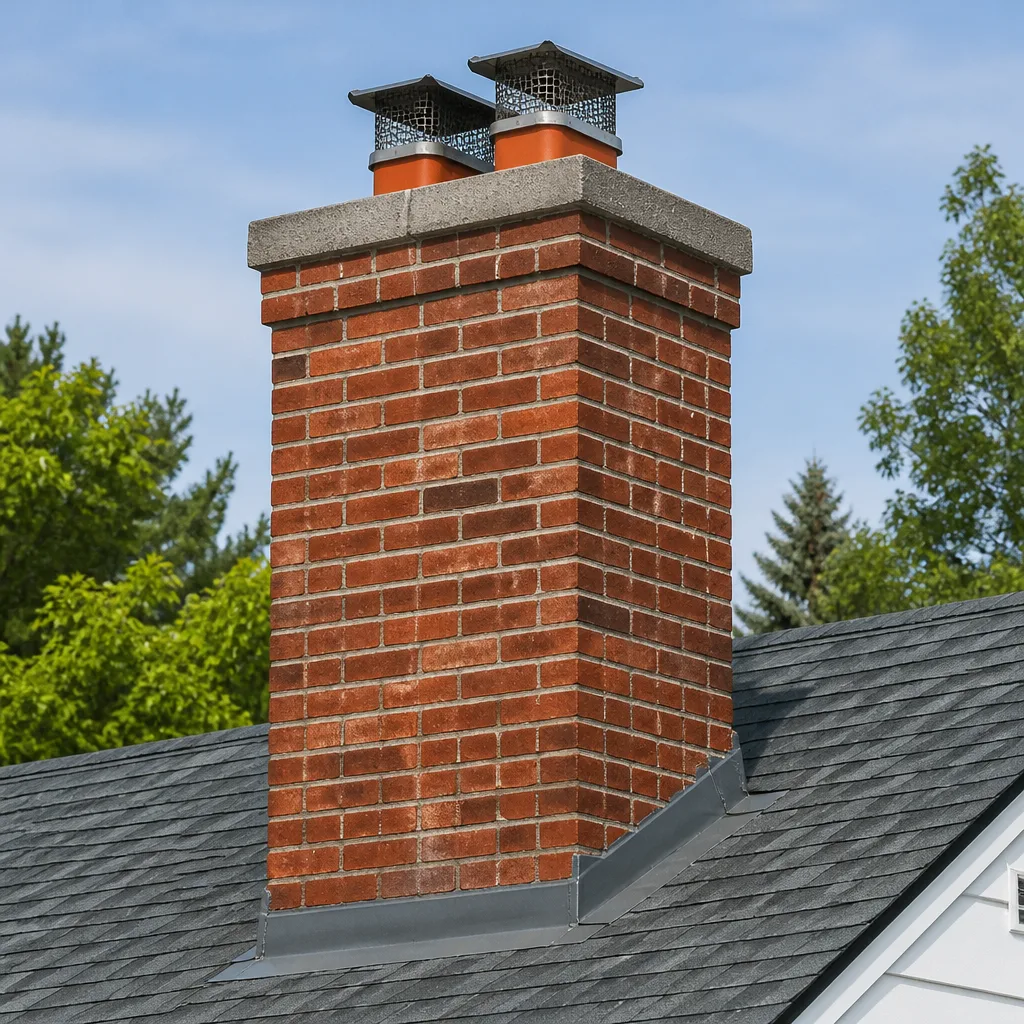 Masonry repair
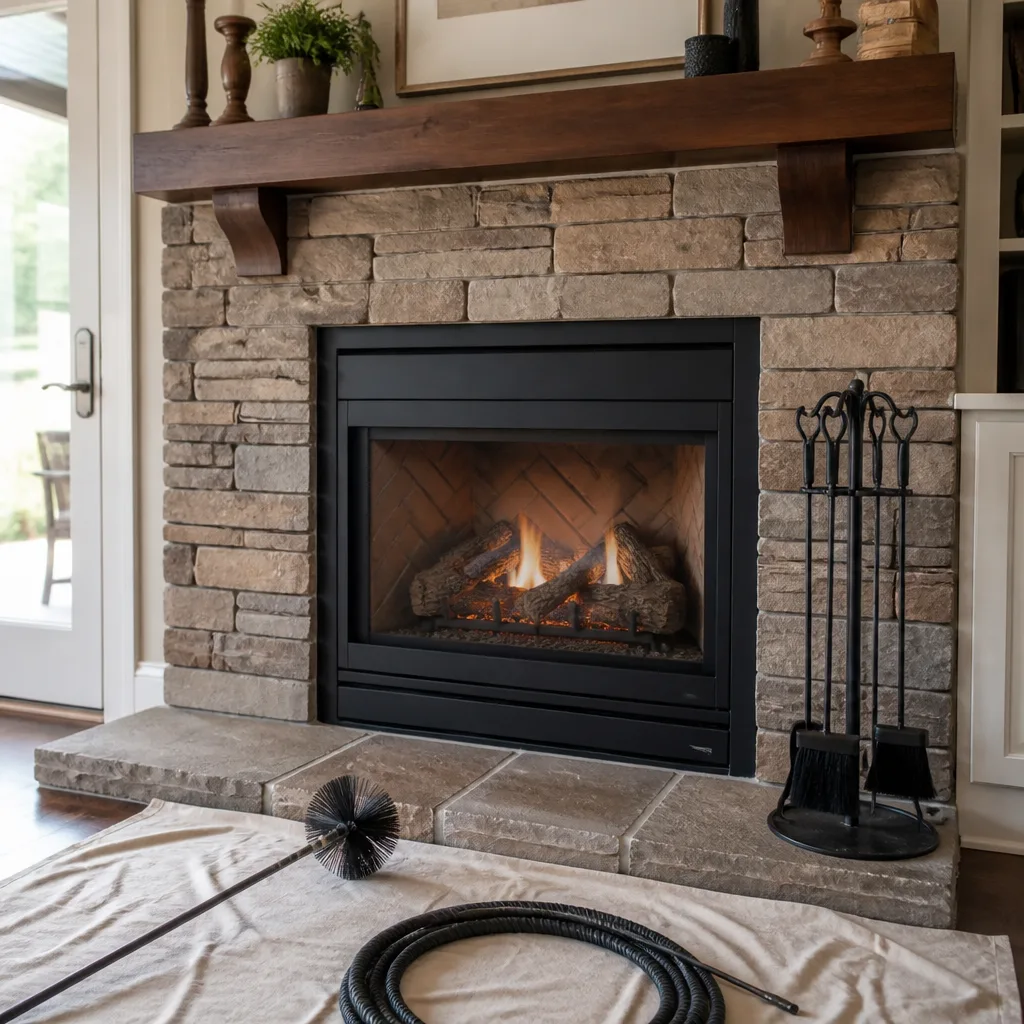 Gas fireplace service
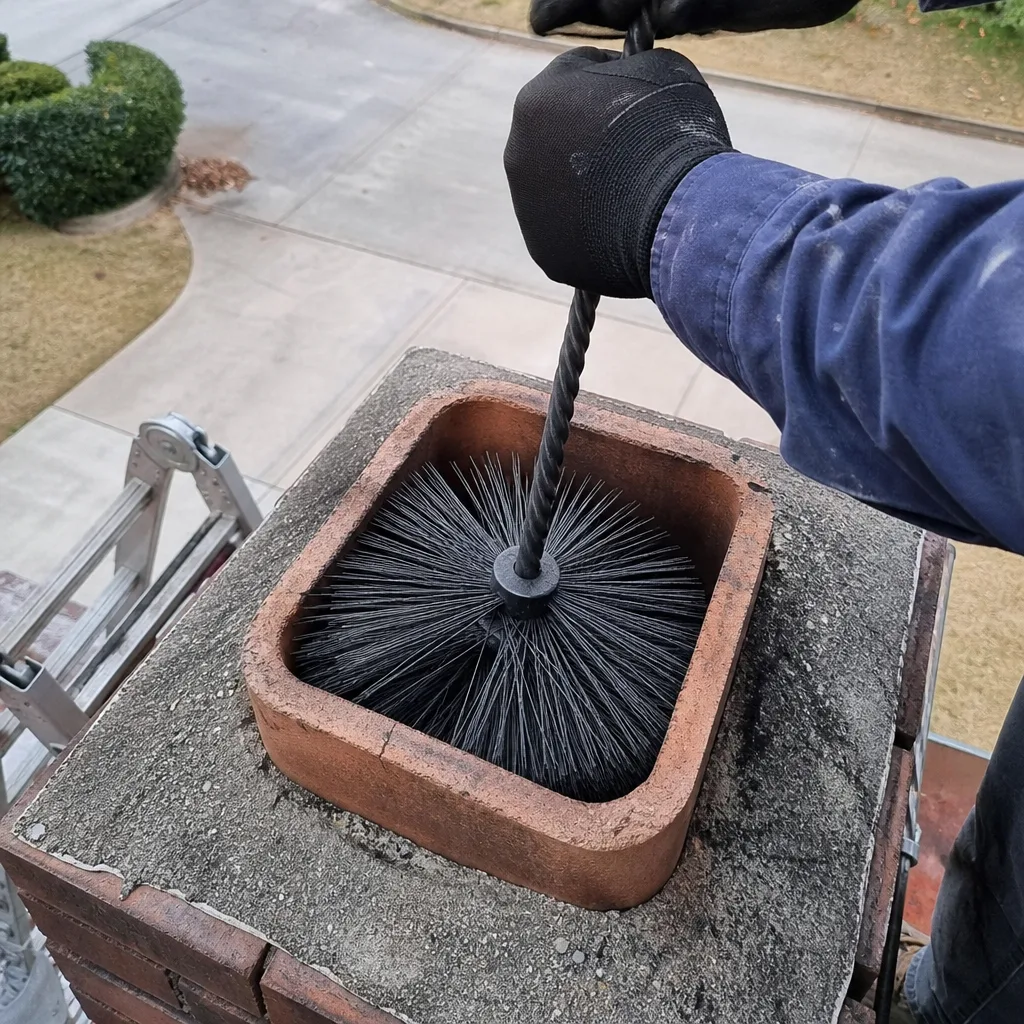
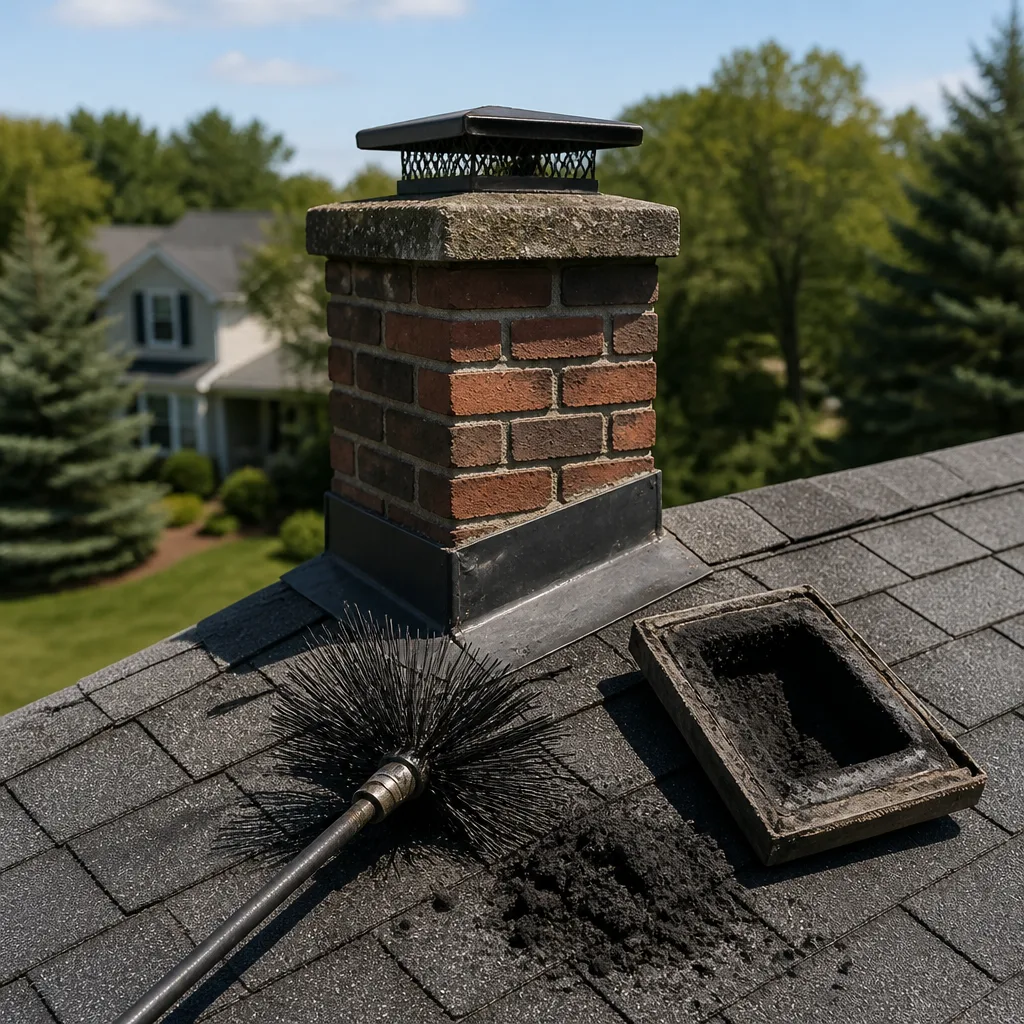
Level 1 sweep and inspection to the NFPA 211 annual standard - flue, crown, cap, and flashing checked and photographed
Chimney sweep logs do not sweep chimneys. They loosen some creosote - which then falls where a brush and vacuum still have to collect it.
Chimney Sweep Troubleshooting in Irving: Common Problems and How to Fix Them
Most homeowners in Irving call a sweep because the fireplace smokes, or because a neighbor told them it was “that time of year.” Both reasons miss the point. A dirty flue is only one of about six failures that all look identical from the living room, and each one has a different fix. The expensive mistake isn’t skipping the sweep. It’s paying for a cleaning that never addresses the real problem, then paying again when nothing changes. Creosote staging, cracked flue tile, negative pressure, liner sizing mismatches, crown cracks and flashing leaks all live under the same “my chimney isn’t working” umbrella. This guide breaks them apart so you can tell what you’re actually dealing with before anyone touches the flue.
Quick Answer
Chimney problems in Irving fall into three categories: combustion deposits (soot, creosote, glazed creosote), structural faults (cracked flue tile, failed crown, flashing leaks, damaged liner), and system faults (draft problems, undersized or oversized liners, blocked caps). A sweep fixes the first. The second needs repair with materials like HeatShield or DuraFlex liners. The third needs a proper diagnostic inspection, because no amount of brushing will fix a pressure balance problem. Matching the fix to the actual fault is the whole job.
Styles & brands we work with
- Sweep & inspection
- Caps & crowns
- Flue relining
- Masonry repair
- Gas fireplace service
Table of Contents
- How to tell a draft problem from a creosote problem
- First-degree, second-degree and third-degree creosote: what actually brushes off
- Spotting a cracked terra cotta flue tile before you call
- Why your fireplace smokes after a cleaning
- Crown cracking, water intrusion and how to tell it from a flashing failure
- Cap and vent termination problems
- What a diagnostic inspection should actually cover
- Repair options: what each fix is for and when it applies
How Can You Tell a Draft Problem From a Creosote Problem?
Watch the smoke, not the chimney. A creosote problem produces a fire that burns steadily but deposits heavily on the flue walls; the fire itself usually draws fine. A draft problem produces visible smoke spill from the firebox opening, the smell of smoke in the room during or after a burn, and a fire that’s hard to keep lit or burns lazily no matter how dry the wood is. Those are different failures and they need different answers.
Draft issues come from three places in the Irving market:
- Negative pressure. Tight modern construction, kitchen exhaust fans, and second-floor HVAC returns can pull harder than the chimney. If the fireplace spills when a bath fan or dryer runs, pressure is your problem, not soot.
- Cap obstruction. A cap with clogged mesh, or a cap sized too tight for the flue, chokes draft at the top. Debris, birds and leaves under a damaged cap do the same.
- Flue height mismatch. A chimney that terminates too close to a roof peak, or that is out-competed by wind eddies across the ridge, drafts poorly on certain days and fine on others. That pattern alone tells you it isn’t creosote.
Creosote behaves differently. It’s about what’s on the flue walls, and you’ll often see heavier deposit after cold snaps and slow, smoldering fires. If smoke stays in the firebox but the flue is loaded with soot, you have both problems at once sometimes. That’s why a proper sweep is only the first half of the job. Our technicians have up to 11 years of experience reading these signals, and most of what tells one problem apart from another is knowledge, not equipment.
What Do First-Degree, Second-Degree and Third-Degree Creosote Look Like?
Creosote is graded in three stages, and only two of them respond to a brush. That single fact explains most “we just had it cleaned” complaints we hear in Irving.
- First-degree creosote. Soft, flaky, soot-like, easily brushed off. This is the light dust you see on a flue wall after a season of well-seasoned fires. Standard brushing removes it completely.
- Second-degree creosote. Hardened crusts and flakes, sometimes curly and shiny at the edges. It’s harder, but a proper poly brush and the right diameter still break it loose. Most residential cleanings deal with this stage.
- Third-degree creosote. Glazed, tar-like, smooth, and it can look like a coat of dark shellac on the flue wall. It’s the fire hazard. Mechanical brushing alone will cut through the top surface and leave the rest, which is why it needs a chemical treatment like the ones HeatShield and Gelco supply, plus a follow-up sweep after the glaze is broken down.
Here’s the pitfall. A sweep using the wrong brush diameter for a relined oval flue can pass a brush through, remove the top layer of glaze, and call it clean. The visible result looks fine. The deposit that remains is still combustible. That’s why a follow-up inspection matters as much as the sweep itself, and why we recommend pairing the two together through chimney sweep and inspection services so nothing gets missed.
Glazed creosote is also the reason we recommend a documented inspection before the burning season begins. Repairs that are caught in early fall are maintenance. Repairs in December tend to be emergencies.
How Can You Spot a Cracked Terra Cotta Flue Tile Yourself?
You can catch a lot of it from the firebox opening before anyone climbs a roof. Open the damper, point a strong flashlight up the flue, and look carefully at the tile joints. What you’re looking for is damage on the interior surface of the tile, not the outer brickwork.
- Visible cracks in a tile segment. A single crack, vertical or diagonal, running through a tile face.
- Spalled tile surface. Sections where the smooth face has flaked off and left a rough, pitted patch.
- Offset joints. A step or gap where one tile should sit flush with the one above it. That shift often means movement, sometimes water intrusion, sometimes original construction.
- Missing mortar joints. A clear gap between tile segments where the mortar has crumbled away.
- A rusty damper or black staining. Water and flue gas have been at the metal long enough to show you something’s wrong upstream.
What you can’t see from the firebox is the tile segments further up the flue, and you can’t see whether the cracks have penetrated the full thickness of the tile. That’s why an inspection uses a camera. If you suspect damage on your flue, we can look with the proper tools through our chimney repair service before deciding on the fix. A cracked tile in Irving is a carbon monoxide pathway, not cosmetic sloppiness, and it deserves a real answer.
Why Does a Fireplace Smoke After a Cleaning?
Because the cleaning wasn’t the problem. A fireplace that smoked, got cleaned, and still smokes has a sizing or system fault that a brush cannot touch. The three faults that show up most:
- The liner is the wrong size for the appliance. A wood insert or a firebox door change can require a different flue cross-section. Too large and draft stalls. Too small and smoke backs up. A cleaning doesn’t change the liner diameter.
- The liner is oval-relined but the brush wasn’t matched. Round brushes in an oval flue skip the flats. The sweep passes through, but deposits remain on two sides of the flue wall.
- The liner is a recent relining that wasn’t sized to the current appliance. This happens after a replacement insert, a rebuilt firebox, or a conversion to gas. A DuraFlex liner sized for one setup can be wrong for another.
Another thing worth saying: a liner that has been in service for a long time can develop separation at the seams or a crimped section. A camera inspection picks this up. A brush does not. If your fireplace has “been cleaned” and still smokes, the correct next step is a documented inspection, not a second cleaning with the same brush. That’s a distinction our whole approach turns on at Irving Chimney Cleaning, and it’s why we offer sweep, repair and inspection as a set rather than three separate vendors.
How Do You Tell Crown Cracking From Flashing Failure?
Water intrusion in an Irving chimney almost always comes from one of two places: the crown, or the flashing. They look similar from the living room ceiling, but they need completely different repairs.
The crown is the sloped concrete cap on top of the masonry. Cracks form when the crown was poured thin, when the concrete was poorly mixed, or when it was left without an overhang past the brick. In the Dallas-area clay soils, the expansion and contraction cycle also pushes on masonry foundations and eventually works through a rigid crown. If the crack runs horizontally across the crown face or opens where the crown meets the flue, water travels down the flue and shows up as staining on the chimney breast inside the house, sometimes only after several days of rain, sometimes as powdery white efflorescence on the interior brick.
Flashing is the metal detail where the roof meets the chimney. Flashing failures usually announce themselves more quickly, and the water appears on the ceiling near the chimney, or along the chimney flashing line on the roof deck. A failed flashing shows as lifted, rusted or missing step flashing, gaps at the counter-flashing, or tar patches that have separated. Two wet spots at different times, two different fixes.
If water is entering, check the crown first of all. Then check the flashing. The order saves you a repeat repair. Repairing a failed flashing when the real problem is a crown crack, or the other way around, is one of the more common waste-of-money patterns we see around Irving. An inspection with documented photos settles it in one visit.
This is also where the local clay matters. Whether you’re in a neighborhood closer to the Las Colinas side or up toward Valley Ranch, the same soils are pushing on masonry. If your neighbors’ chimneys show crown cracks, yours likely will too eventually. Catching it before the crack turns into a rebuild saves real money.
What Do Cap and Vent Termination Problems Look Like?
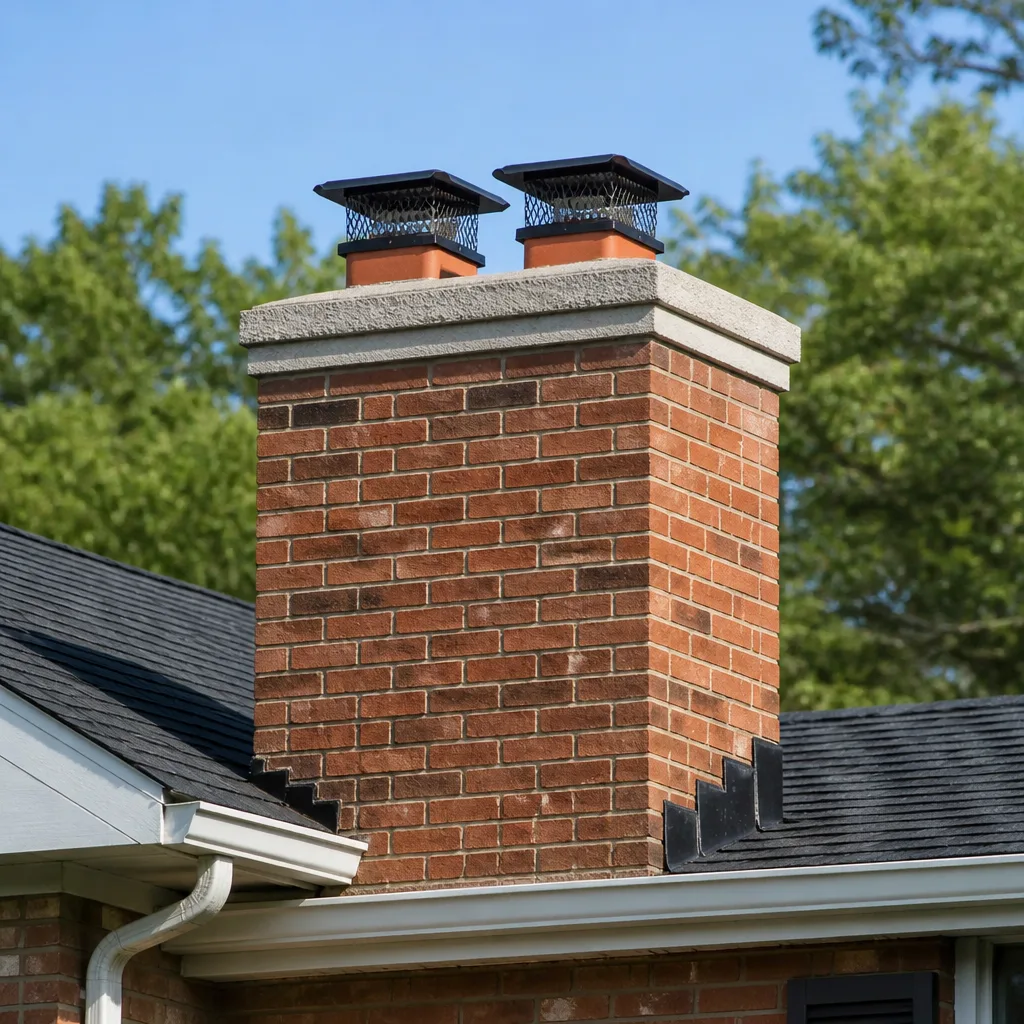
A missing or damaged chimney cap is one of the most common causes of “mystery” chimney problems in Irving, and one of the cheapest to fix when it’s caught early. The cap is the sheet-metal hood covering the flue termination. It does four jobs: keep rain out, keep debris out, keep animals out, and keep sparks from landing on the roof.
Signs your cap is the issue:
- Animals in the flue. Birds, squirrels or raccoons in the flue are a cap problem first, an animal problem second.
- Water down the flue after rain. A missing cap with no rain hood lets water straight onto the flue tile and shows up as a rusted damper or water stains in the firebox.
- Sparks on the roof. A missing or degraded spark arrestor mesh is a genuine fire risk in dry Texas summers.
- Draft problems that appear suddenly. Mesh screens on caps clog with soot and debris over time. When they do, the flue chokes.
- A loose cap that rattles or shifts in wind. That’s usually a fastening failure, and it means the cap may not be sitting squarely over the flue opening.
Caps come in different styles depending on the flue type and the vent setup. A wood-burning flue and a gas insert’s B-vent want different terminations, and the wrong one can strangle draft or fail to vent properly. Products from lines like Gelco and Olympia Chimney come in specific models for specific terminations, and the fit matters as much as the material.
We recommend checking the cap every time the chimney is swept, since it’s the easiest component to assess while someone is already up on the roof. A cap that’s worth keeping gets left alone. A cap that isn’t gets replaced. Simple as that.
What Should a Diagnostic Inspection Actually Cover?
A real chimney inspection is not a walk-around with a flashlight. It’s a documented review of every component that matters to safety and function. In the Irving market, where a lot of housing stock is 1970s through 2000s masonry with a mix of original and replaced liners, the inspection is often the most valuable part of the visit.
A proper inspection covers:
- Exterior walk-around. Crown condition, flashing condition, mortar joints, brick spalling, cap security, spark arrestor condition.
- Firebox and damper. Firebox brick and mortar integrity, damper operation and seal, smoke chamber condition.
- Flue interior via camera. Flue tile integrity, offset joints, missing mortar, liner seams, deposit staging.
- Appliance and venting. Whether the current insert or fireplace matches the existing liner, and whether the liner was sized correctly.
- Documented findings. Photos of anything found, so you can see exactly what the inspector saw, not just a verbal report.
IRVING CHIMNEY SWEEPING & REPAIR INC. uses the inspection to separate what needs work now from what can safely wait. That distinction is the whole reason we recommend doing sweep and inspection together. The sweep tells you what’s on the flue wall. The inspection tells you why. Both answers matter.
We also inspect chimneys in nearby communities with similar housing stock. Down toward Double Oak, the soil conditions look very much like what we see in Irving, and the same crown and flashing patterns show up.
What Repair Options Exist, and When Does Each Apply?
There are really only a few repairs in chimney work, and they solve different problems. Matching the repair to the fault is where the difference between a specialist and a generalist shows up.
- HeatShield interior resurfacing. For deteriorated flue tile where cracks aren’t full-through, or where the mortar joints have failed between tile segments. HeatShield is applied as a resurfacing system on the interior tile face, and it’s a real alternative to relining when the tile is still structurally sound but no longer sealed. This is the technically demanding interior repair most sweep-and-go operations simply cannot offer.
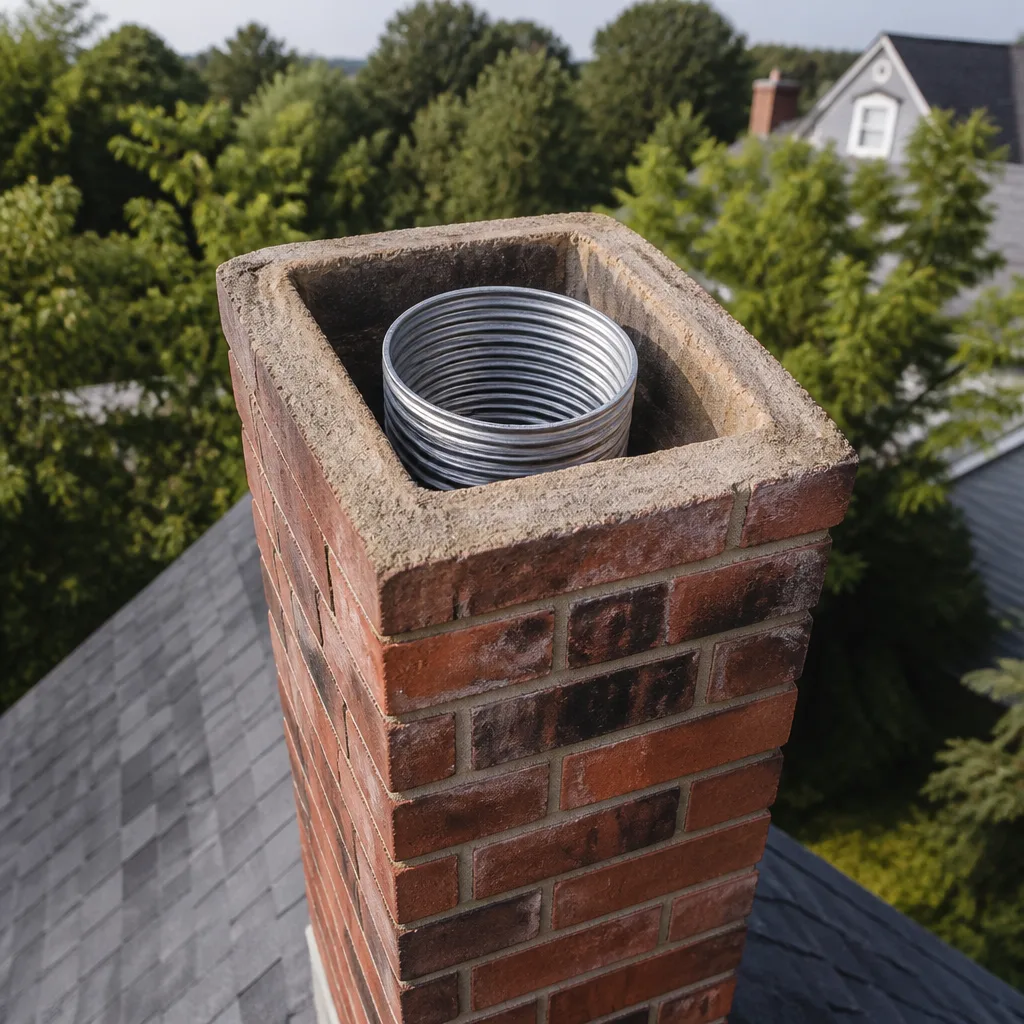
- DuraFlex liner relining. For flues where the tile is cracked through, missing, or where a full-length stainless liner is the correct answer. Relining is the fix that protects your home from carbon monoxide migration into adjacent flues and from the fire risk of a compromised flue. Sizing is critical here, and the wrong size recreates the smoking problem the relining was meant to solve.
- Crown repair or rebuild. For cracks that let water into the masonry. Repair keeps the cost low when the crack is small; rebuild matters when the crown is beyond repair.
- Flashing repair or replacement. For roof-to-chimney water intrusion. Copper and aluminum flashings fail differently, and the fix depends on which failed.
- Cap replacement. For missing, damaged or wrongly sized caps. This is the smallest line item in the whole list and often the one that stops the most damage.
- Firebox and smoke chamber repairs. For firebox mortar, brick spalling, and the smoke shelf and chamber that can affect draft.
We work with professional-grade materials including DuraFlex and HeatShield because these are the brands chimney specialists trust. Whether you need resurfacing or full relining, the decision should come from a documented inspection, not from a guess.
Common Mistakes to Avoid
- Hiring a sweep who stops at the brush. A sweep that cleans and leaves without inspecting the flue, cap and crown leaves the actual diagnosis on the table. In Irving, where masonry chimneys with original tile are common, this mistake alone is the biggest cause of repeat problems.
- Treating a draft problem as a cleaning problem. If your fireplace spills smoke on certain days, or when a kitchen fan runs, another cleaning won’t change the outcome. A pressure test and a proper look at the flue height are the answers.
- Ignoring glazed creosote after a “clean” visit. Third-degree glazed creosote is a fire hazard that a brush swipes over and leaves in place. If your sweep can’t explain the creosote grade and what was actually removed, ask. You have a right to know.
- Assuming a crack in the flue tile is cosmetic. A cracked terra cotta tile is a pathway for fire and carbon monoxide. It’s not a cosmetic defect and it’s not a “next year” problem.
- Repairing flashing when the crown is the culprit. In Irving, we see this one often. A wet ceiling spot doesn’t tell you which one it is. A camera and a proper roof inspection do.
- Skipping the cap. A cap is cheap, and a missing or damaged one lets in water, debris and animals. It’s the smallest repair that prevents some of the largest damages.
- Treating the sweep and the repair as separate vendors. When the person who cleans the chimney is also the person who inspects and repairs it, nothing falls between the two visits. That continuity is worth real money over time.
See the difference
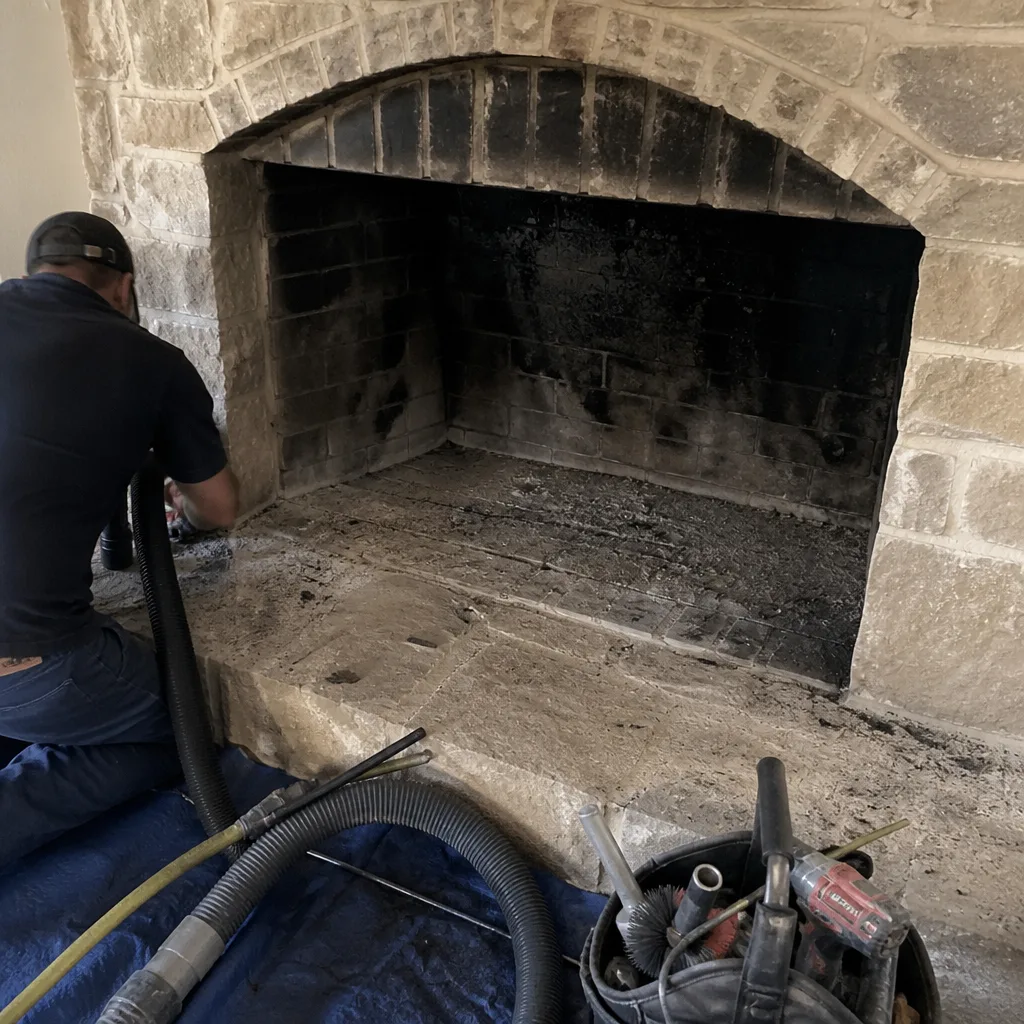 Before
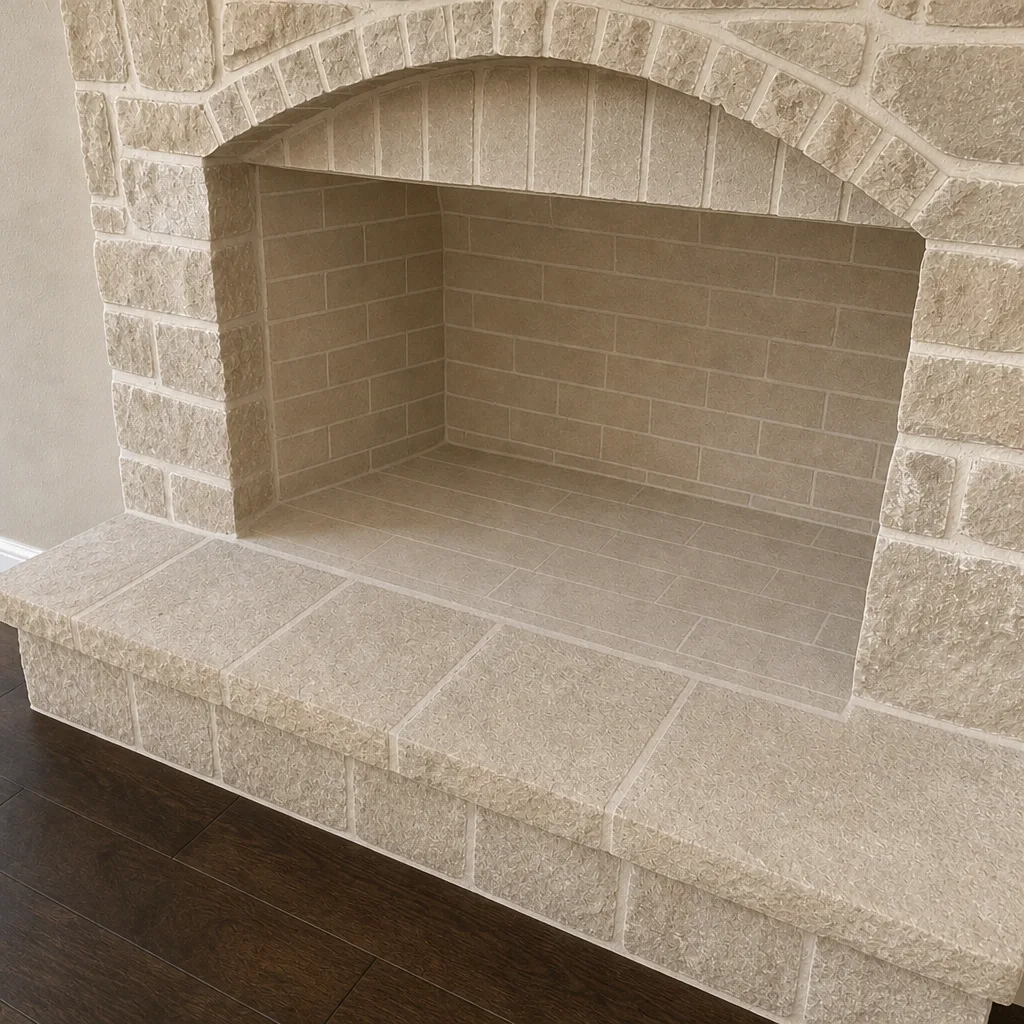 After
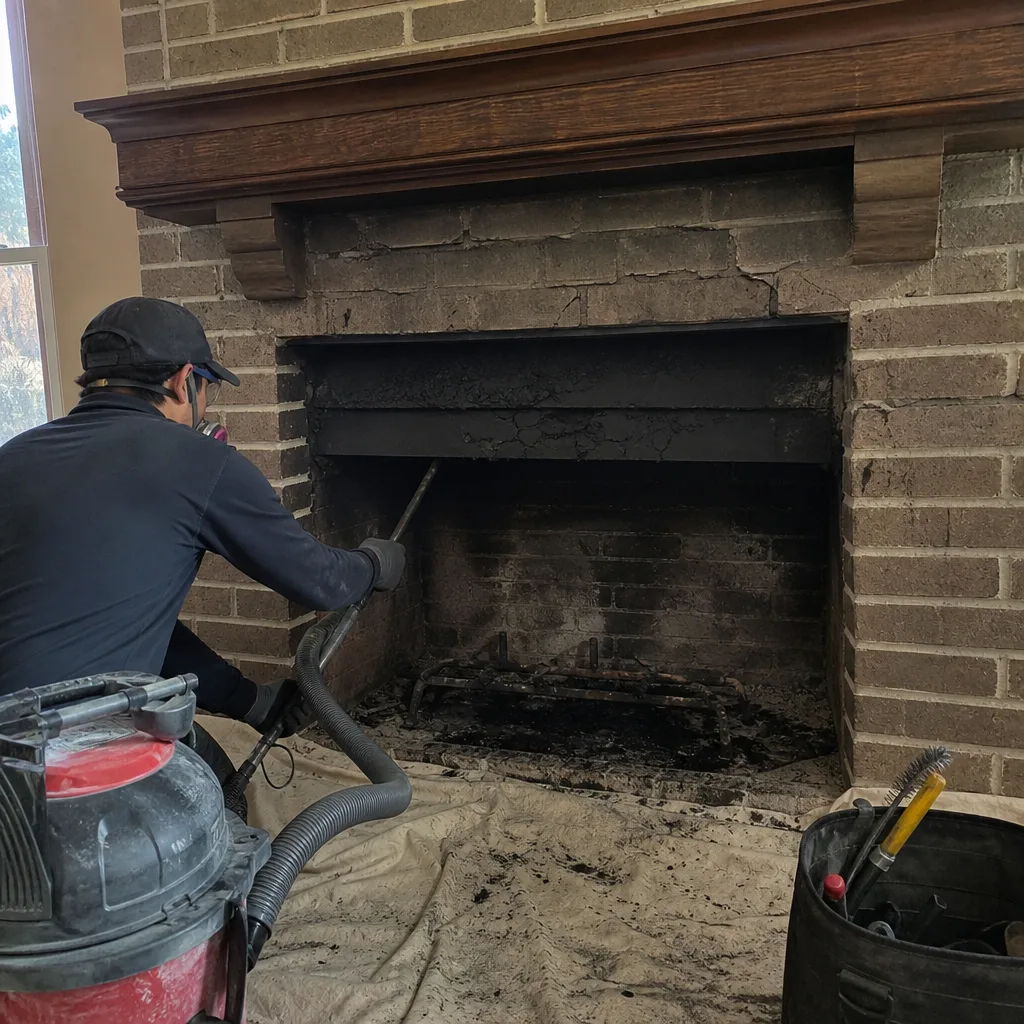 Before
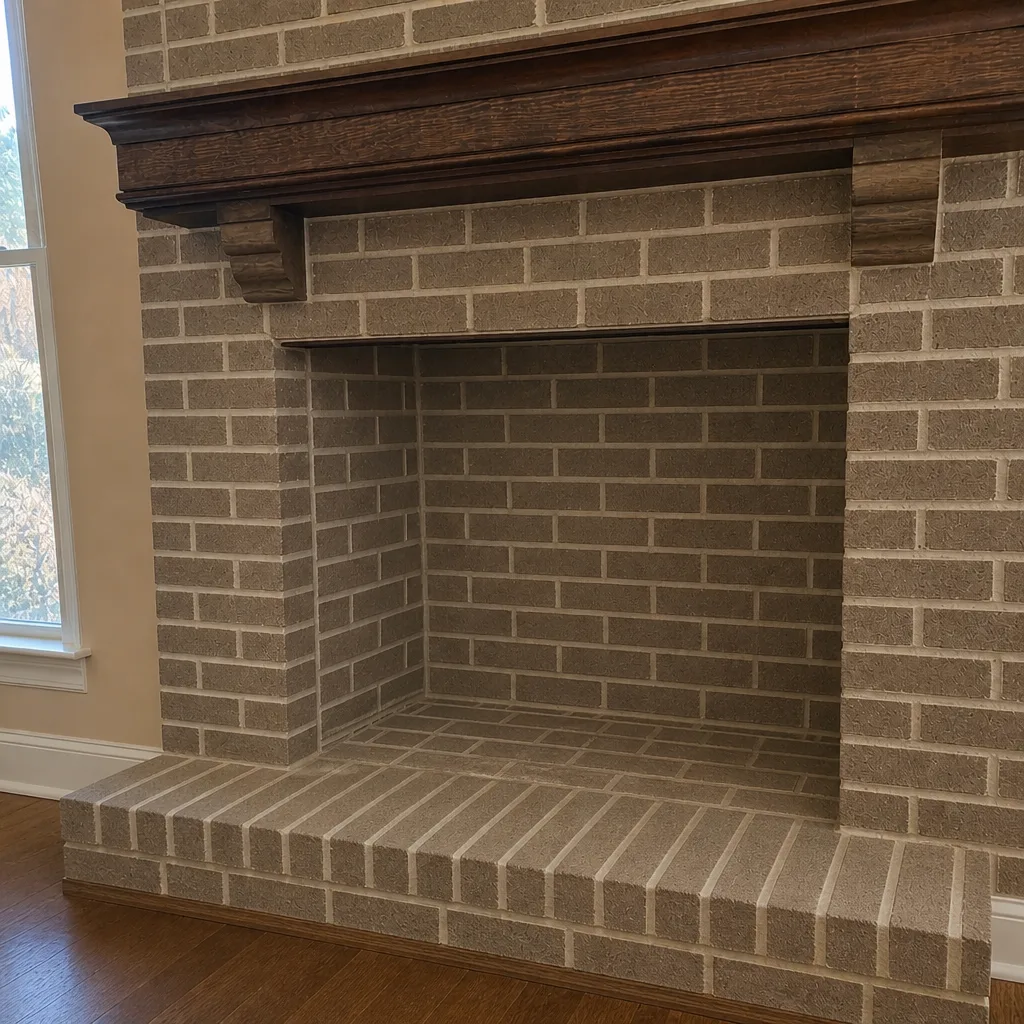 After
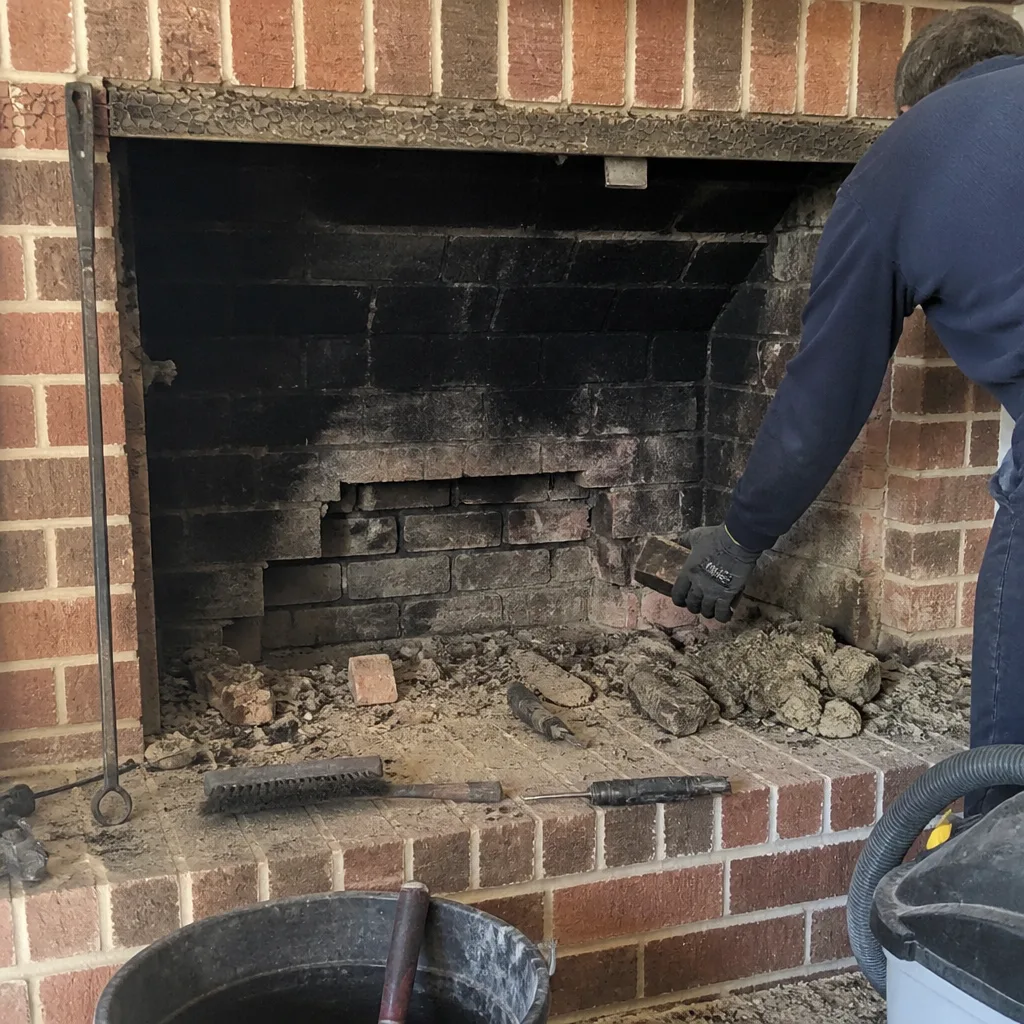 Before
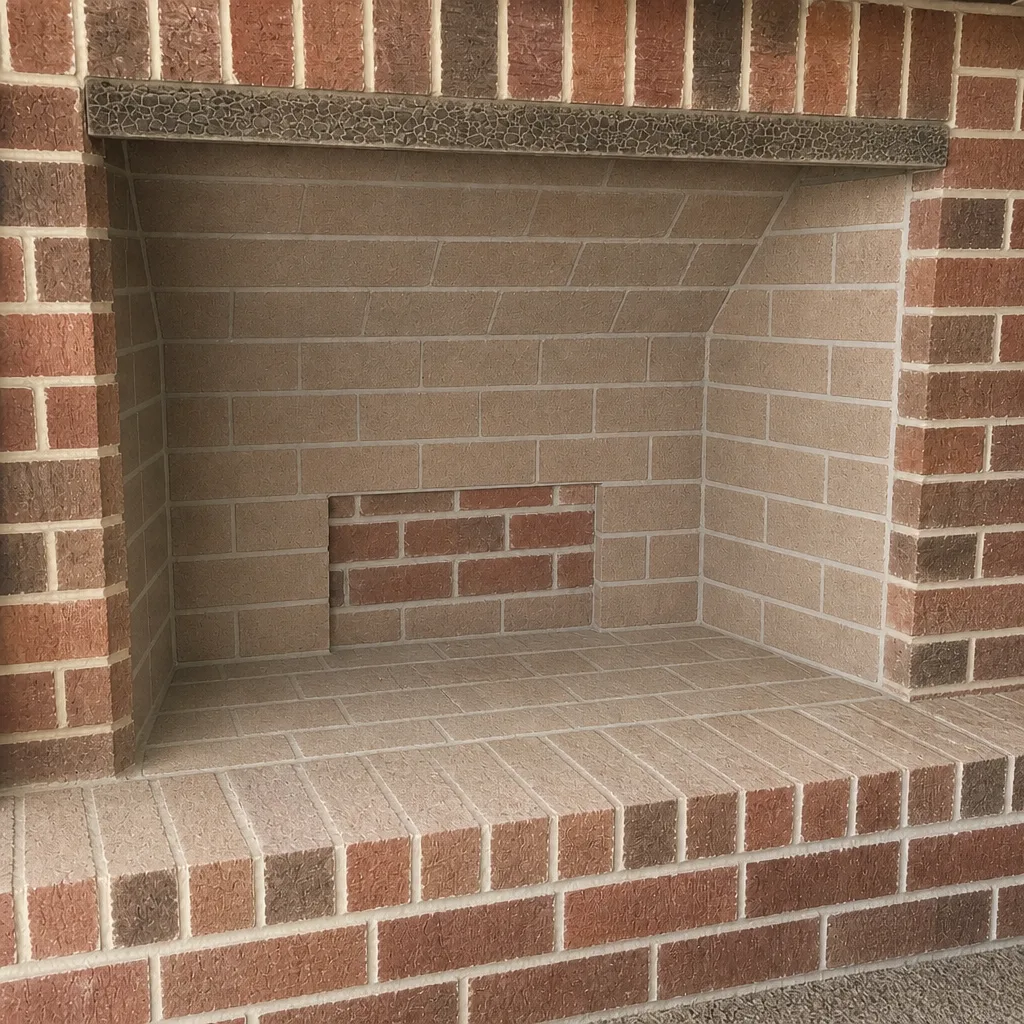 After
When to Call a Professional
Chimney work is one of those trades where the wrong tool in the wrong place is genuinely dangerous. The three back-to-back safety issues that should end your DIY thinking immediately: glazed creosote is highly combustible; a cracked flue tile is a direct path for carbon monoxide; and a compromised crown or masonry joint is a structural risk at height. Those aren’t things a homeowner can safely diagnose or fix.
Call a professional if you see any of the following: cracked or spalled flue tile visible from the firebox, smoke spill from the firebox on a normal burn, water stains on the chimney breast or near the flashing line, a damaged or missing cap, or a rusted damper or firebox metal. Those are all signs that point to a real failure, not just a dirty flue.
Irving Chimney Cleaning offers free estimates in Irving. Call (855) 955-5057. We answer 24/7. Fast dispatch from 7am to 7pm, Sunday through Friday. Our technicians have up to 11 years of experience, and we specialize exclusively in chimney services, so the diagnosis and the fix aren’t handed off to another contractor.
Frequently Asked Questions
Not always. A chimney sweep removes soot and creosote, which can improve draft, but a smoky fireplace often points to a liner sizing mismatch, negative pressure in the house, or a blocked or undersized cap. The right fix depends on which of those is actually happening. A documented inspection will tell you. Call (855) 955-5057 for a free estimate on Irving. We answer 24/7.
Watch where the smoke goes. Smoke that spills into the room, that gets worse when a bath fan or kitchen exhaust runs, or that only appears on certain days is typically a draft problem. A fire that burns normally but leaves heavy deposits, especially shiny or tar-like patches, is a creosote problem. Different cause, different fix. Call (855) 955-5057 for an inspection-based answer.
Yes, in many cases. Minor cracks that haven’t penetrated the full tile can be resurfaced with a HeatShield application; more extensive damage usually calls for a DuraFlex liner instead. The correct fix comes from a camera inspection, not a guess. Call (855) 955-5057 in Irving for a free estimate. We answer 24/7.
Very likely because of house tightness, flue height, or the cap. Newer construction in Irving is tight, and that changes the pressure balance inside the house. A second factor is the liner: many chimneys were relined when an insert was installed, and if the liner is the wrong size for the current firebox, it will smoke no matter how clean it is. A proper inspection covers both. Call (855) 955-5057 for a free estimate.
Glazed creosote looks like a smooth, shiny, tar-like coating on the interior flue wall, almost like a second skin. It’s the most combustible form of creosote and it does not come off with a standard brush. Chemical treatment plus a follow-up sweep is the correct approach. If a sweep reports that your chimney is clean but you can still see a shiny coating up the flue, ask for a second opinion. Call (855) 955-5057 in Irving for a free estimate.
Timing and location tell you a lot. Crown cracks tend to leak slowly and show up as staining on the chimney breast or efflorescence on the interior brick after prolonged rain. Flashing failures usually show up as a wet spot near the chimney on the ceiling, sometimes soon after a single heavy rain. The only way to be certain is a real roof and chimney inspection with photos. Call (855) 955-5057 for a free estimate. We answer 24/7.
The Bottom Line
A chimney that isn’t working right is rarely one problem. It’s usually two or three stacked on top of each other: a glazed creosote stage, a failing liner, and a cap that lets water in, or a draft issue alongside a dirty flue. The fix that matters is the fix matched to what’s actually wrong. That requires a documented inspection, not just a brush. Once you know which fault is which, the repair list usually gets shorter, not longer. And you can spend the money on the repair that protects your home rather than chasing the same complaint season after season.
If you’re in Irving and want a straight answer on what’s happening in your chimney, call Irving Chimney Cleaning at (855) 955-5057 for a free estimate. We answer 24/7. Fast dispatch from 7am to 7pm, Sunday through Friday. We work with professional-grade materials including DuraFlex and HeatShield, and we service sweep, repair and inspection together so nothing gets missed.
Written by the team at Irving Chimney Cleaning.