
Last updated November 16, 2026
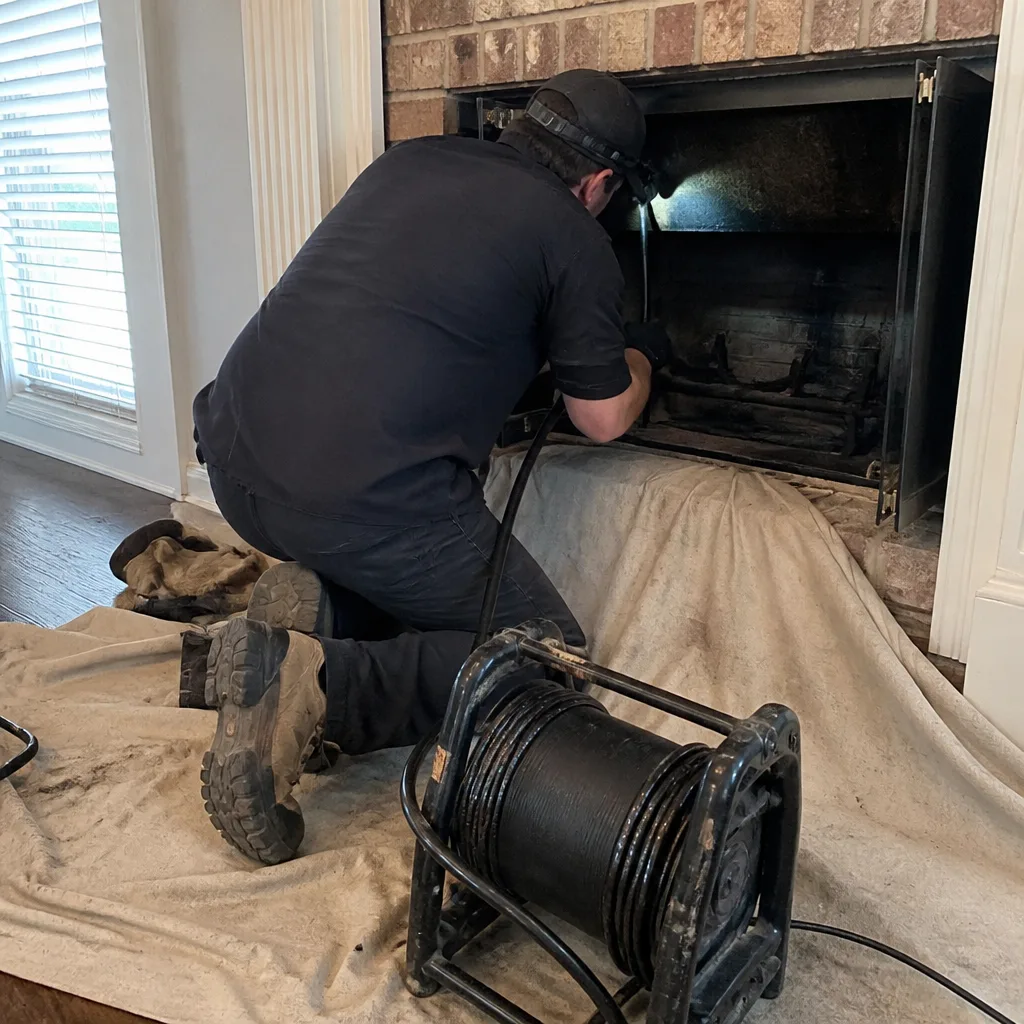
 Sweep & inspection
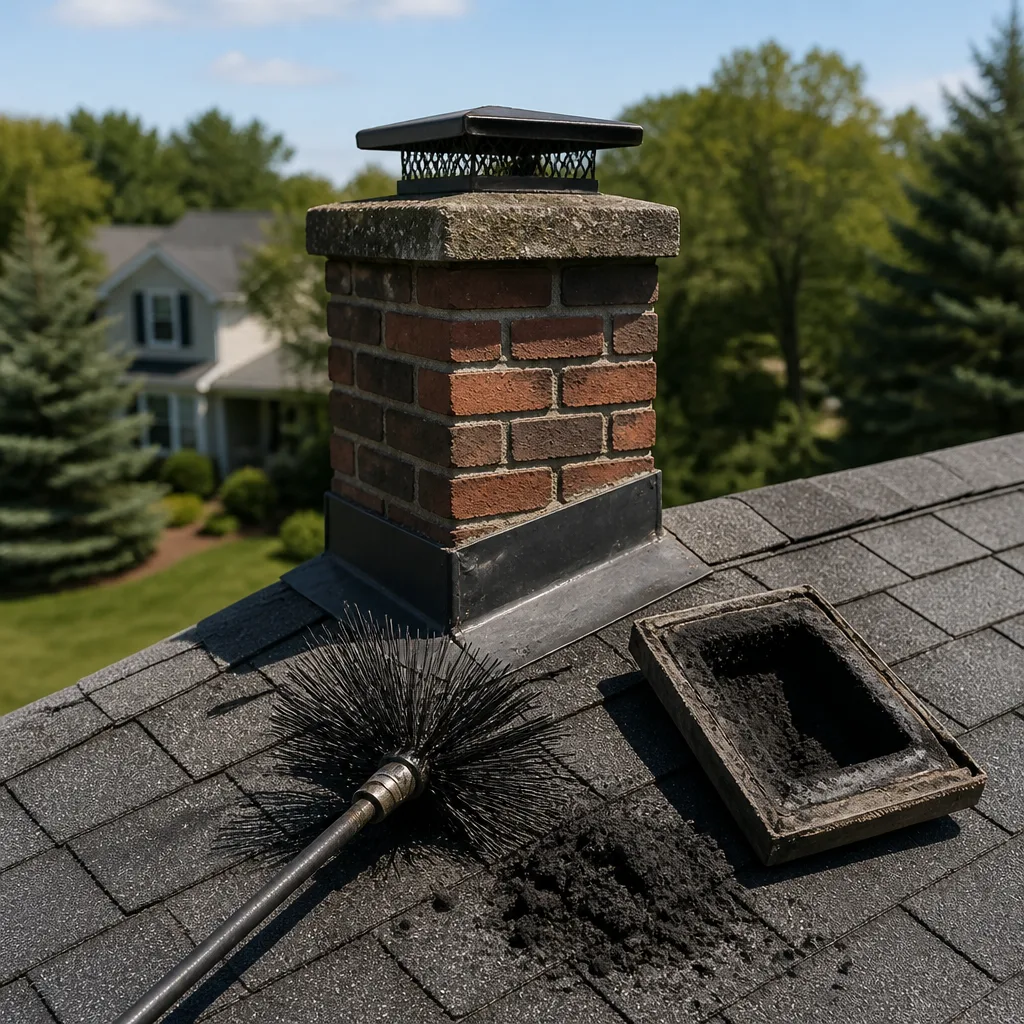
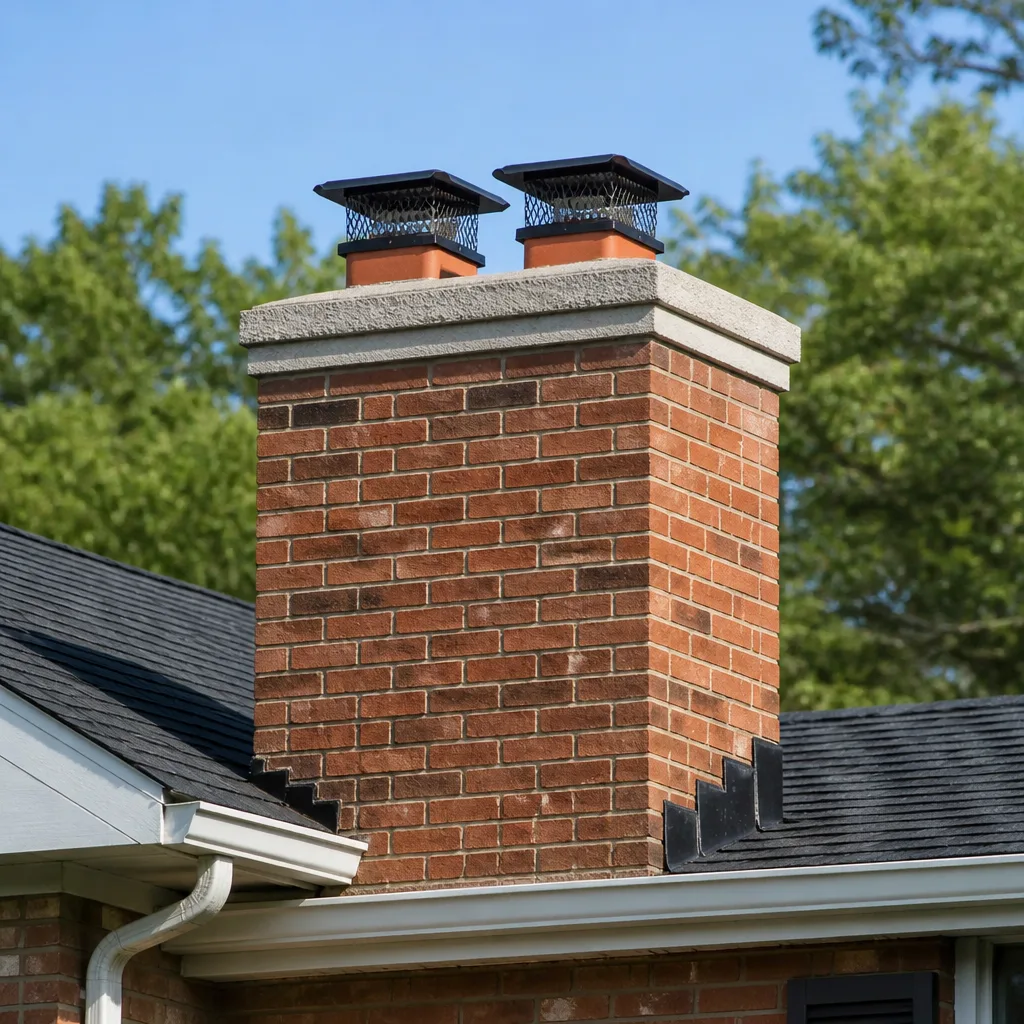 Caps & crowns
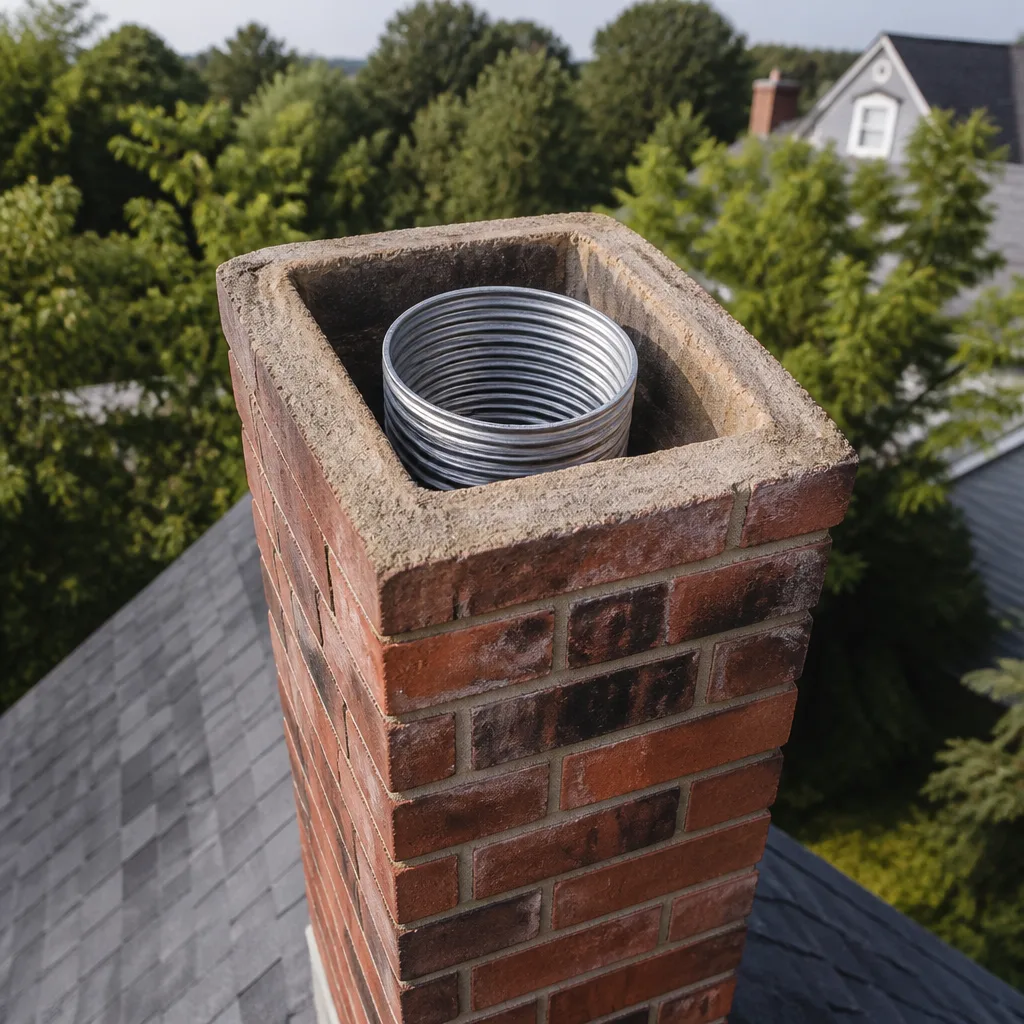 Flue relining
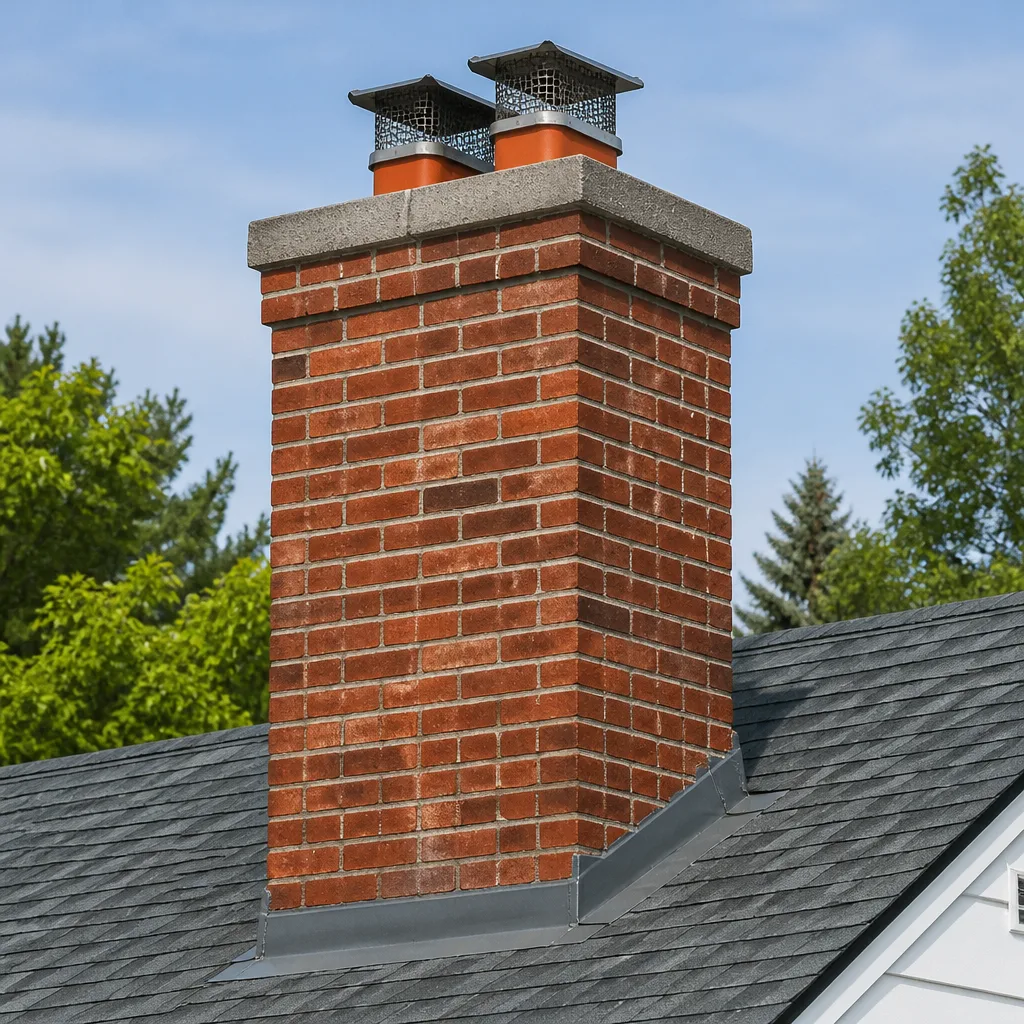 Masonry repair
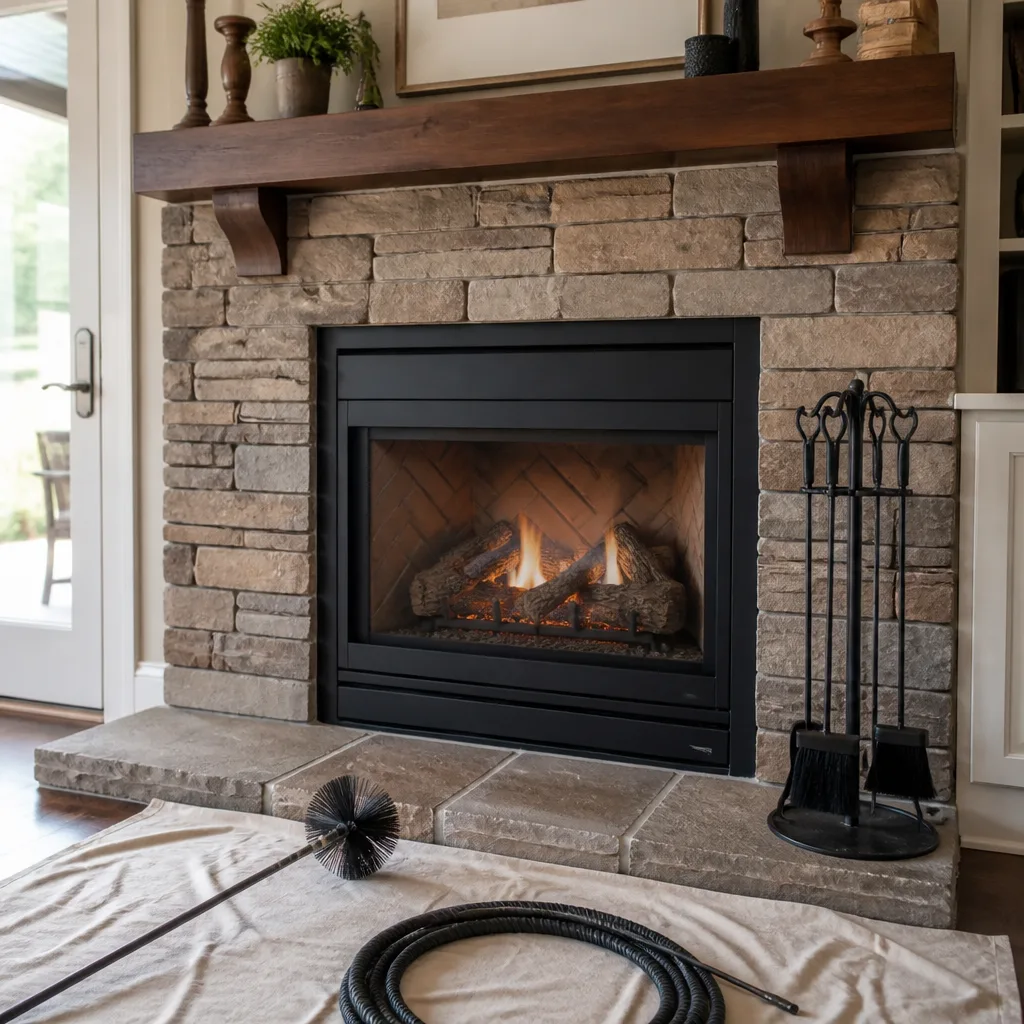 Gas fireplace service
Level 1 sweep and inspection to the NFPA 211 annual standard - flue, crown, cap, and flashing checked and photographed
Chimney sweep logs do not sweep chimneys. They loosen some creosote - which then falls where a brush and vacuum still have to collect it.
Chimney Cleaning Emergency Preparedness Guide for Irving Homes
A chimney fire doesn’t always sound like a roar. Sometimes it sounds like a low rumble, a clicking in the flue, or nothing at all, and the homeowners who get hurt are often the ones who didn’t know what they were listening for. That gap between what a chimney does and what a homeowner recognizes is where real emergencies begin. This guide covers the 48 hours on either side of a chimney emergency: the warning signs that show up while a fire is still burning, the right order of response, the carbon monoxide risks that come with no visible smoke, and the inspection steps that have to happen before you light the next fire. We’ll also cover what you can do now, ahead of burn season, to remove the conditions most Irving chimney emergencies start with.
Quick Answer
If you suspect an active chimney fire in Irving, call 911 first, get everyone out of the house, and close the fireplace glass doors or damper only if the fire is small and the flue is still controlled. Never pour water on a fire in a hot firebox or onto a cast iron insert. After any suspected chimney fire, the chimney must be inspected by a trained professional before it’s used again, and a visual-only check from the ground is not enough. Before burn season, a pre-season sweeping and inspection is what prevents most of the events this guide is about.
Styles & brands we work with
- Sweep & inspection
- Caps & crowns
- Flue relining
- Masonry repair
- Gas fireplace service
Table of Contents
- How do you recognize an active chimney fire while it’s happening?
- What is the correct response protocol during a chimney fire?
- How does carbon monoxide build up in Irving chimneys without visible smoke?
- What has to happen after a chimney fire before you burn again?
- What should an Irving homeowner do before burn season starts?
- Which chimney conditions create the highest emergency risk?
- How does Irving’s climate and housing stock affect chimney performance?
- When should you call a professional instead of waiting?
How do you recognize an active chimney fire while it’s happening?
A chimney fire is not always dramatic, and the quiet ones are the dangerous ones. Creosote fires burn hot and fast when the buildup is heavy, but a slow-burning fire inside a flue can smolder for hours with almost no noise. In our experience, the fires that cause the most structural damage are the ones nobody noticed, because there’s no visible smoke inside the house and no alarm until the masonry has already cracked.
The reason to know the signs is that Irving has a lot of older masonry chimneys, and older flues can hide a smoldering fire behind a parged interior that looks normal from the firebox. Creosote is the fuel here. It builds up as a crust of unburned wood gas, and once that crust reaches a certain thickness, one hot fire is enough to light it. That’s why the warning signs matter more than a single “correct” time to call. You call as soon as you recognize them.
Sounds to listen for
- A low rumble that seems to come from inside the chimney, not the firebox, and continues even after you close the glass doors.
- A roaring or rushing sound that sounds like a train in the distance, which usually means a hotter, larger fire.
- Clicking, popping, or a tapping sound from the flue, often the metal or masonry expanding under sudden heat.
Smells and visible signs
- A strong, acrid, or chemical smell in the house, unlike the ordinary smell of a wood fire.
- Smoke backing into the room from the firebox seams, glass door edges, or the damper.
- Discolored or blistered paint on the chimney pipe, warped damper hardware, or a cracked firebox wall.
What you can see from outside
Walk outside and look at the top of the chimney. Puffs of black smoke that don’t come from the wood in the firebox, visible flames or sparks at the cap, or a sudden hissing sound at the chimney top are all signs of an active fire in the flue. If the chimney cap or crown is cracked and the flue liner is damaged, you may see the fire burn through in a way that shows at the crown. Any of these signs mean you treat the situation as a fire in progress.
What is the correct response protocol during a chimney fire?
The single most important rule is that people come out of the house before property does. A chimney fire can move into the attic or into wall framing through a cracked flue, and by the time smoke fills the attic, you’ve lost the time you needed to evacuate safely. What follows is the sequence we’d give any homeowner calling us during one.
- Call 911 if you see flames at the chimney top, smell smoke inside the house, or hear a roaring fire. The fire department can determine whether the surrounding structure is involved.
- Get everyone out, including pets. Do not stop to gather belongings. Meet at a safe distance.
- If the fire is small and contained in the firebox, close the glass doors. This starves the fire of air without freezing the flue, and it’s the safer first move for a modest fire.
- Do not close the damper as your first instinct. On a hot fire, closing the damper can trap heat and pressure in the flue and push smoke and combustion gases into the room. If the fire is large or the flue is already compromised, the damper is not your safety valve.
- Never pour water on the fire. Water on a hot firebox, a cast iron insert, or cracked firebrick can cause a steam explosion or thermal shock that makes the damage worse. Letting the fire burn out under supervision is safer for the structure.
- Don’t use a hose or a garden sprayer on the chimney. If the fire is serious, leave it to the fire department.
- After the fire, do not relight the fireplace. The flue, damper, and any liner need to be inspected first.
We understand why people reach for the damper. It feels like the fast way to cut off a fire. The problem is that the damper doesn’t close off the firebox from the flue; it closes off the firebox from the room, and if the damper is warped or partially stuck, it can do neither job well. On a serious fire, the first move is evacuation, and the second move is the fire department. Everything else is secondary.
How does carbon monoxide build up in Irving chimneys without visible smoke?
Carbon monoxide is the failure mode that gets the least attention, because CO has no color, no odor, and no visible smoke trail. A gas insert, a gas log set, or a gas furnace vented through a chimney with a cracked or detached liner can push CO into the living space with no smoke at all.
In our experience, the conditions that produce CO without visible smoke fall into a few predictable buckets:
- A partially blocked flue. A bird nest, a leaf pack, or a fallen cap screen sits in the flue. The gas appliance still burns, but the exhaust has nowhere to go, so it backs up into the room.
- A liner that has separated from the flue tile. On a gas insert, the liner is often aluminum or stainless, and a joint can come apart over years of heating and cooling. Combustion gases then migrate outside the liner and can find their way into the house.
- A cracked or spalling flue tile. The flue tile itself no longer keeps gases inside the flue. CO can move through the crack and into an adjacent wall cavity.
- Negative pressure in the house. If the house is tight and a strong exhaust fan runs, the chimney can pull air backwards. Gas appliances that aren’t drafting properly will spill CO into the room.
- Masonry that has become porous. A flue with a deteriorated interior can leak gas over a wide surface. This is where a resurfacing job with HeatShield comes in, because it restores the interior of the flue without a full reline.
Irving homes with a chimney shared by a wood fireplace and a gas furnace have an extra layer of risk, because a fire in one appliance can pull exhaust from the other. If you have that setup, a working carbon monoxide alarm on every level of the house is non-negotiable. We’ll say that in every conversation we have about Irving chimney safety. But a CO alarm tells you the problem is already in the house. The inspection is what catches the draft issue before it gets there.
What has to happen after a chimney fire before you burn again?
Every suspected chimney fire needs a professional inspection, and a visual-only check from the ground is not an inspection. We’re direct about this because we’ve seen the consequences: a fire that looked minor from the driveway can leave a damaged liner a homeowner never knew about, and the next fire pushes CO through the damage.
The inspection sequence after a chimney fire goes in a specific order:
- A visual inspection of the flue interior with a camera. A camera gives a documented view of the flue from the firebox to the cap. You get a recording or photo report, and you can see the damaged area yourself.
- A check of the firebox, damper, and smoke shelf. Firebrick cracks and a warped damper both matter after a fire, and both are visible from inside.
- A check of the exterior masonry or chimney pipe. Cracks in the crown, missing mortar joints, and a leaning chimney are signs the fire went beyond the flue.
- A check of the liner material. A stainless liner like DuraFlex is rated for high temperatures, but a clay tile flue is not. The inspection identifies which one you have and whether it survived.
- A written assessment and a written estimate for any repair. You should know exactly what needs to be done, why, and what it will cost before anyone touches the chimney.
If the inspection turns up a damaged clay liner, the fix is often a reline with a stainless system. If it turns up a rough or deteriorated interior but the flue will hold a liner, a resurfacing with HeatShield may be the right repair. Either way, the inspection is what tells you which one you need. If you’ve had a fire, the inspection also doubles as the evidence that protects your insurance claim. Call your insurer before the chimney work is done, and keep the inspection report and photos in the file.
What should an Irving homeowner do before burn season starts?
Burn season in Irving runs through the cooler months, and most of the emergencies we see could have been prevented by a pre-season chimney sweeping and inspection. Getting ahead of the season is the cheapest, most reliable form of emergency preparedness there is.
Here’s the pre-season checklist we recommend, and it’s short enough to do in one morning:
- Book a chimney sweep before the first fire. Sweeping removes the creosote that feeds a fire. In our experience, the fires that are hardest to put out are the ones fueled by a heavy glaze of creosote that a brush pass would have taken out months earlier.
- Get the chimney inspected at the same time. A sweep and an inspection are two different services. Sweeping cleans the flue. An inspection documents its condition, and the camera footage is what you’ll use to decide if a repair is needed before the season.
- Check the chimney cap and screen. A damaged cap lets rain in and animals out. Cap and venting components from Gelco or Olympia Chimney are the kind of replacement parts a chimney specialist carries the knowledge to specify.
- Clear the firebox of old ash. Ash buildup reduces air flow and can hide a crack in the floor of the firebox.
- Test every CO alarm. Battery-only units, hardwired units, and combination smoke-CO units should all be tested. Replace any alarm past its service life.
- Have your gas appliance checked if it vents through the chimney. A gas insert, a gas log set, or a furnace flue need a draft check, not just a visual inspection.
- Trim trees and vegetation away from the chimney cap. Creosote and dry leaves at the cap are the worst combination. A spark from a chimney fire that reaches those leaves starts a second fire outside the house.
If you’re in Irving and you’re not sure what you’re looking at, a pre-season inspection is where you start. It’s a low-cost way to find the problems now. We offer free estimates on any recommended repair, and the written assessment tells you what can safely wait until spring and what can’t.
Which chimney conditions create the highest emergency risk?
Not every dirty chimney is an emergency waiting to happen. Some conditions raise the risk far more than others, and knowing which ones apply to your chimney is what tells you how urgent a sweep really is.
- Glazed creosote (stage three). Creosote goes through stages, and the third is a hard, shiny, tar-like glaze that ignites at a lower temperature than fluffy soot. It’s the fuel behind most serious chimney fires. A standard brush pass won’t remove it; it takes a chemical or rotary cleaning, or in some cases a liner replacement.
- A damaged or missing flue liner. The liner is the barrier between the fire and the structure. A missing liner is the single biggest structural risk in an older Irving masonry chimney.
- A blocked flue. A bird nest, a squirrel nest, a collapsed flue tile, or a fallen cap screen all block the flue. A wood fire under a blocked flue pushes smoke into the house. A gas appliance under a blocked flue pushes CO into the house. Blockage is the condition that most often creates a quiet, odorless emergency.
- A cracked chimney crown or missing mortar joints. Water gets into the masonry, the flue breaks down, and the fire has a way out of the flue.
- Improper clearances to combustibles. A chimney that’s too close to framing, siding, or roofing material is a code concern. It’s also a fire spread path when the flue overheats.
- Burning unseasoned or soft wood. Green wood and high-moisture wood produce more creosote per cord. Wet wood is a big part of why North Texas chimneys build up faster than homeowners expect.
Our technicians have up to 11 years of experience, and if there’s one pattern that repeats, it’s this: the emergency conditions were visible in an inspection months before the fire. That’s the whole argument for getting an inspection done before the season rather than after the smell starts.
How does Irving’s climate and housing stock affect chimney performance?
Irving’s winters are mild, and that fact changes how chimneys behave here. A mild winter means more partial burns, more dampers closed early, and more cool flues. Each of those produces creosote more readily than a long, hot burn would. A homeowner who lights a fire, lets it die down, closes the damper, and relights it two days later is building up more creosote than someone who burns consistently through the season.
The DFW humidity plays a role too. Masonry absorbs moisture and holds it. A masonry chimney that gets rain into the crown through a hairline crack can spend the warm months drying out and returning to the season with a compromised flue. That’s why chimney caps and crowns matter more here than they would in a dry climate.
Irving also has a housing mix that makes this an inspection town, not a full-rebuild town. The city has older homes on mature lots in the older neighborhoods, plus newer construction where a prefabricated metal chimney system is more common than a full masonry flue. Those two systems fail differently. A prefabricated metal chimney from Olympia Chimney or a similar manufacturer needs its own inspection sequence, and the parts are not interchangeable with a masonry flue. If you’re not sure what system your house has, that’s the first thing a professional can identify for you.
We’re a local company and we work only in Irving and the surrounding DFW communities. If you’re in a neighboring community to the north, our Double Oak page covers how the work looks there. The systems are the same; the roof pitches are a little different.
When should you call a professional instead of waiting?
Call immediately if you smell smoke in the house when there’s no fire lit, if a CO alarm goes off, if you’ve heard the rumble or the roar of a chimney fire, or if the firebox, damper, or chimney cap shows heat damage. Those are not “wait until spring” conditions. They’re a call.
Call within the same week if you have never had the chimney inspected, if you moved into an Irving home with an existing fireplace you haven’t had looked at, if your wood has been wetter than usual, or if it’s been more than a year since the last sweep. A chimney fire risk is cumulative, not linear, and the difference between a clean flue and a glazed one is often one extra season of partial burns.
Irving Chimney Cleaning offers free estimates in Irving and can schedule a sweeping and inspection before burn season. We work with professional-grade materials like DuraFlex and HeatShield on relines and resurfacing, and our inspection report is documented so you can see what we’re seeing. Call (855) 955-5057 to book. We answer 24/7, and dispatch runs 7am to 7pm, Sunday through Friday.
If your call comes in outside those dispatch hours, it’s booked into the next opening, Sunday through Friday, 7am to 7pm. Chimney fires don’t follow a schedule, so we make sure someone is available to take the call whatever time it comes in.
Common Mistakes to Avoid
- Waiting for a visible flame before calling 911. A smoldering flue fire can burn for hours without visible fire at the top. If you smell the fire, hear the flue, or see the firebox seams smoking, that’s the call. Waiting for the visible fire is how a close call becomes a structure fire.
- Closing the damper as the first move. It’s the instinct, and it’s the wrong one on a hot fire. Close the glass doors instead, and leave the damper open unless the fire department tells you otherwise.
- Pouring water on the fire. Water on a hot firebox, a cast iron insert, or a firebrick wall can shatter the brick and produce a steam explosion. Let the fire burn out under supervision, and call the fire department if it’s serious.
- Relighting the fireplace after a fire without an inspection. We’ve seen a homeowner relight a fire two days after a small chimney fire without an inspection. The second fire pushed heat through damage the first one created. The firebox looked fine. The liner didn’t.
- Skipping the CO alarm. A working CO alarm is the only way to catch a CO leak from a chimney you’re not burning in. The gas furnace you run all winter and the gas insert you use in the evening both vent through the same house.
- Burning wet wood in a mild winter. Irrving’s mild winters mean more partial burns, and partial burns build creosote faster. Seasoned wood and a hot fire are the fix, not a smaller fire.
- Trusting a visual-only inspection after a fire. A camera inspection is what catches a cracked liner or a joint that’s come apart behind a parged flue. A flashlight from the firebox isn’t an inspection. It’s a look.
See the difference
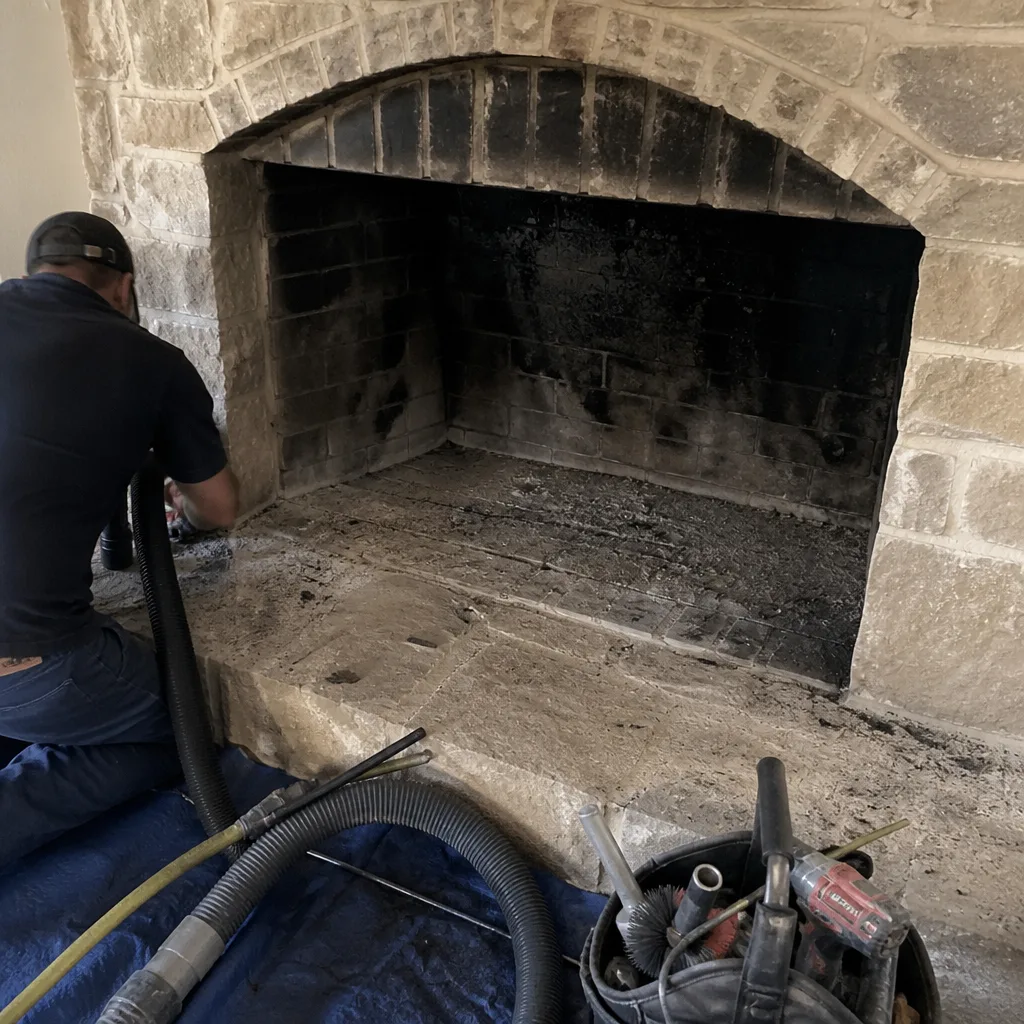 Before
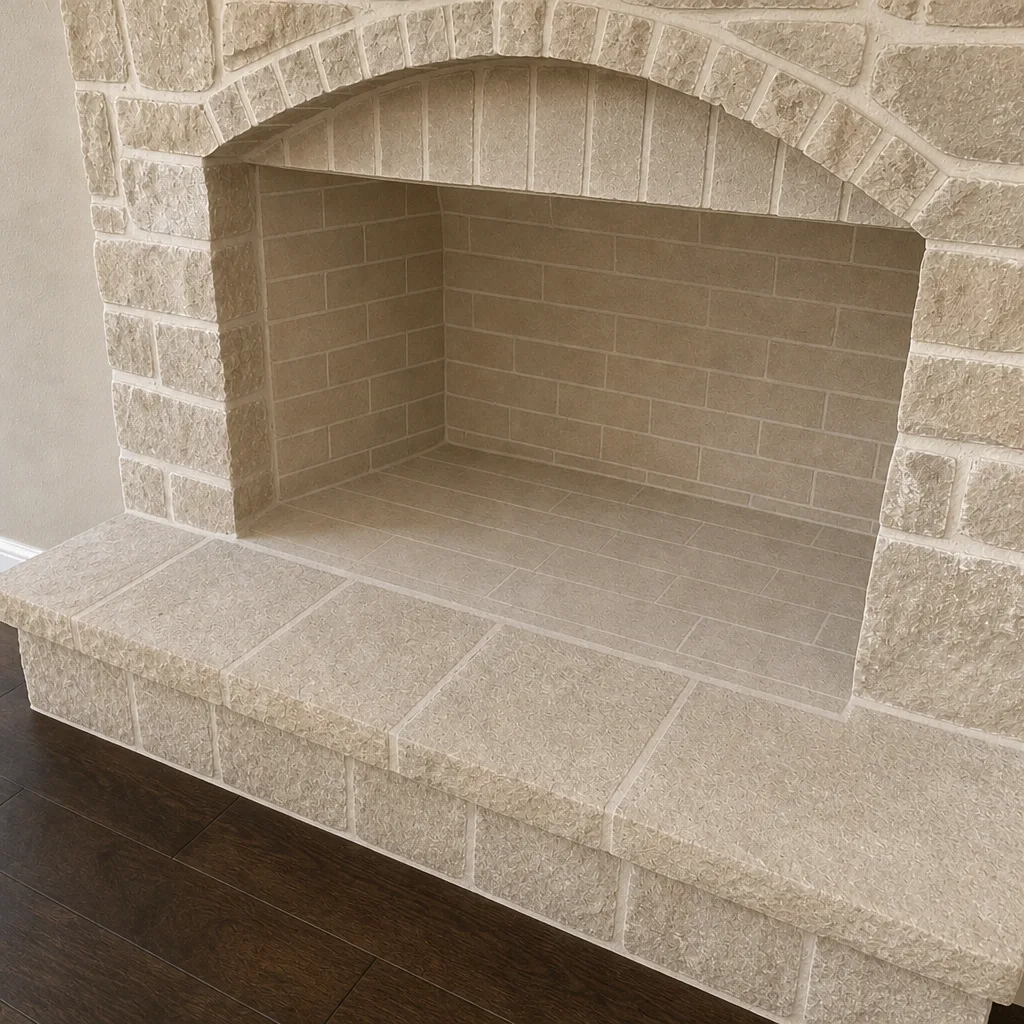 After
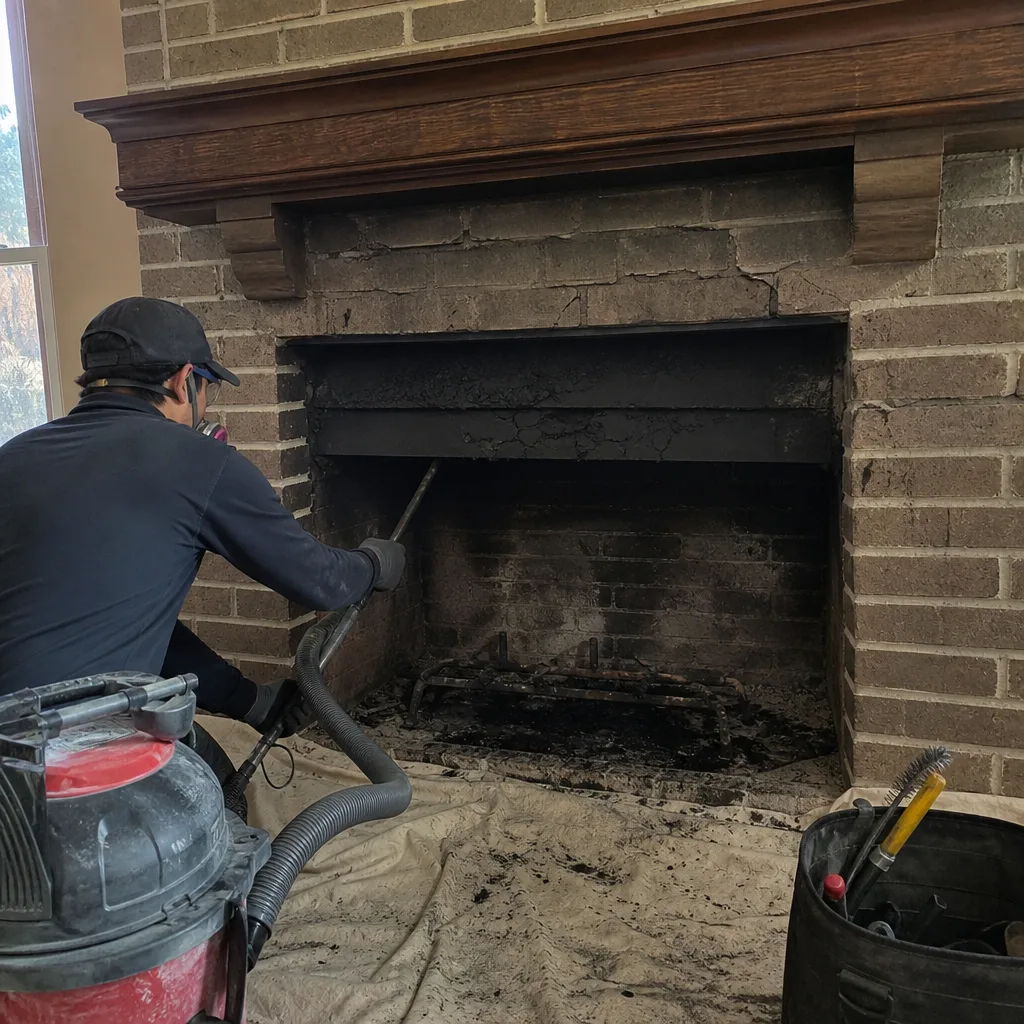 Before
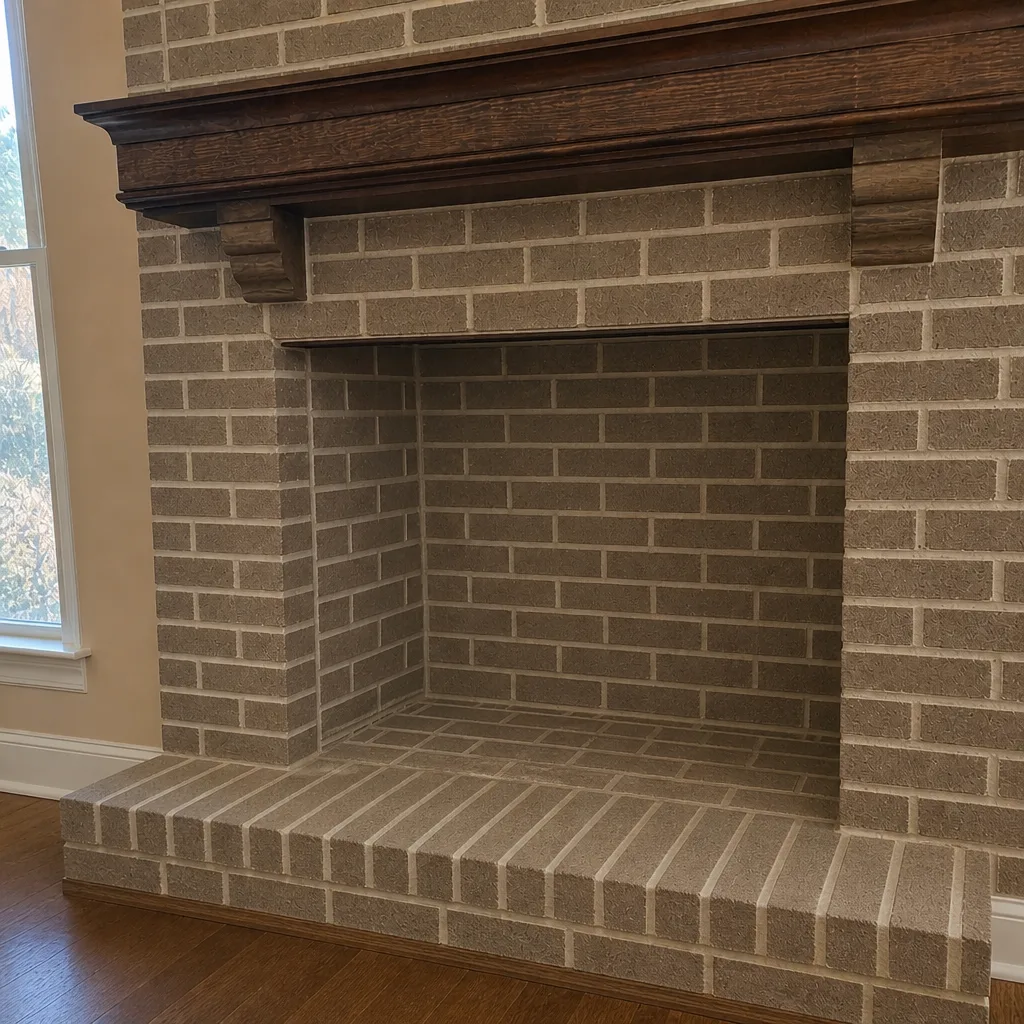 After
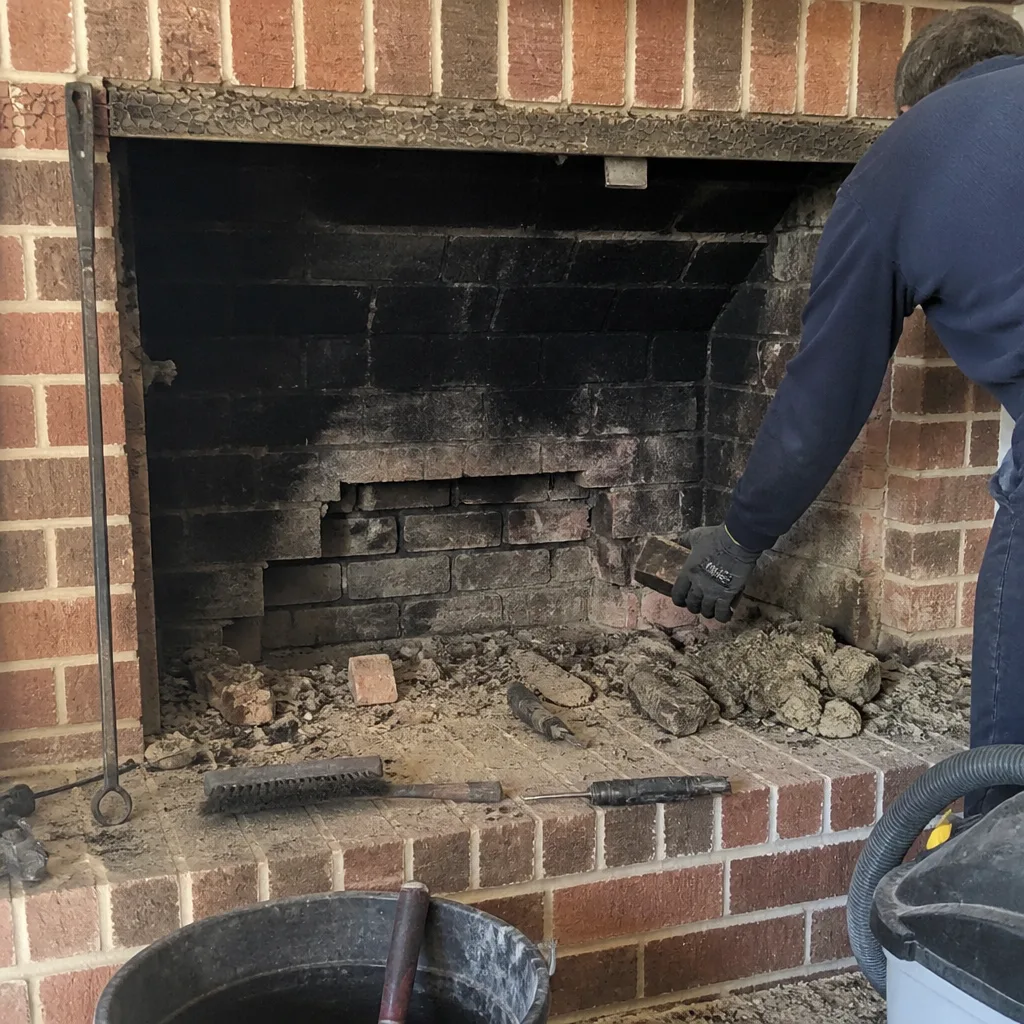 Before
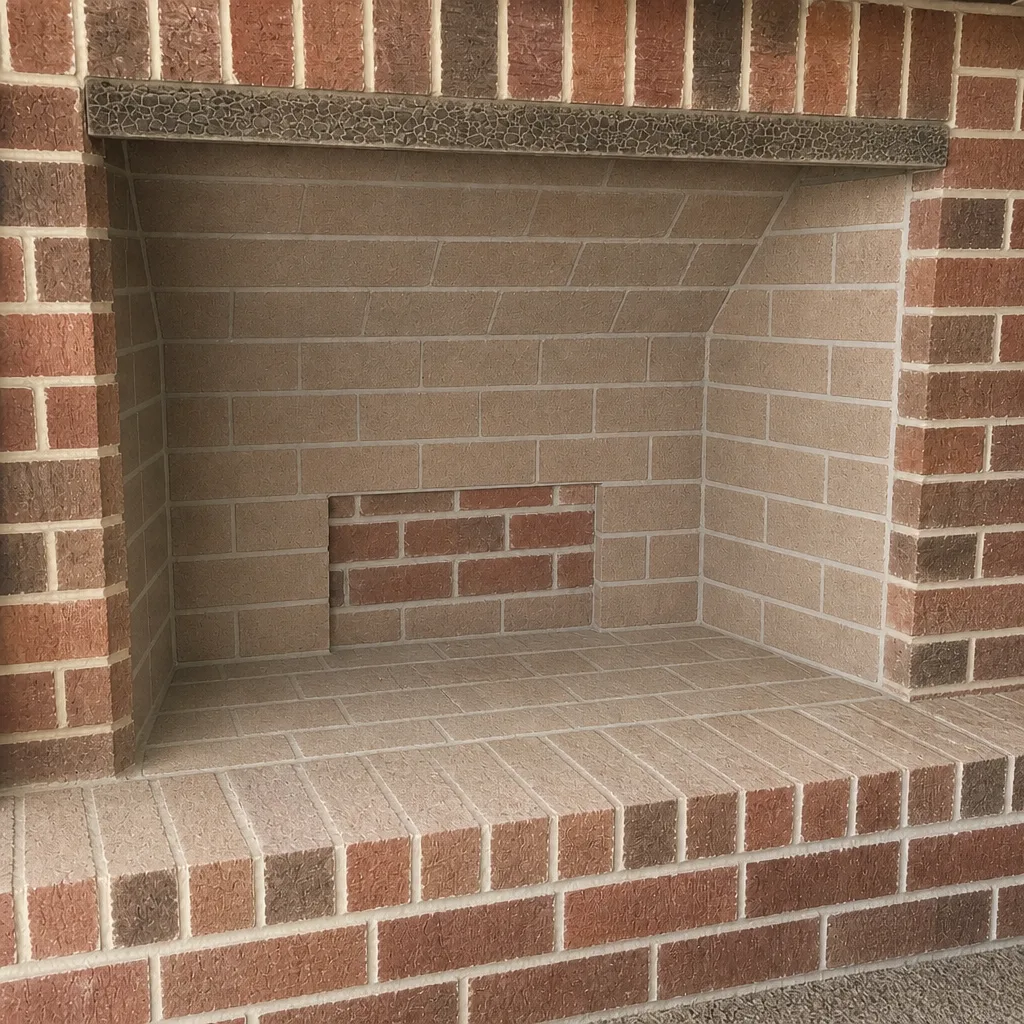 After
When to Call a Professional
Call a professional if you’ve had any of the fire signs in this guide, if your CO alarm has ever gone off, if the chimney cap is damaged or missing, or if you can’t remember the last time the flue was swept. Call if you’re in an Irving home with an older masonry chimney and you haven’t had it inspected. Call if you have a gas insert, gas logs, or a gas furnace flue and you’ve never had the draft checked. Call if you’re seeing smoke in the house when the fireplace is lit, or if the flue smells like a campfire when nothing is burning. If you’re unsure, a pre-season sweep and inspection is a low-cost way to find out what you’re dealing with. Irving Chimney Cleaning offers free estimates in Irving, and our inspection report is documented so you can see the condition of the flue yourself. Call (855) 955-5057.
Frequently Asked Questions
A chimney sweep in Irving is priced per job by a written estimate, and the estimate is free. The price depends on the flue condition, the chimney height, the number of flues, and whether the inspection turns up creosote that needs a chemical treatment. The written estimate sets the final price before any work begins, and there’s no surprise number after the fact. Call (855) 955-5057 for an exact quote. Estimates are free.
Not always, but you need an inspection to know. A fire that burned a small amount of creosote in a flue that’s still intact may need cleaning and a resurfacing with HeatShield rather than a full reline. A cracked clay flue or a separated stainless joint does need a reline, and DuraFlex is the kind of system we’d recommend for that. The inspection camera is what tells you which one you’re looking at. Don’t accept a liner recommendation without seeing the footage. Call (855) 955-5057 for an inspection with a photo report.
At least once a year, and often at the start of burn season if you burn wood regularly. If you’re burning unseasoned wood, burning often in a mild winter, or have a gas insert, the right interval may be shorter. The right rule is “clean when the buildup reaches a certain thickness,” and the inspection measures that directly. A pre-season sweep is the routine answer in Irving. Call (855) 955-5057 to book a sweep and inspection before the season.
Creosote builds up, and a fire in the flue can start at a much lower temperature than you’d expect. That’s a chimney fire, and it can spread into the framing around the chimney without ever showing visible flame at the top. In a gas-chimney setup, a blocked flue can push carbon monoxide into the house. Both are preventable with a sweep, and both are what this guide is about. Call (855) 955-5057 if it’s been more than a year.
No. A chimney fire usually has an acrid, chemical, or “hot metal” smell, not the smell of burning oak or pecan. If the smell is sharp or the flue is clicking and the firebox seam is smoking, treat it as a fire in progress and call 911. The fire department determines whether the structure is involved; we handle the inspection and repair after. Call (855) 955-5057 for the post-fire inspection and a documented report.
No. Even a small chimney fire can crack a flue liner or warp a damper, and a second fire pushes heat and CO through the damage. The inspection sequence is damage assessment, camera inspection of the flue, and a check of the firebox and cap. It’s a short visit and it protects the house. Call (855) 955-5057 to schedule it before you relight.
Yes. We handle sweeping, repair, and inspection as three integrated services, so the company that sweeps the chimney is also the one that inspects it and, if something needs fixing, does the repair. That matters after a fire because the assessment, the estimate, and the repair work stay with one team. Call (855) 955-5057 for a free estimate on any recommended repair.
The Bottom Line
Chimney emergencies in Irving rarely appear out of nowhere. They start with glazed creosote, a cracked liner, a blocked flue, or a cap that let water into the masonry, and they end with a fire, a CO event, or a costly repair, only when those conditions were left alone through a season. The 48 hours before an emergency is where a homeowner has the most power. A pre-season sweep and inspection is the way to use it. The 48 hours after is where the inspection sequence matters, because a fire you survived isn’t the end of the risk. If you’ve had any of the fire signs in this guide, or if you’re not sure what condition your flue is in, call us. We’ll tell you what the inspection shows, and we’ll tell you when something can safely wait.
If you’re looking for Irving Chimney Cleaning or need a chimney repair assessment after a fire, we handle both. Our chimney sweep and inspection services run through burn season, and our Double Oak page covers the nearby service area. We work with professional-grade materials like DuraFlex, HeatShield, and Olympia Chimney, and we specialize in chimneys, which is what lets us diagnose a problem properly instead of cleaning around it. Call (855) 955-5057 for a free estimate. We answer 24/7, with fast dispatch from 7am to 7pm, Sunday through Friday.
Written by the team at Irving Chimney Cleaning.