
Last updated November 16, 2026
 Sweep & inspection
 Caps & crowns
 Flue relining
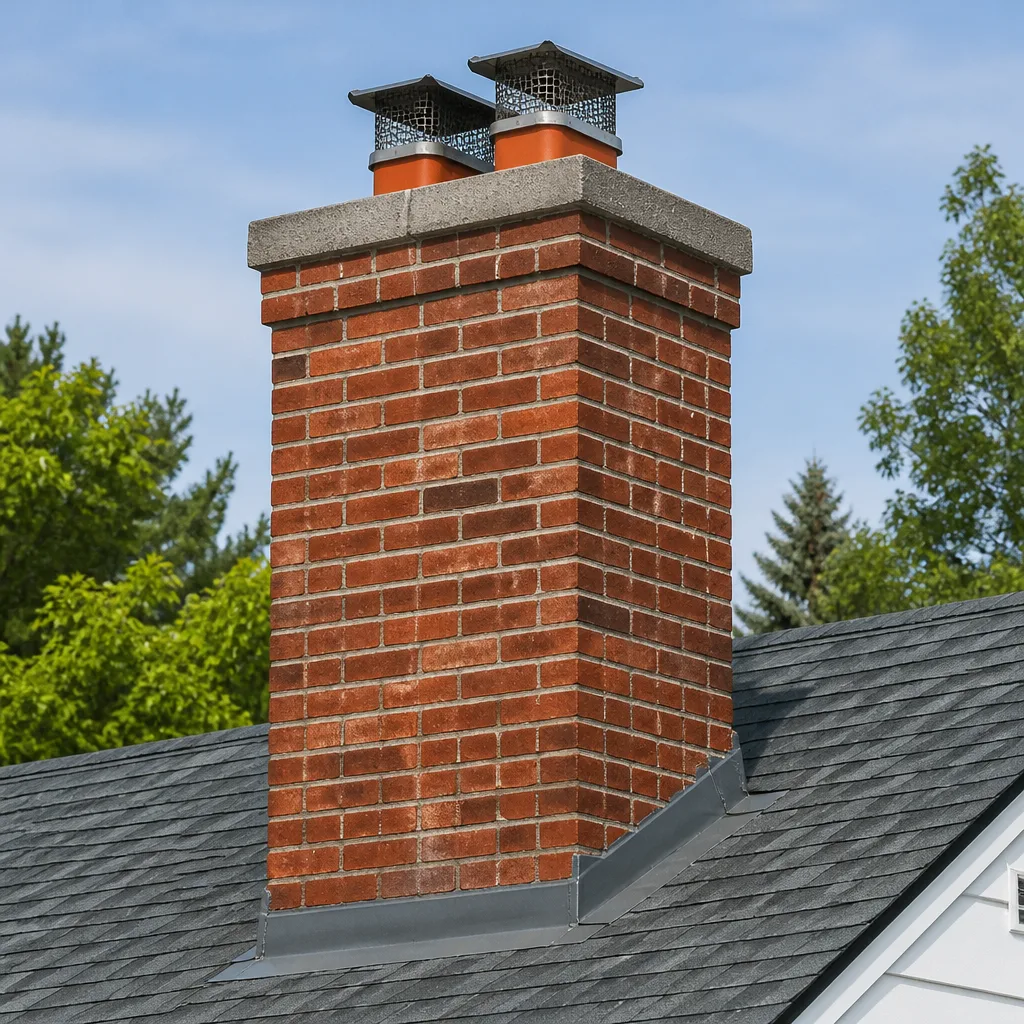 Masonry repair
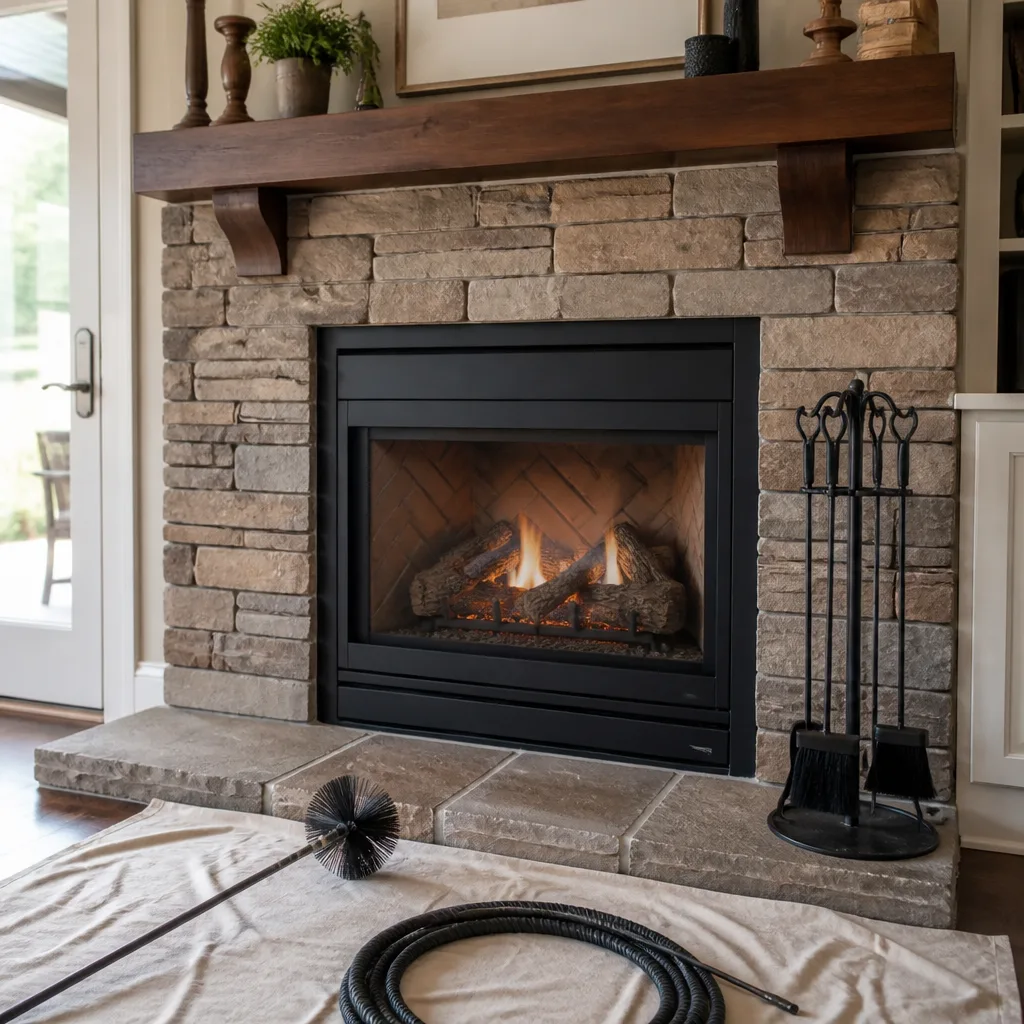 Gas fireplace service
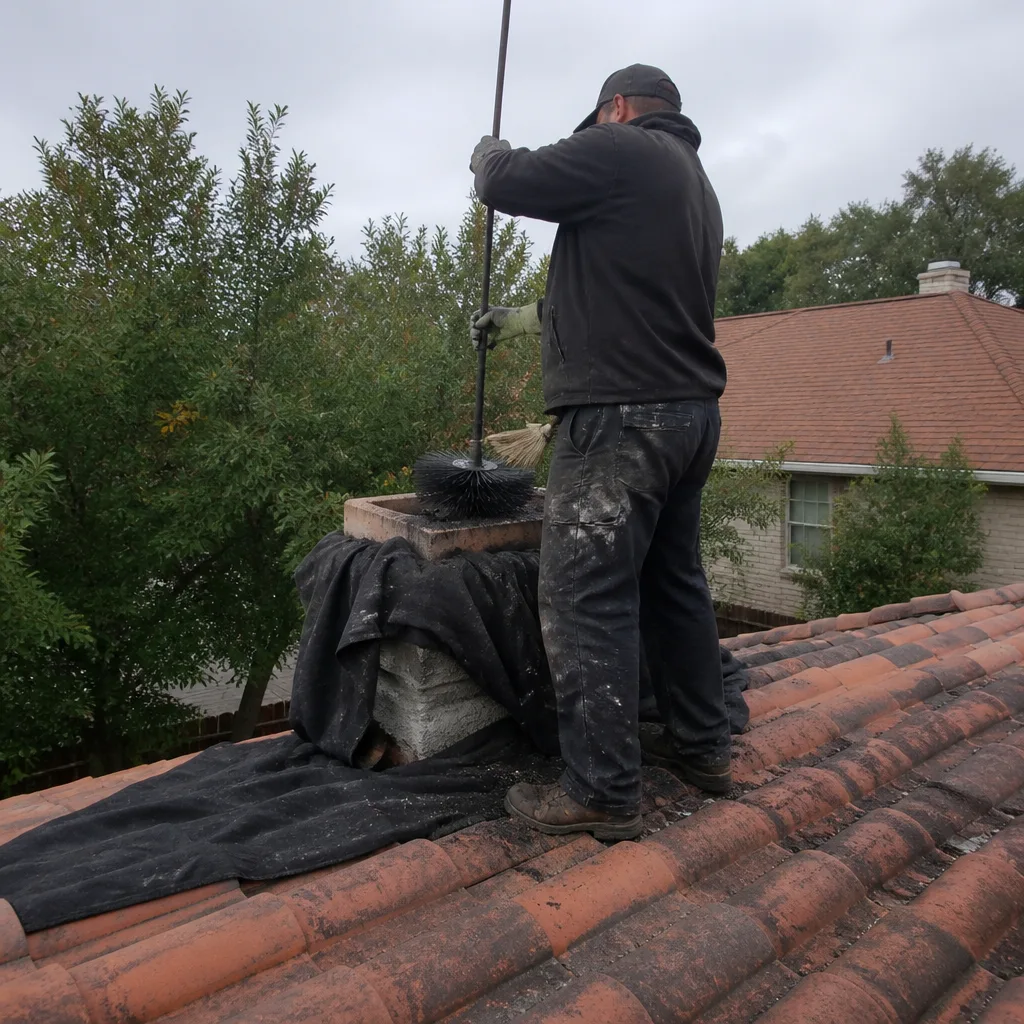
Level 1 sweep and inspection to the NFPA 211 annual standard - flue, crown, cap, and flashing checked and photographed
Chimney sweep logs do not sweep chimneys. They loosen some creosote - which then falls where a brush and vacuum still have to collect it.
Chimney Sweep Maintenance Checklist for Irving Homeowners
The chimney cap you forgot to check last spring is the single most common reason Irving homeowners pay for a liner repair they could have avoided for under $80. That’s the counterintuitive part of chimney care: the expensive failures rarely start inside the flue. Water gets in at the top, rusts the damper, spalls the mortar crown, and soaks the refractory mortar behind the firebox brick. By the time you notice a smell in July, the damage has been progressing for months. This checklist is built around what actually goes wrong in Irving’s housing stock and climate, not what looks tidy on a printed handout. You’ll learn the visual checks you can do safely without a ladder, the month-by-month tasks calibrated to North Texas seasons, and how to document your chimney’s history so a technician knows exactly where to look.
Quick Answer
A chimney maintenance checklist for an Irving home should cover four things: an annual professional sweep and inspection before burning season, a monthly visual check from ground level and inside the firebox, a summer moisture watch (caps, crowns, flashing, and staining), and a written log of odors, draft changes, and smoke behavior. Wood-burning fireplaces usually need a sweep once a year or after roughly a cord of wood, gas log sets need an annual inspection even though they produce little creosote, and any masonry chimney older than about 30 years should get a documented level of inspection rather than a quick brush-and-go.
Styles & brands we work with
- Sweep & inspection
- Caps & crowns
- Flue relining
- Masonry repair
- Gas fireplace service
Table of Contents
- Why Irving Chimneys Fail Differently
- The Month-by-Month Breakdown
- What You Can Safely Check Yourself
- Wood, Gas, and Insert Systems: Different Failure Points
- What to Document Between Professional Visits
- Building Your Maintenance Log
- When a Sweep Becomes an Inspection
- Common Mistakes to Avoid
- When to Call a Professional
- Frequently Asked Questions
Why Irving Chimneys Fail Differently
Irving sits in a climate that’s mild on average but hard on masonry in specific ways. Winters are short enough that many homeowners skip the annual sweep because they only burned a few fires. That’s the trap. The summer is the aggressive season for a chimney, not the winter. Months of heat, humidity, and afternoon thunderstorms work on the exterior of the chimney while the fireplace sits idle, and any crack in the crown or gap at the flashing lets water track down the flue. By October, the mortar joints behind the firebox brick have been quietly soaking.
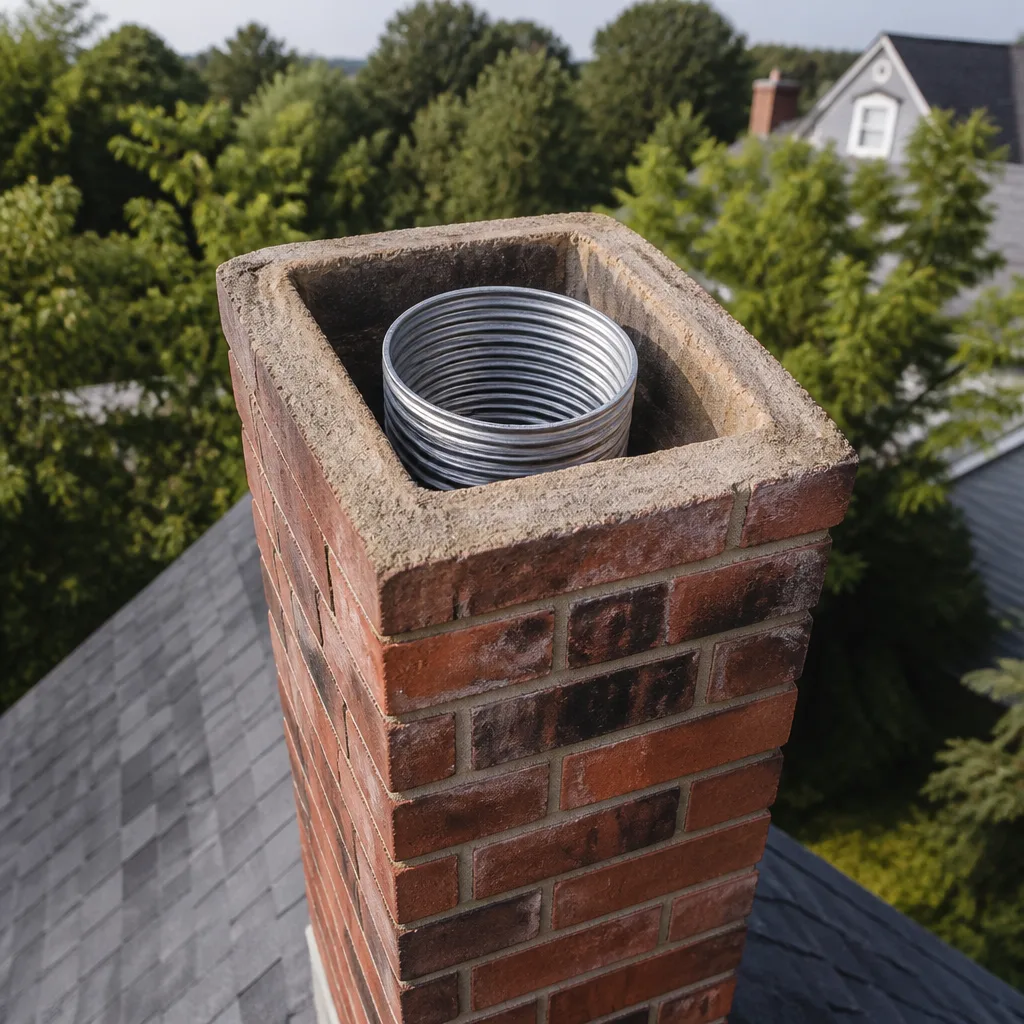
The housing stock matters too. Much of Irving was built in the 1960s through the 1980s, and the masonry chimneys from that era are now at the age where original mortar, clay tile liners, and dampers are showing their first serious wear. Repair choices get more expensive the longer they wait, but the fix is usually straightforward when it’s caught early. A deteriorated clay tile liner can often be resurfaced with a HeatShield system instead of fully relined. Once the flue gasses have been escaping through cracked tiles into the surrounding masonry for several winters, the repair is a full reline with a DuraFlex stainless liner, and the cost and scope change entirely.
The neighborhood geography adds one more variable. Homes in the older parts of Irving near the downtown Heritage District and along the corridors around the old Texas Stadium site often have original chimney construction that was never upgraded. Homes out toward Las Colinas and Valley Ranch are newer and frequently gas-first, so the failure modes there are different: venting, condensation, and failed cap gaskets more than creosote buildup. Either way, the checklist is the same diagnostic routine, tuned to what’s actually in the house.
If you want the technical foundation under this checklist, the Irving Chimney Cleaning team writes about it there, and everything below assumes that grounding.
The Month-by-Month Breakdown
Chimney maintenance in Irving is not a single annual event. It’s a rhythm tied to the burning season (roughly November through February) and the moisture season (April through September) that most homeowners ignore. Here’s what we recommend, month by month.
January and February
- Keep a rough count of fires and cords of wood burned. You’ll need it for the spring inspection.
- Watch for smoke rollback into the room on cold starts, which suggests a draft problem, a partially blocked flue, or a cold flue that needs a preheat.
- Listen for a low roar, popping, or a rumbling draw. That’s a sign of a flue fire, and it means stop using the fireplace until a professional inspects it.
March and April
- Schedule the annual sweep and inspection after the last burn of the season, not in October when the calendar fills up.
- Do a ground-level exterior walkaround: cap, crown, flashing, masonry joints, visible staining. Note anything you want the technician to look at.
- Move firewood off the chimney base. Stacked wood holds moisture against the masonry.
May and June
- Check inside the firebox for staining, efflorescence (the white powdery salt-like crust on masonry), and any crumbling mortar behind the brick.
- Look at the damper. It should open and close smoothly. A rusty or stuck damper usually means moisture is getting in from above.
- This is the window to do repairs. Masonry work and relining jobs done in late spring have the whole summer to cure before burning season.
July and August
- Watch for chimney odors, especially on humid days. That smell is often the creosote in the flue reacting to moisture, or the first sign of a draft problem.
- Check the chimney chase exterior for hairline cracks in the crown. A crown that has cracked is the most common entry point for water.
- Inspect your chimney cap. A missing or damaged cap is the single cheapest problem to fix and the most expensive to ignore.
September and October
- Do a full pre-burning-season walkthrough using the checklist in the next section.
- Have a professional sweep and inspection if you didn’t do it in spring. Do not skip it because you “barely burned last year.”
- Test the smoke detector and carbon monoxide detector on every level of the house before the first fire.
November and December
- Burn dry seasoned wood only. Wet wood produces more creosote and more smoke rollback.
- Start a fire with a small, hot kindling load to warm the flue before adding larger logs. This reduces the smoke spill common in older Irving masonry chimneys on cold mornings.
- Note in your log how the fire behaved. That’s the data a technician will use for the spring inspection.
What You Can Safely Check Yourself
The annual sweep and the formal inspection belong to a professional, full stop. But plenty of the diagnostic work in between is safe to do from the ground and from inside the firebox without a ladder or tools. These checks won’t replace a camera inspection. They will tell you what to flag.
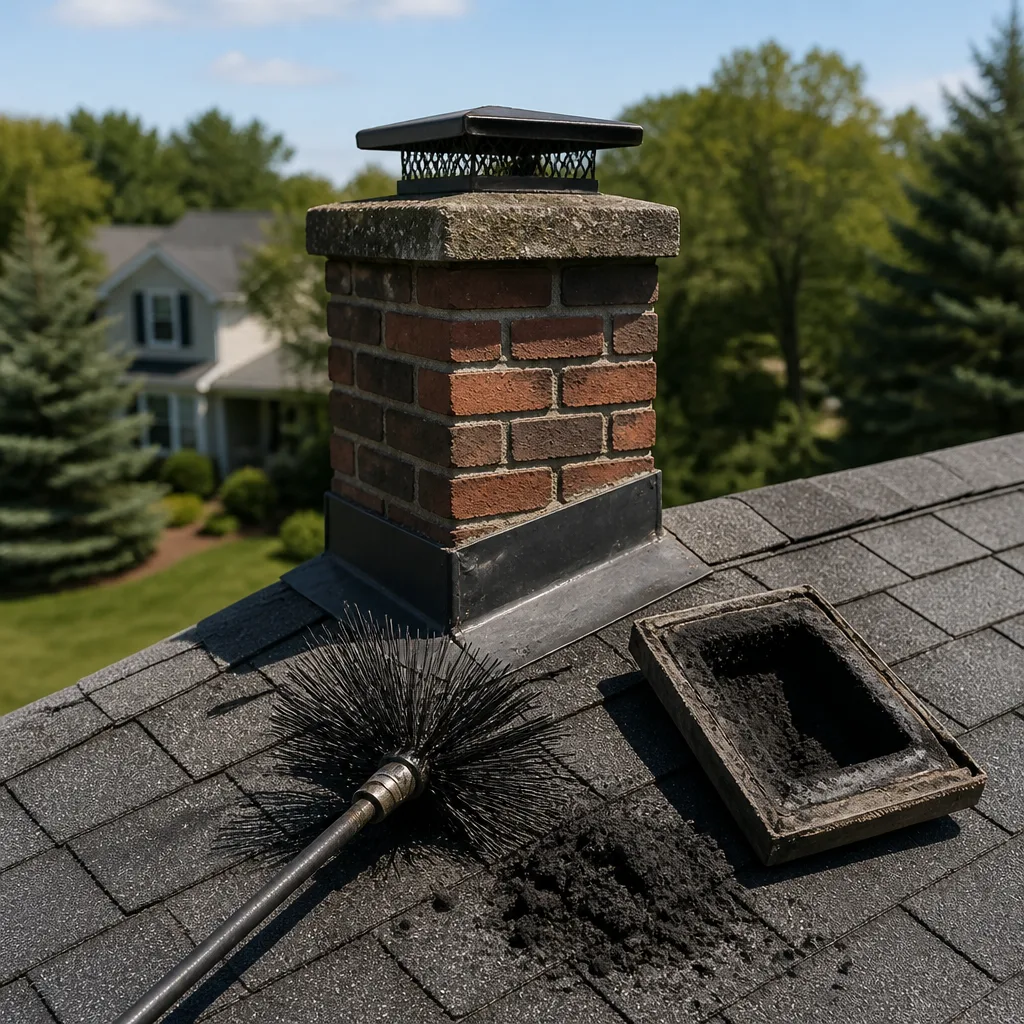
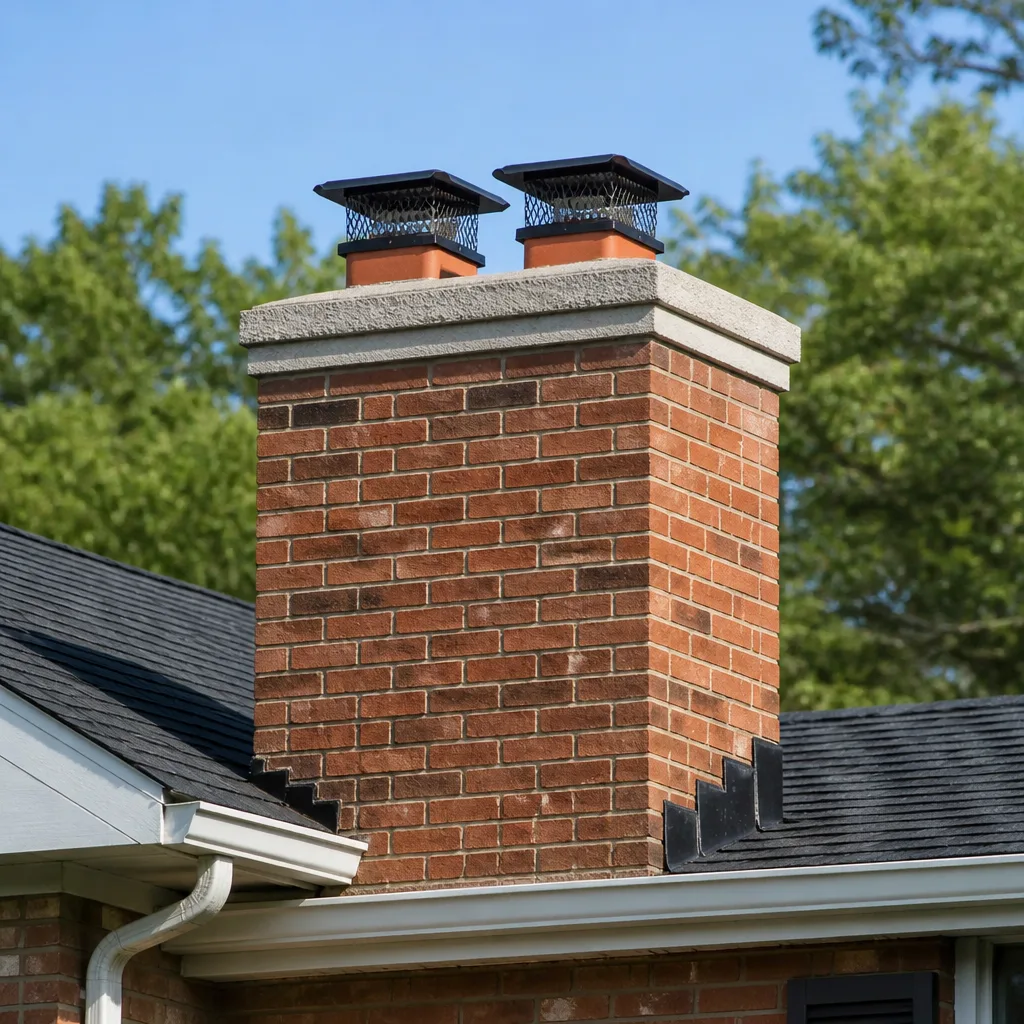
- From ground level, look at the chimney cap. It should sit snugly on top with no gaps. A missing cap, a cap with rusted or bent edges, or a cap that has shifted off square all mean water or wildlife can enter.
- Look at the crown. The concrete slab at the very top of the chimney should slope away from the flue and show no cracks. Cracked crowns let water soak directly into the masonry.
- Look at the flashing where the chimney meets the roof. The metal edging should be tight against the chimney and the shingles, with no lifting or gaps. This is a roofer’s territory for repairs, but flag it now and it saves trouble later.
- Look for white staining on the exterior masonry. Efflorescence, the powdery white crust, means moisture is moving through the brick. It’s not dangerous on its own, but it’s a signal.
- Inside the firebox, look for cracked or crumbling mortar behind the brick. The firebrick lining should be intact. Any mortar joint that’s soft or has fallen out is a sign the firebox needs professional attention.
- Look at the damper. Open and close it fully. If it sticks, is rusted, or the metal plate is warped, note it.
- Look up the flue with a flashlight. You should see an even, unbroken liner surface with no obvious cracks or offset tiles. You won’t see what a camera sees, but you’ll catch an obvious problem.
- Smell the fireplace when it’s not in use. A persistent smoky or musty odor means creosote, moisture, or both.
None of these checks requires getting on the roof. Don’t. Roofs are steep, chimneys are exposed, and the value of a homeowner on a ladder is dwarfed by the risk. Anything you can’t see from the ground or the firebox floor belongs to a technician with the right equipment.
Wood, Gas, and Insert Systems: Different Failure Points
One of the mistakes we see in Irving is a maintenance checklist written as if every chimney is the same. It isn’t. A wood-burning fireplace, a gas log set, and a wood insert fail in fundamentally different ways, and the checklist should account for that.
Wood-Burning Fireplaces
The failure mode here is creosote. Every fire deposits some, and the rate depends on wood moisture, draft quality, and how hot you burn. The professional sweep removes it before it reaches the glazed, tar-like stage that feeds a chimney fire. Your checklist items: yearly sweep, count your burns, watch for smoke rollback, and watch the firebox mortar. A masonry chimney that’s been burning wood for a long time may also need a liner assessment, and a deteriorated clay flue is often the reason for a DuraFlex reline.
Gas Log Sets and Gas Inserts
Gas produces almost no creosote, so a common and costly mistake is to skip the annual inspection. Gas logs still need inspection because the failure points are different: the venting, the cap, the firebox gas connections, and condensation. Gas burns create water vapor as a byproduct. In a poorly vented or cold flue, that moisture condenses and corrodes the damper and the metal of the venting system. Your checklist items: check for a sulfur or rotten-egg smell (that’s a gas leak, call your utility immediately), watch for condensation or corrosion at the top of the firebox, and keep the annual inspection on the calendar even if you barely use the set. Chimney caps for gas systems also matter, and we work with product lines like Gelco caps and venting components for exactly this reason.
Wood Inserts
A wood insert is a more efficient wood burner, which means it produces creosote at least as fast as an open fireplace, often faster if the installer didn’t properly line the flue. An insert without a full-height stainless liner is a serious problem in older Irving houses. The heat and creosote go straight into the bare masonry, which was never designed for the concentrated output. Your checklist items: confirm the insert has a full-height liner, sweep annually, and watch for a liner that has come loose at the top. A partial liner is often the first thing a technician should verify, and it’s the reason we recommend a documented inspection before you trust an insert installation you didn’t personally oversee.
What to Document Between Professional Visits
The most underused tool in home chimney care is a simple written log. When you write down what you notice, a technician walks into the job knowing what to look for instead of starting from zero. That shortens the inspection, sharpens the diagnosis, and in our experience catches early problems before they become repair jobs.
Note these four categories, and date every entry:
- Odors. When did you first notice it, is it worse on humid days or when the house is closed up, and does it smell like creosote (a smoky, tarry smell) or like damp masonry?
- Smoke rollback. Does the fire smoke into the room on cold starts, or during certain weather? Note the outside temperature, wind direction, and whether the damper was fully open.
- Draft changes. A flue that used to draw well and now doesn’t is telling you something. Sometimes it’s weather. Sometimes it’s a partial blockage from a bird nest, a fallen tile, or creosote buildup.
- Staining patterns. Where is the staining, when did it appear, and did it grow over the season? Staining on the exterior at the roofline suggests a crown or flashing problem. Interior staining above the firebox suggests moisture in the chimney.
The log also matters for a second reason: it gives you a clear picture before issues escalate. An inspection that’s supported by months of notes will always be more accurate than one done blind.
Building Your Maintenance Log
A maintenance log doesn’t need to be elaborate. A notebook is fine. A shared note on your phone is fine. What matters is that you keep the same record over time, because the value comes from the comparison across seasons and years. Here’s a simple structure that covers what a chimney technician will actually want.
- Property details at the top of the log. Chimney type (masonry or prefab), liner type if known, fireplace type (wood-burning, gas logs, insert), and rough build era of the house. Irving homes built mid-century and earlier often have original construction worth noting.
- Annual sweep and inspection record. Date, who performed it, level of inspection, findings, and any recommended repairs. Keep any written report and photo set attached.
- Repair history. Date, what was repaired, materials used (note if a DuraFlex liner was installed or a HeatShield resurfacing was applied, for example, because that tells future inspectors what they’re looking at), and who did the work.
- Seasonal observations. The four categories above (odors, smoke rollback, draft changes, staining), dated.
- Burning season summary. Roughly how many fires, how many cords of wood, where the wood came from, and how dry it was.
- Weather notes where relevant. “Rollback on cold morning below 40 degrees” is a useful data point, not a diary entry.
Hand that log to a technician and the inspection becomes significantly faster. It’s also a document you can hand to a home inspector, a buyer, or your insurer if you ever need to demonstrate that the chimney has been maintained. For Irving homeowners, that record is often worth more at resale than the equipment it documents.
When a Sweep Becomes an Inspection
A sweep and an inspection are not the same thing, and this is where a lot of Irving homeowners get surprised. A sweep removes creosote and soot. An inspection evaluates the condition of the chimney system: the firebox, the damper, the smoke chamber, the flue, the liner, the cap, the crown, the flashing. You can sweep a chimney and never know the liner is cracked. You can inspect a chimney and find that everything is fine and there’s no creosote to remove.
The industry recognizes three levels of chimney inspection. The names vary, but the substance is consistent:
- Level 1: A visual inspection of readily accessible portions, done during a standard sweep or annual visit. Appropriate when nothing has changed in the system.
- Level 2: A more thorough inspection, typically with video camera equipment to see the full length of the flue. Appropriate when there’s a change in the system: a new appliance, a new liner, a property transfer, or evidence of a problem.
- Level 3: A targeted investigation that may involve opening up parts of the chimney or structure to access a specific concern. Reserved for the cases a Level 1 and Level 2 can’t resolve.
The reason this matters in Irving is the age of the housing stock. A Level 1 visual inspection on a 1960s masonry chimney in an older neighborhood can miss a cracked clay tile that only a camera sees. If you’re buying a home with an older masonry chimney, or if you’ve had an insert installed, or if there’s any question about the liner, ask for a Level 2 inspection with a camera and a photo report. That documentation is the difference between “it looks fine” and “we know it’s fine.”
Common Mistakes to Avoid
- Skipping the sweep because you “only burned a few fires.” Creosote accumulates slowly, and a partially blocked flue doesn’t announce itself. A yearly professional sweep is the baseline even in a light-burning year.
- Assuming a gas log set doesn’t need an inspection. Gas is cleaner to burn but harder on the venting system through condensation, and the firebox and connections still need checking. It’s the most common assumption we correct in Irving homes.
- Ignoring a chimney cap. A missing or damaged cap is the cheapest chimney repair and the most frequent cause of water damage inside a flue. Fix the cap and you’ve prevented the most expensive repair.
- Waiting until October to schedule the annual visit. In Irving, fall is the busy season and repair work done in fall is rushed against the first cold snap. Move the visit to spring and give the chimney a full summer to cure if repairs are needed.
- Burning wet or unseasoned firewood. Wet wood creates more creosote and more smoke, and it’s the most common avoidable cause of a smoky fire in a masonry fireplace. Season your wood through the summer.
- Painting over efflorescence on the exterior masonry. The white staining is a symptom, not a cosmetic issue. Painting traps moisture in the masonry and accelerates the damage.
- Not keeping a log. An undocumented chimney is a chimney that gets re-diagnosed every visit. A written record makes every future inspection faster and more accurate.
When to Call a Professional
Most of this checklist is about maintenance and diagnosis. A short, specific list of situations should always end with a call to a professional, without trying to work through them yourself.
Call us if you’ve had a chimney fire, even a small one, or if you smelled a loud roar or heard popping sounds during a burn. Call us if there’s a persistent odor from the fireplace in summer, if the fire smokes into the room on a regular basis, if the damper sticks, or if you see white staining or crumbling mortar around the firebox. Call us if you’re buying a home with a masonry chimney older than about 30 years and want a documented inspection before closing, or if you’ve had an insert or gas set installed and you’re not sure it’s properly vented. And call us for the annual sweep and inspection, which is the baseline that makes everything else easier to track.
Irving Chimney Cleaning offers free estimates in Irving. Call (855) 955-5057. We answer 24/7. Fast dispatch from 7am to 7pm, Sunday through Friday.
Frequently Asked Questions
In Irving, a wood-burning chimney should be swept once a year, ideally after the last fire of the season. If you burn heavily (more than about a cord of wood a year) or burn a lot of wet wood, a second sweep in mid-season is worth it. Gas log sets should be inspected annually even though they produce almost no creosote, because the failure points are moisture and venting, not buildup. Call (855) 955-5057 to get on the schedule – estimates are free.
Only if the inspection finds the liner is cracked, spalled, or otherwise compromised. A clay tile liner with cracks lets flue gasses escape into the surrounding masonry, and that’s when the repair matters. A deteriorated liner can often be resurfaced with a system like HeatShield rather than fully relined, and a fully deteriorated flue may need a DuraFlex stainless liner. The decision should always be based on evidence you can see in a camera inspection and photo report, not a verbal recommendation. Call (855) 955-5057 to schedule an inspection and see the findings yourself.
Creosote accumulates, and once it reaches the glazed, tar-like stage, the next hot fire can ignite it. That’s a chimney fire, which can damage the liner and, if it reaches the surrounding structure, is a house fire risk. Skipping the sweep also means water damage from a missing cap or cracked crown is never caught, and the flue slowly deteriorates. Carbon monoxide risk is the other concern for gas-burning appliances where a blocked flue sends exhaust back into the home. Call (855) 955-5057 for a free estimate and get the inspection on the calendar.
Chimney sweep pricing in Irving is set per job by a written estimate, because the cost depends on the system (wood-burning versus gas, masonry versus prefab, insert versus open fireplace) and on the condition of the flue. A standard sweep on a clean, accessible wood-burning fireplace is usually at the lower end of the range, and a sweep combined with a camera inspection costs more but produces a documented photo report of the full flue. Call (855) 955-5057 for an exact quote – estimates are free.
You can safely do the ground-level and firebox visual checks in this guide, and you should. What you can’t do safely is climb on a roof or see the full length of the flue. The camera inspection that finds cracked tile, creosote glazing, or a liner problem is a professional tool and a trained judgment. Do the homeowner checks, keep the log, and let a professional do the rest. Call (855) 955-5057 to book an inspection.
Late spring and early summer, right after the burning season ends. Scheduling in late spring means you’re not fighting the fall rush, and any repairs identified (a liner resurfacing, a cap replacement, a flash seal) get the whole summer to cure before the next fire. Summer is also when moisture damage is actively progressing, so an early inspection catches it mid-season rather than in October. Call (855) 955-5057 for a free estimate and get on the spring calendar.
The Bottom Line
A chimney maintenance routine in Irving works best when it’s tied to the actual seasons and the actual construction of the home, not to a generic yearly reminder. The key points: sweep annually and inspect with a camera when the system is older or has changed; schedule the professional visit in spring so repairs have time to cure; do the ground-level and firebox visual checks monthly; keep a written log of odors, smoke rollback, draft changes, and staining; understand that gas log sets and inserts fail differently from open wood fireplaces and need their own checks. Most of the expensive chimney repairs we see in Irving start as a small, cheap-to-fix problem: a missing cap, a cracked crown, a loose flashing. The checklist exists to catch those before the cost changes. For a professional sweep, repair, or inspection anywhere in Irving, chimney sweep service is available through the team, and chimney repair work is handled with the same diagnostic rigor. If you’re outside Irving and want the same approach, the team also works the Double Oak area.
Call (855) 955-5057 for a free estimate and to schedule a sweep or inspection. We answer 24/7. Fast dispatch from 7am to 7pm, Sunday through Friday. Estimates are free and the written estimate sets the final price, so you’ll know exactly what work is recommended and why before anything starts.
Written by the team at Irving Chimney Cleaning.
See the difference
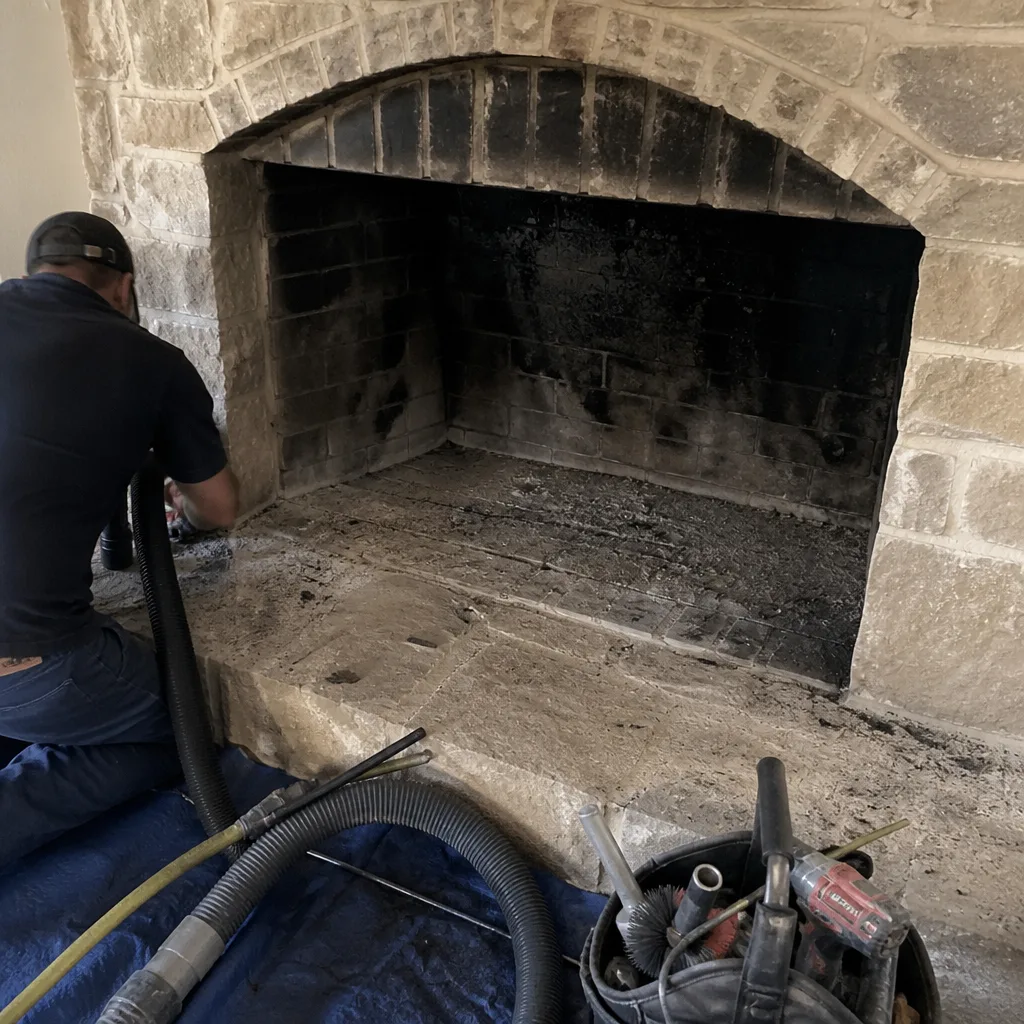 Before
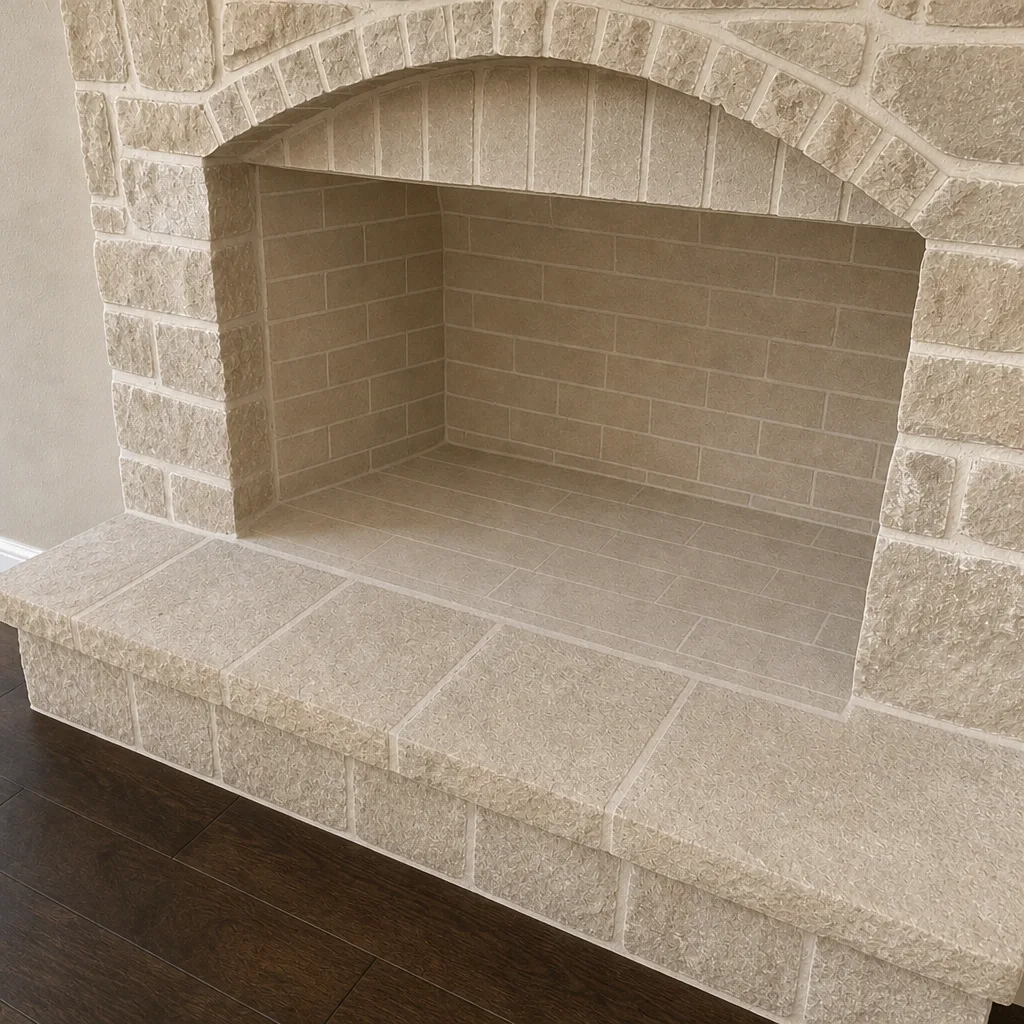 After
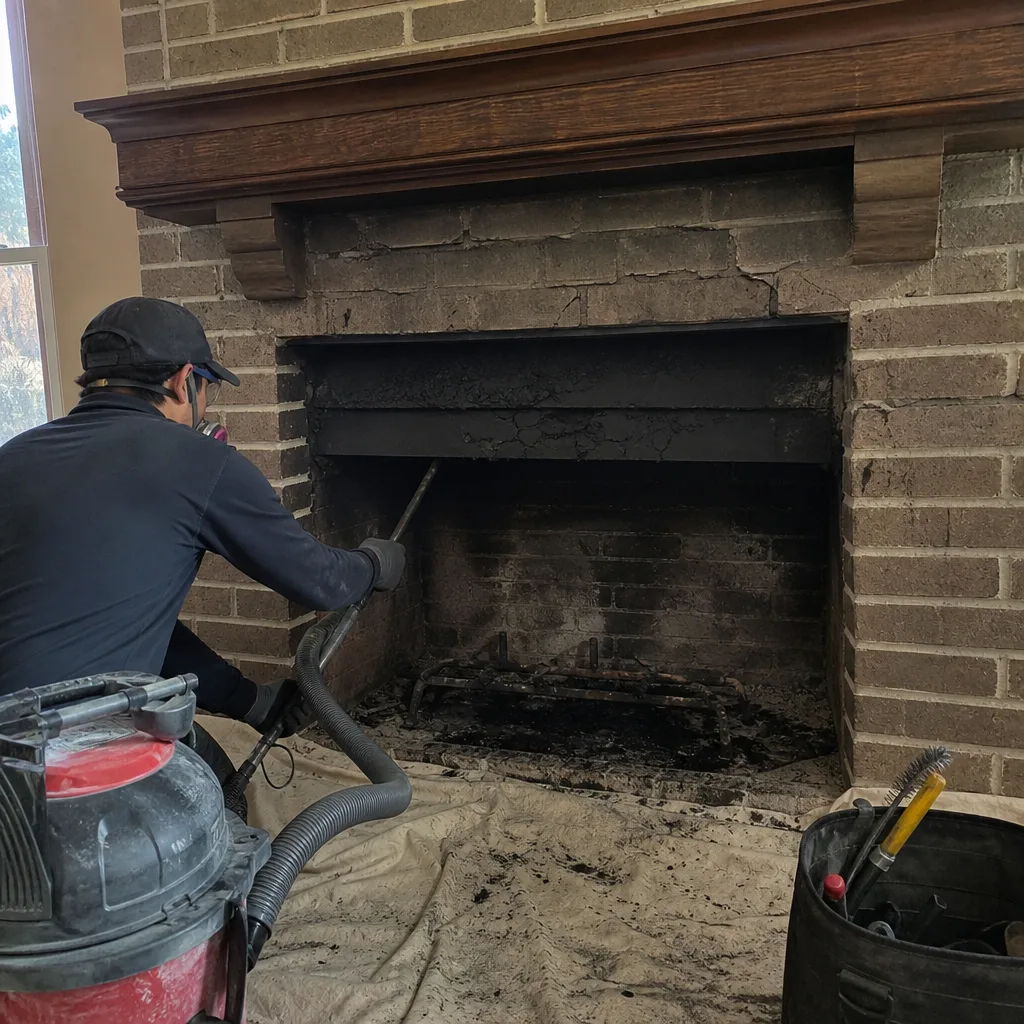 Before
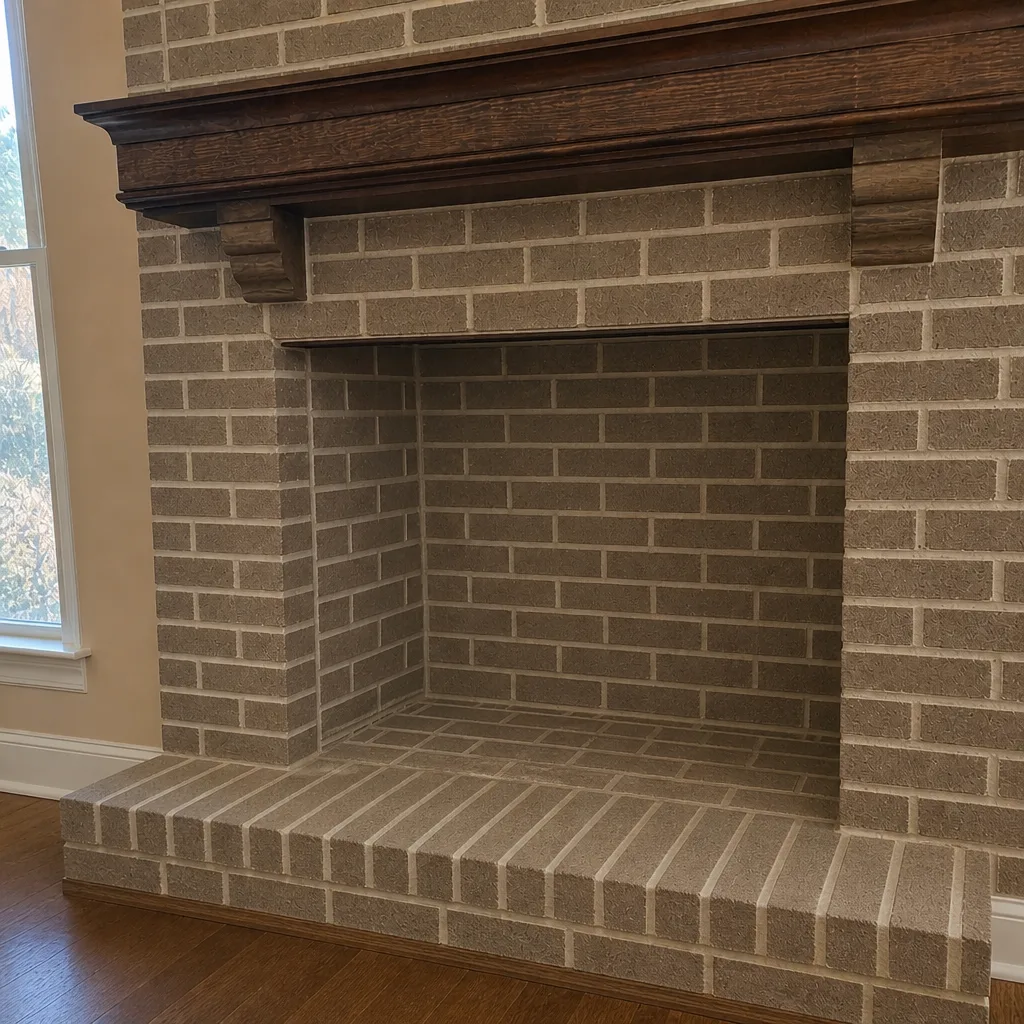 After
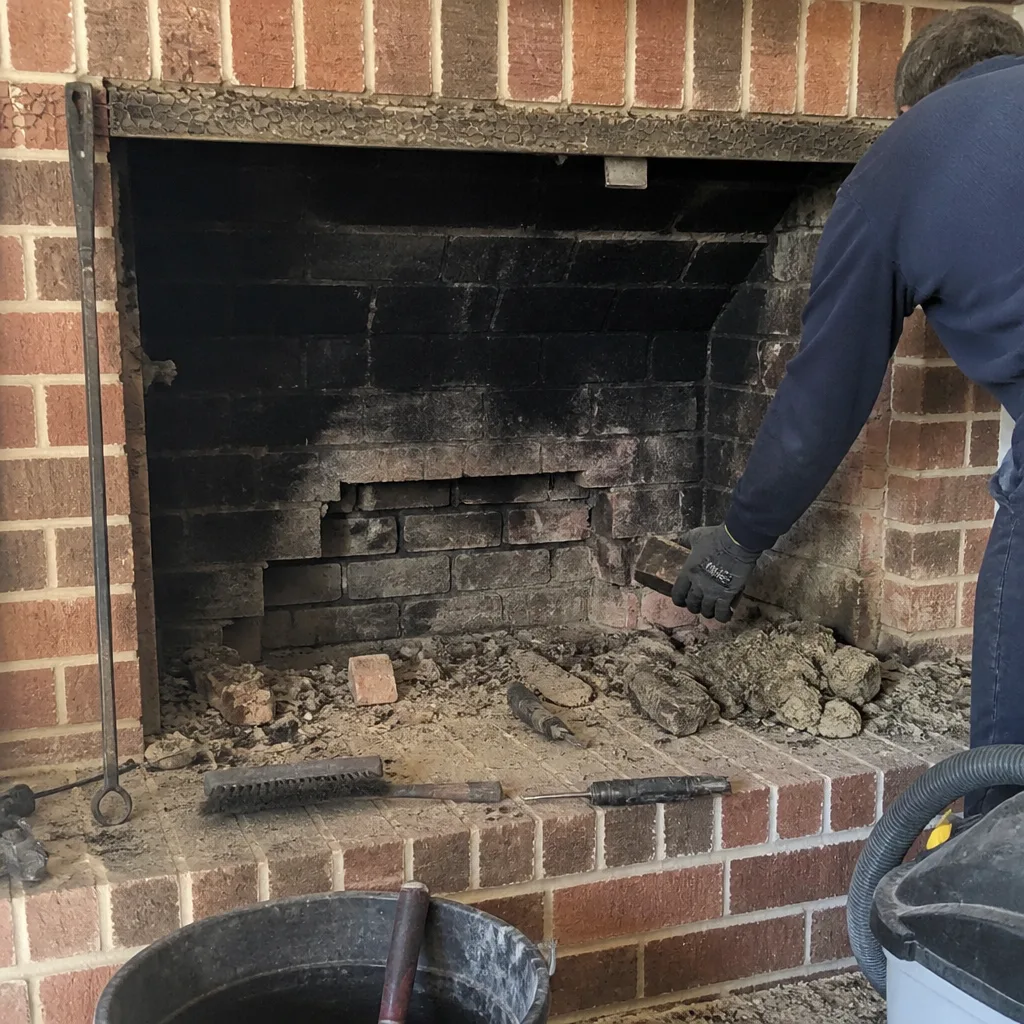 Before
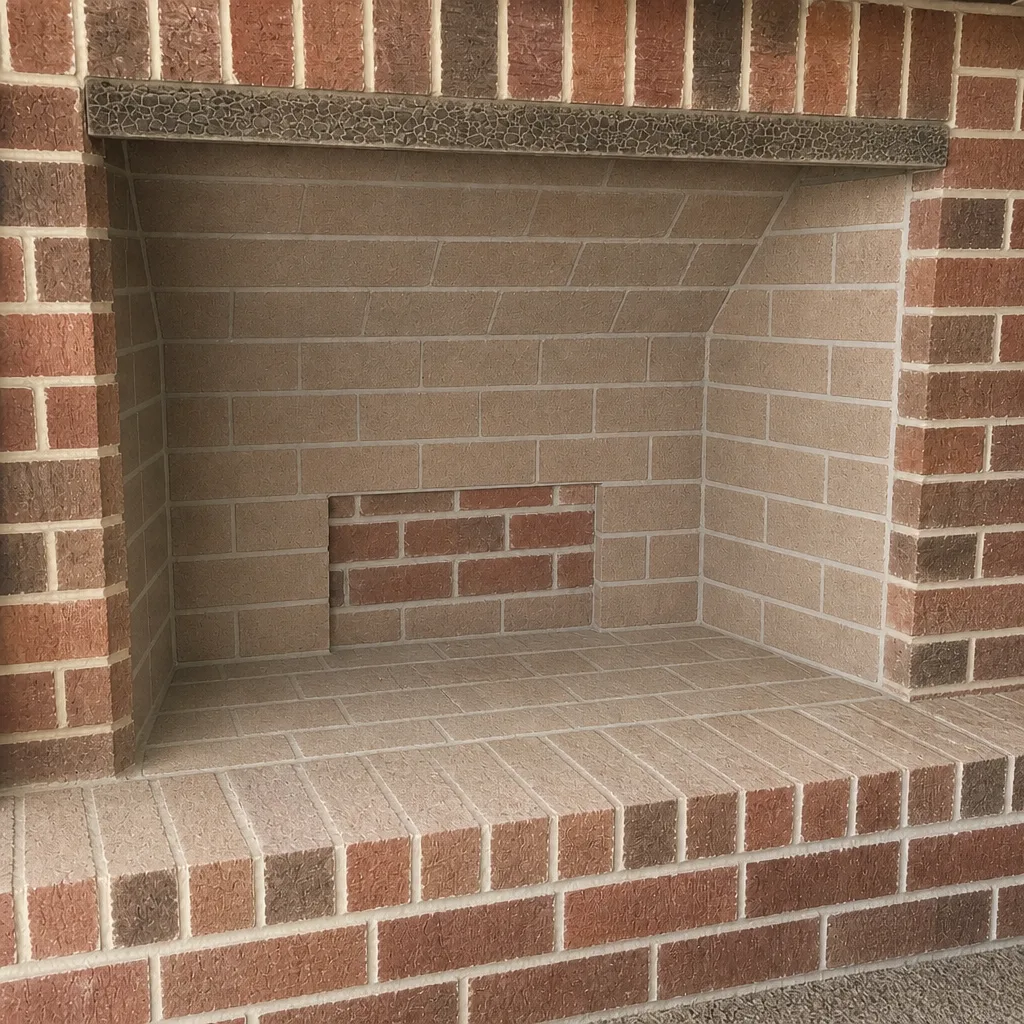 After