
Last updated November 16, 2026
 Sweep & inspection
 Caps & crowns
 Flue relining
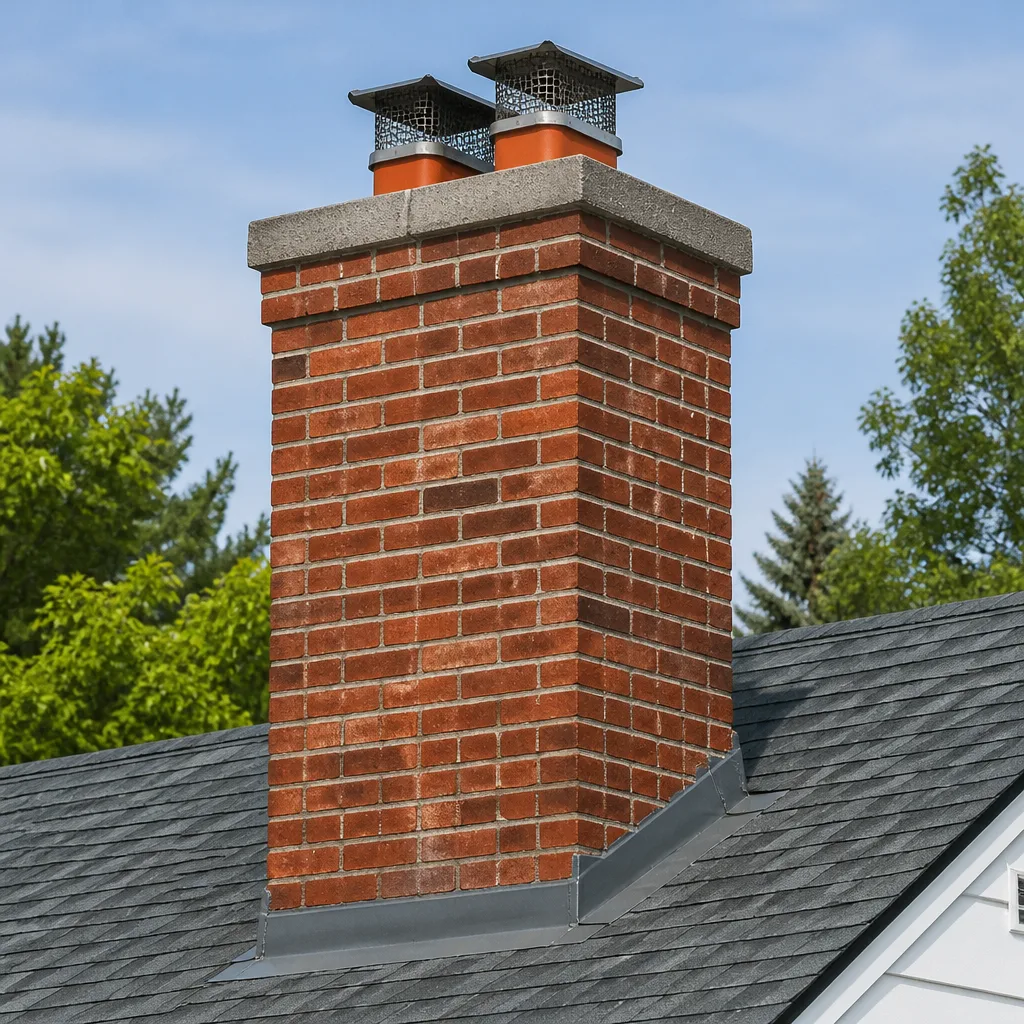 Masonry repair
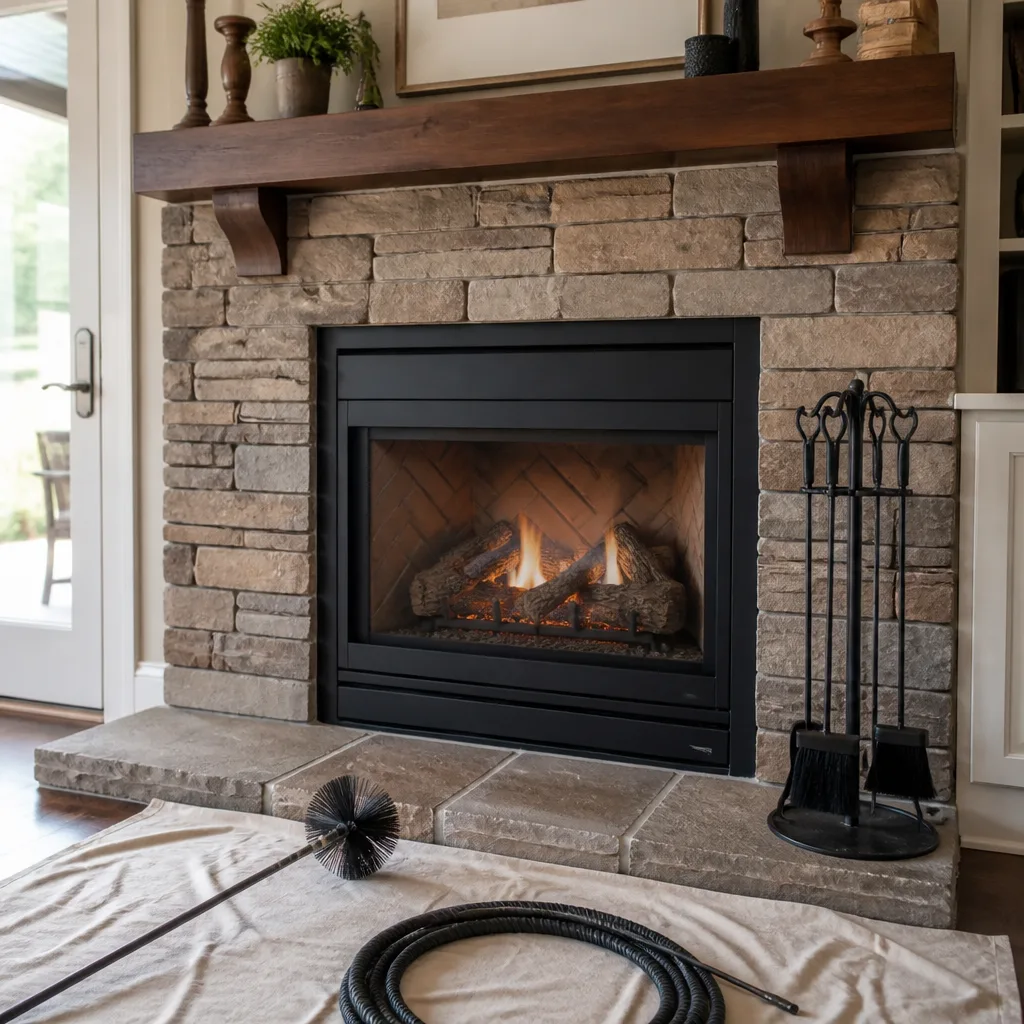 Gas fireplace service
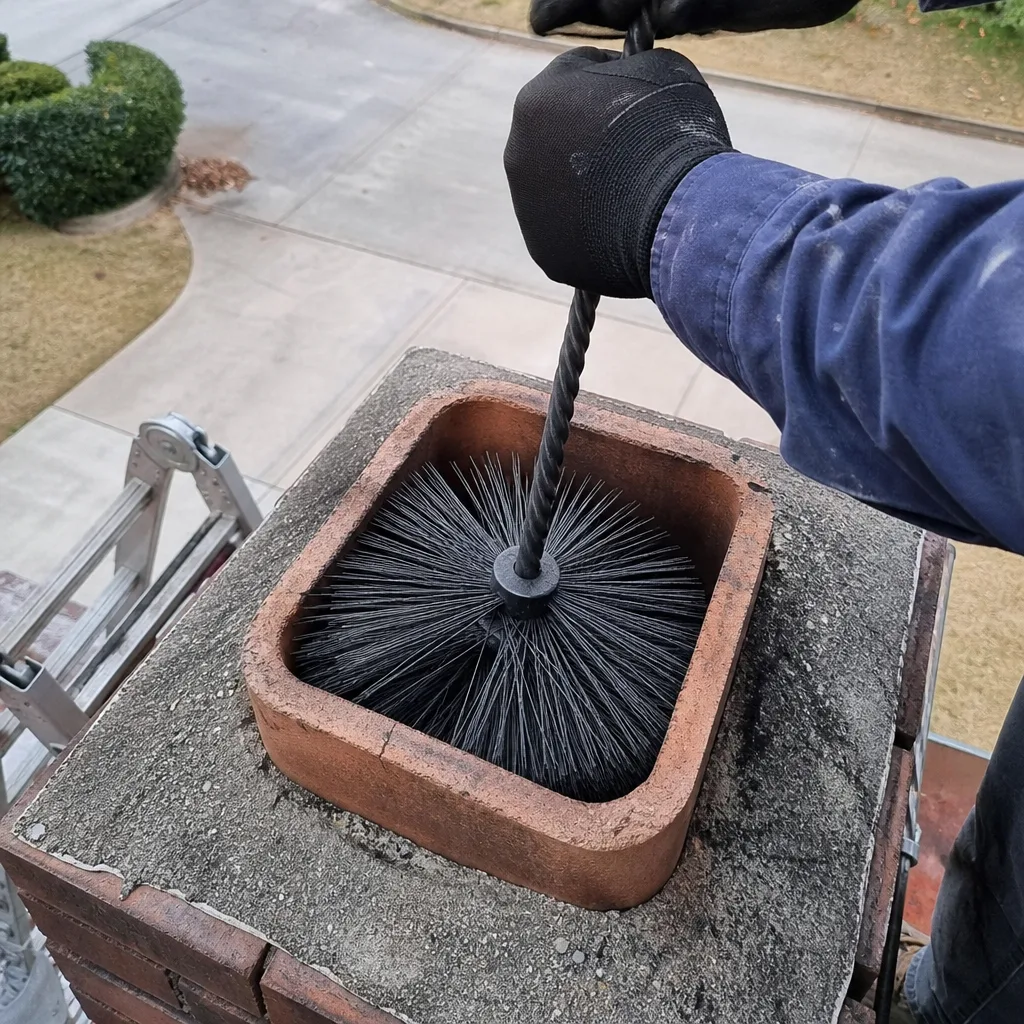
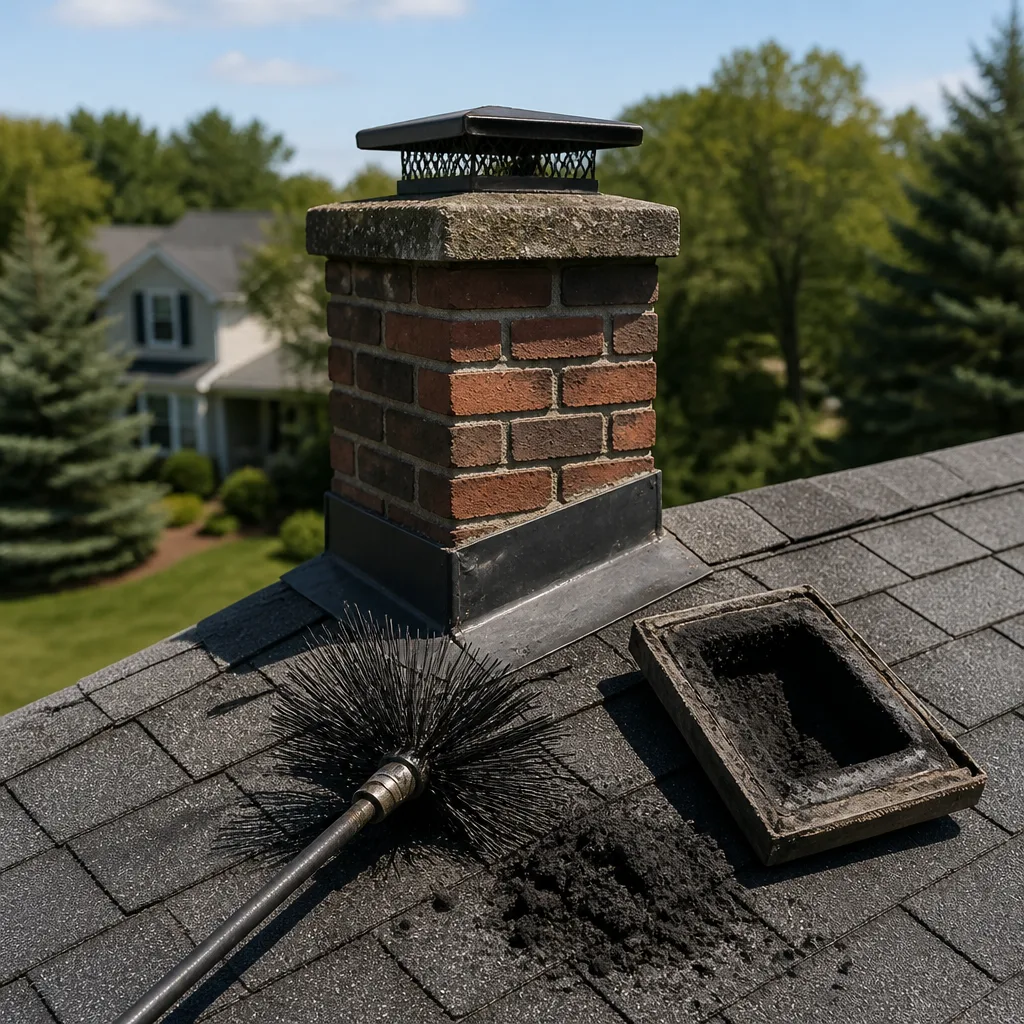
Level 1 sweep and inspection to the NFPA 211 annual standard - flue, crown, cap, and flashing checked and photographed
Chimney sweep logs do not sweep chimneys. They loosen some creosote - which then falls where a brush and vacuum still have to collect it.
Chimney Cleaning Cost Breakdown: The Irving Homeowner’s Reference for 2026
The $79 chimney sweep special you’ve seen advertised doesn’t include an inspection camera, a written report, or any repair capability. It’s a marketing number, not a service price. In Irving, a genuinely thorough sweep with a documented Level 1 inspection costs meaningfully more than that, and the gap between the two isn’t greed – it’s the difference between brushing a flue and actually knowing what’s inside it. This reference lays out real service categories and material costs so you can benchmark any quote you receive against something defensible. You’ll see what drives pricing, what repairs typically get flagged during Irving inspections, and how to spot an incomplete bid before you sign it.
Quick Answer
A standard chimney sweep in Irving with a Level 1 inspection typically runs $185 to $340, depending on flue height, creosote stage, and access. Add a Level 2 camera inspection and you’re usually looking at $285 to $475. Repairs found during inspection – caps, crowns, liner resurfacing, or stainless relining – add separate cost, from a few hundred dollars for a cap to several thousand for a full reline, all set by a written estimate before work begins.
Styles & brands we work with
- Sweep & inspection
- Caps & crowns
- Flue relining
- Masonry repair
- Gas fireplace service
Table of Contents
- Line-Item Breakdown by Service Type
- What Actually Drives Price Variation in an Irving Quote
- Creosote Stages and Why They Change the Job
- Repair Cost Benchmarks for Common Irving Findings
- How to Tell a Competitive Quote from an Incomplete One
- The Real Cost of Deferring Maintenance
- Questions to Ask Before You Book
- When to Call a Professional
Line-Item Breakdown by Service Type
Most homeowners shopping for a sweep only hear one number. In practice, chimney work in Irving gets priced in distinct service categories, and knowing them lets you compare quotes apples to apples. Below are typical estimated ranges for the Irving market. These are benchmarks, not exact quotes – the written estimate always sets the final price for your specific chimney.
Basic sweep (no inspection report)
- Typical range: $140 to $225
- What it covers: Brushing the flue and firebox, removing soot and creosote, basic cleanup
- What it usually excludes: Camera inspection, written condition report, any repair assessment
Sweep with Level 1 inspection
- Typical range: $185 to $340
- What it covers: The sweep plus a visual assessment of the firebox, damper, flue, and cap, with a written summary of condition
- Best for: Annual maintenance on a chimney with no known problems
Sweep with Level 2 inspection (camera scan)
- Typical range: $285 to $475
- What it covers: Everything in a Level 1 plus a video camera run through the flue, with photo documentation of the interior
- Best for: A newly purchased home, a change in fuel type, a chimney that’s had a fire, or any suspected liner problem
Standalone camera scan
- Typical range: $150 to $275
- What it covers: Camera inspection only, when the chimney was recently swept but you need a documented look at the liner
Liner assessment
- Typical range: Usually bundled into a Level 2 inspection; standalone assessments run $175 to $300
- What it covers: Close evaluation of liner condition, joints, cracks, and clearances, with a recommendation on whether resurfacing or relining is warranted
The pattern to notice: the sweep itself is not the expensive part. The diagnostic capability and the paper trail are. A sweep without a report is a cleaning. A sweep with a documented assessment is a maintenance record you can act on. If you want to see how we structure the cleaning side specifically, our chimney sweep page walks through what’s included in the process.
What Actually Drives Price Variation in an Irving Quote
Two Irving homes with the same square footage can get quotes that differ by hundreds of dollars. That’s not arbitrary – several concrete factors move the number.
Flue height
Every additional foot of flue means more brush time, more setup, and sometimes more roof access work. A single-story ranch with a short chimney is a faster job than a two-story home with a tall exterior stack. Taller chimneys also require more careful ladder and roof staging, which affects labor time.
Number of flues
A chimney with two flues – common in older Irving masonry chimneys built to serve both a fireplace and a furnace – costs more to sweep than a single-flue stack because each flue gets swept and inspected separately. Some quotes don’t clarify the flue count upfront, which is one of the most common sources of surprise charges.
Degree of creosote buildup
Stage 1 creosote is a light, flaky soot that brushes away easily. Stage 2 is denser and glazed in spots, requiring more time and sometimes chemical treatment. Stage 3 is hardened, tar-like glaze that can’t be removed with a standard brush at all and often points toward liner damage. The stage determines labor hours more than any other single factor.
Access conditions
Restricted roof access, a steep pitch, a chimney boxed in tight to the roofline, or a flue that requires removal of a cap assembly all add time. Gas inserts and wood-burning stoves with tight clearances to combustibles need more careful handling during the sweep than an open masonry fireplace.
Age and construction of the chimney
Older masonry chimneys in Irving – particularly those built with clay tile liners – often have offset flues, mortar joints that catch debris, and cracks that only show up on camera. Those conditions take longer to work through and are more likely to surface a repair recommendation.
In our experience, the fastest way to a fair quote is to describe your setup accurately when you call: how many flues, how tall the chimney is, what you burn, and when it was last swept. A quote built on accurate information is far less likely to change once the technician is on the roof.
Creosote Stages and Why They Change the Job
Creosote is the byproduct that makes chimney work what it is. It forms when wood smoke cools against the flue walls, and how much has accumulated determines whether a sweep is routine maintenance or a repair precursor.
- Stage 1: Light soot and flaky creosote, usually a quarter-inch or less. Standard brushing removes it completely. This is what an annual sweep on a well-managed chimney looks like.
- Stage 2: Denser, sometimes glazed deposits that take more mechanical effort and may need a chemical sweep product. Burns hot and long, or wet or unseasoned wood, tends to accelerate buildup to this stage.
- Stage 3: Hardened, tar-like glaze bonded to the flue surface. Standard brushes won’t remove it. Stage 3 buildup is a fire risk and often mirrors what’s happening to the liner underneath – cracks, gaps, or deterioration that cameras reveal.
Stage matters for cost because labor scales with it. A Stage 1 sweep on a single-flue chimney is a shorter job. A Stage 3 job on a multi-flue stack can take the better part of a day and frequently ends with a repair recommendation. In Irving, where winter tends to be mild and burning is intermittent rather than constant, buildup patterns can be sneaky – a fireplace used a few dozen times a season still accumulates creosote, and short, hot burns don’t always make it obvious. Regular annual sweeps keep most chimneys in Stage 1.
If buildup reaches Stage 3, the first question is always whether the liner survived it. That’s where the Level 2 camera inspection earns its cost. For how we approach the repair side once a problem is confirmed, the chimney repair page covers the diagnostic and fix process in detail.
Repair Cost Benchmarks for Common Irving Findings
A sweep or inspection in Irving most often ends with a clean report and nothing else. When it does surface a problem, these are the repair categories that show up most and roughly what they cost. All are estimates, and the written estimate after diagnosis sets the final number.
Cap replacement
- Typical range: $175 to $450 installed, depending on cap style and flue configuration
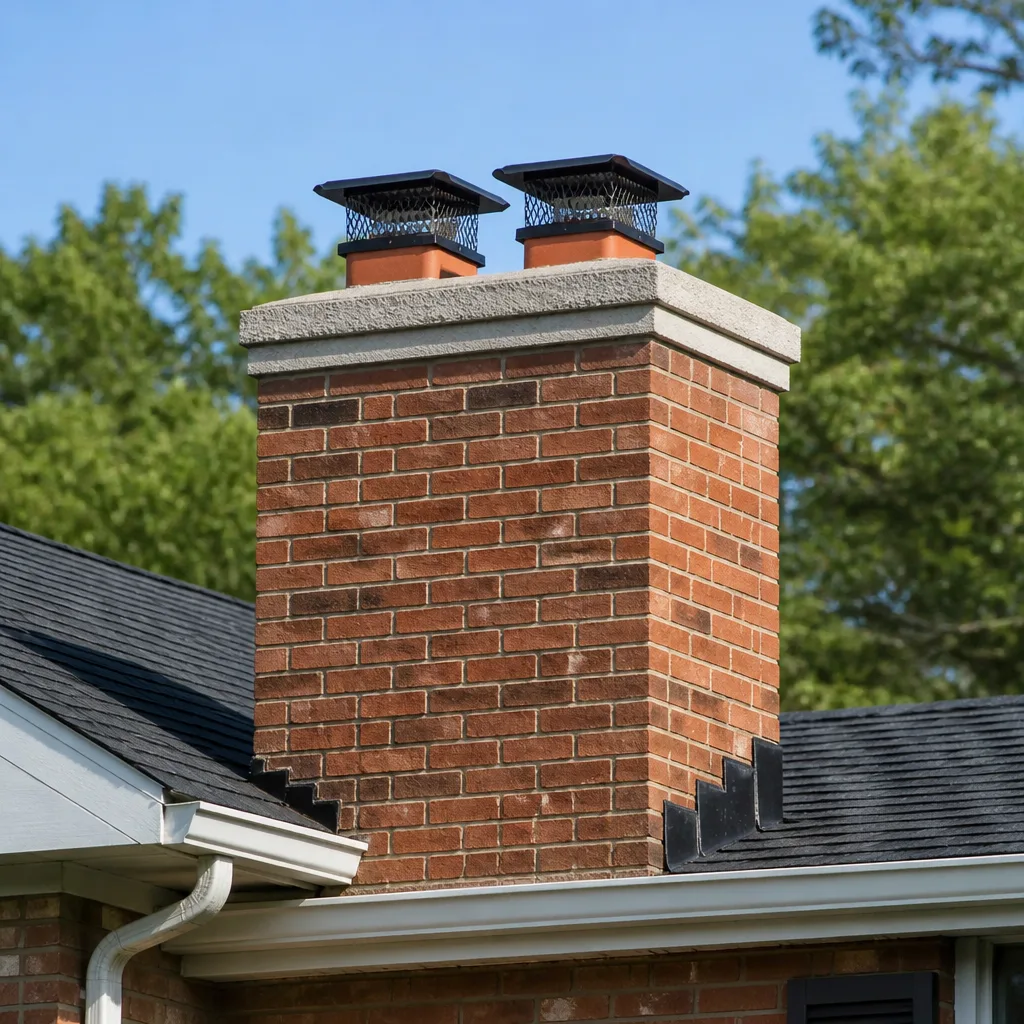
- Why it matters: A missing or damaged cap lets rain, debris, and animals into the flue. We work with cap and venting products from Famco and Gelco to match the cap to the chimney’s actual configuration.
Crown repair
- Typical range: $350 to $900, depending on whether the crown needs patching or full rebuilding
- Why it matters: The crown is the concrete cap on top of the masonry that sheds water away from the chimney. A cracked crown lets moisture into the masonry, which leads to damaged mortar joints and eventually a compromised structure.
HeatShield liner resurfacing
- Typical range: $1,500 to $3,500, depending on flue length and liner condition
- Why it matters: HeatShield is a specialist resurfacing system for clay tile liners with cracks, gaps, or mortar joint damage. It restores the inside of the flue without a full liner replacement. This is a technically demanding service, and not every chimney company offers it.
Stainless liner installation (reline)
- Typical range: $2,800 to $6,500, depending on flue length, liner diameter, and whether insulation is added
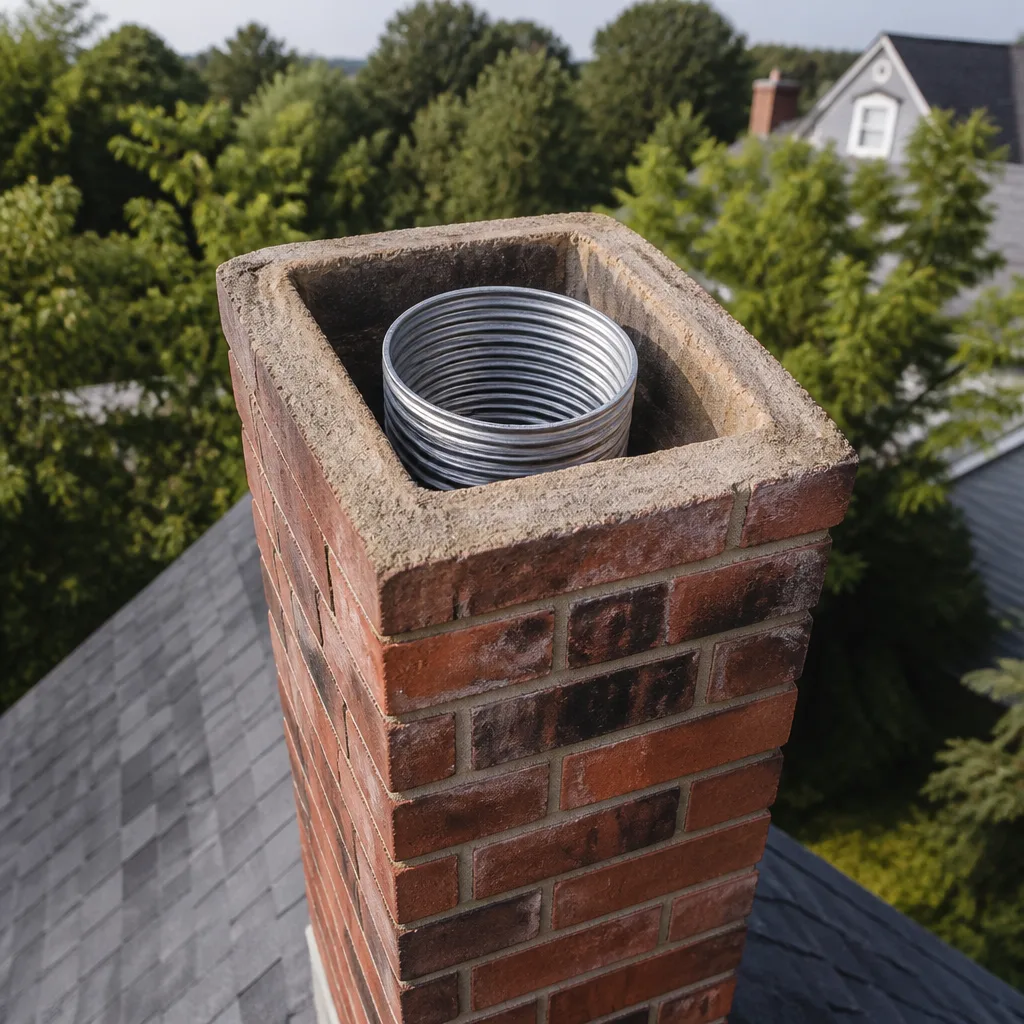
- Why it matters: When the original liner is too far gone for resurfacing, a stainless liner – like the DuraFlex system – is installed inside the existing flue. This is the highest-value repair in chimney work, and it’s the one that most directly protects the home from fire and carbon monoxide risk.
Firebox repointing
- Typical range: $450 to $1,200, depending on how many joints need rebuilding
- Why it matters: Cracked or crumbling mortar joints in the firebox allow heat and gases to reach the surrounding masonry. Repointing restores the joint and re-establishes the firebox’s structural integrity.
One detail worth knowing: these repair categories are not interchangeable. A crown repair is not a substitute for a liner fix, and vice versa. A thorough inspection tells you which category you’re in. That’s the reason we offer sweep, repair, and inspection as one connected service rather than handing you off between companies – the company that finds the problem is the one accountable for fixing it.
How to Tell a Competitive Quote from an Incomplete One
A low quote isn’t automatically a bad quote, but an incomplete one almost always looks low. The difference is in what it excludes. Here’s how to find out which one you’re looking at before you book.
- Ask what the quote includes in writing. A fair quote names the sweep, the inspection level, whether a camera is used, and whether you get a written report. If the answer is “a standard sweep,” ask them to spell out exactly what that means for your chimney.
- Ask whether the camera is included or extra. A low base price with the camera scan billed separately is a common pattern. It’s not inherently unfair, but you should know the total before you agree.
- Ask how many flues the quote covers. If your chimney has two flues and the quote doesn’t say, ask directly. Sweeping one flue and charging a second-flue fee on the day is a frequent surprise.
- Ask about the written report. A documented assessment of the flue, cap, crown, and firebox is part of a thorough job. A sweep without a report leaves you with no record to compare against next year.
- Ask whether repairs are quoted on the spot or after diagnosis. A company that quotes a liner replacement before seeing the liner on camera is guessing. Repairs should be quoted after inspection, not bundled into the original sweep price as an upsell.
- Ask who does the repair if one is needed. If the company only cleans and hands off repairs to someone else, you’ll be starting the diagnosis over with a new provider. Single-provider accountability is worth asking about.
- Ask for the estimate in writing before work begins. A verbal range isn’t an estimate. A flat price, agreed before the job starts, is.
For a broader look at what inspection should actually cover, our Irving Chimney Cleaning service pages walk through the three pillars – sweep, repair, inspection – as one connected process. And if you’re comparing providers across the metroplex, the Double Oak page shows how the same approach applies in a neighboring community.
The Real Cost of Deferring Maintenance
Deferring chimney maintenance is a cost comparison that plays out over months, not days. Here’s the pattern we see most often, described as a general scenario rather than a specific job.
What a $250 inspection catches
- A small crown crack that can be patched rather than rebuilt
- Stage 2 creosote buildup that a sweep can remove before it hardens
- Early mortar joint erosion in the firebox
- A cap that’s loosened but not yet missing
- Liner cracks still small enough for HeatShield resurfacing rather than a full reline
What the same problems cost 18 months later
- A crown crack that went unpatched becomes a rebuilt crown, and the water damage behind it may have reached the mortar joints below
- Stage 2 creosote becomes Stage 3, which is a fire risk, a harder and longer job, and often a sign the liner didn’t survive it
- Eroding firebox joints become a repointing job across most of the firebox, or worse, a structurally compromised firebox
- A missing cap means rain and debris in the flue, animal intrusion, and rusted or degraded liner surfaces
- Small liner cracks become a full stainless reline – a repair in the thousands rather than the hundreds
The pattern is not that repairs get slightly more expensive. It’s that they change category. A resurfacing job becomes a reline. A crown patch becomes masonry work. In Irving, where the burning season is short enough that a chimney can sit unused for months, that gap is exactly when the deferred problem gets worse without anyone noticing. A chimney that hasn’t been looked at since last winter has had a full year to settle, crack, or accumulate.
This is not a scare tactic. Some problems genuinely can wait. The point is that you can only decide whether to wait once you’ve seen the camera footage. That’s what a Level 2 inspection gives you – a dated record of what your chimney looked like this season, which becomes the benchmark for next season. Nothing should be recommended to you that you can’t see for yourself in a photo.
Questions to Ask Before You Book
Once you’ve compared quotes, a few final questions separate a genuine specialist from a generalist with a brush. We work with professional-grade chimney brands – DuraFlex for lining systems, Olympia Chimney for components and venting – because the materials in a chimney repair matter as much as the labor. Ask any provider you’re considering which systems they work with and why. A company that can explain the difference between a HeatShield resurfacing and a DuraFlex reline is a company that can tell you which one your chimney actually needs. The one that says “we’ll figure it out on the day” is not.
See the difference
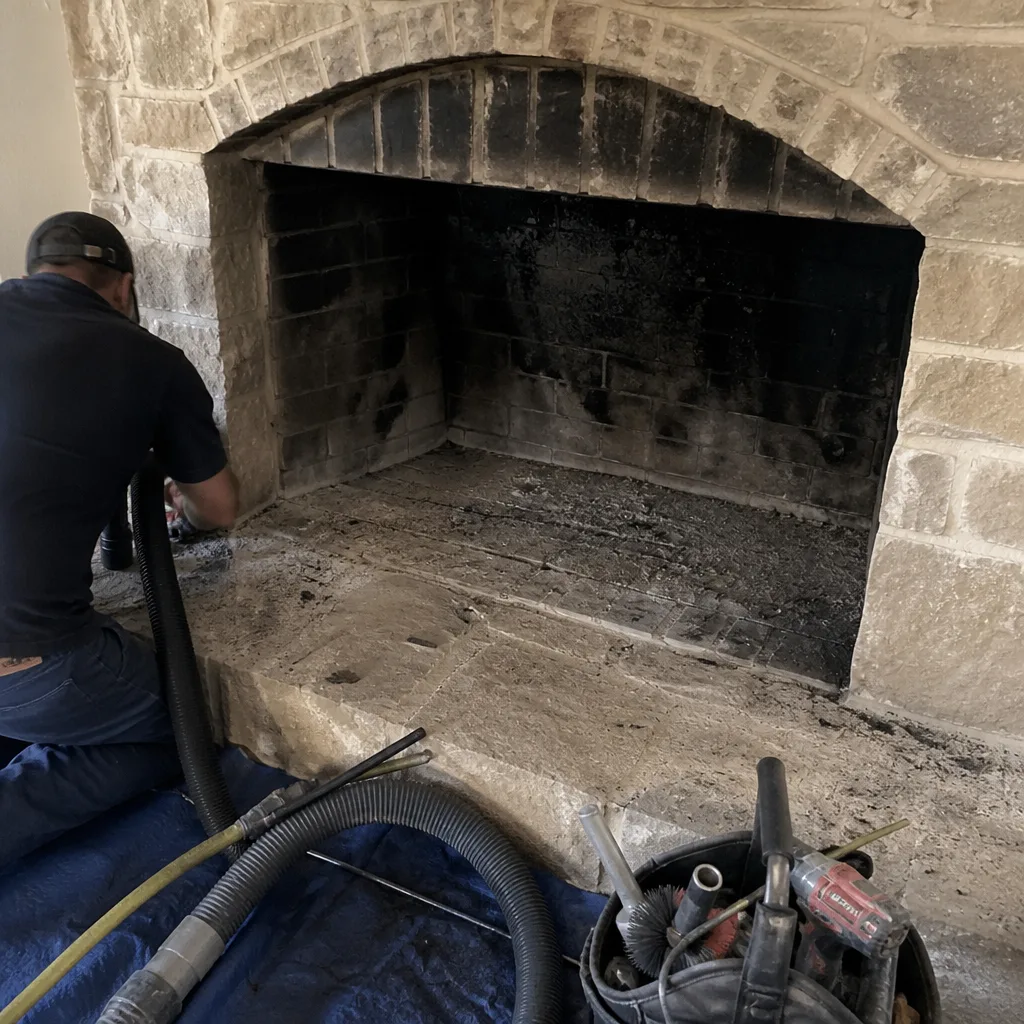 Before
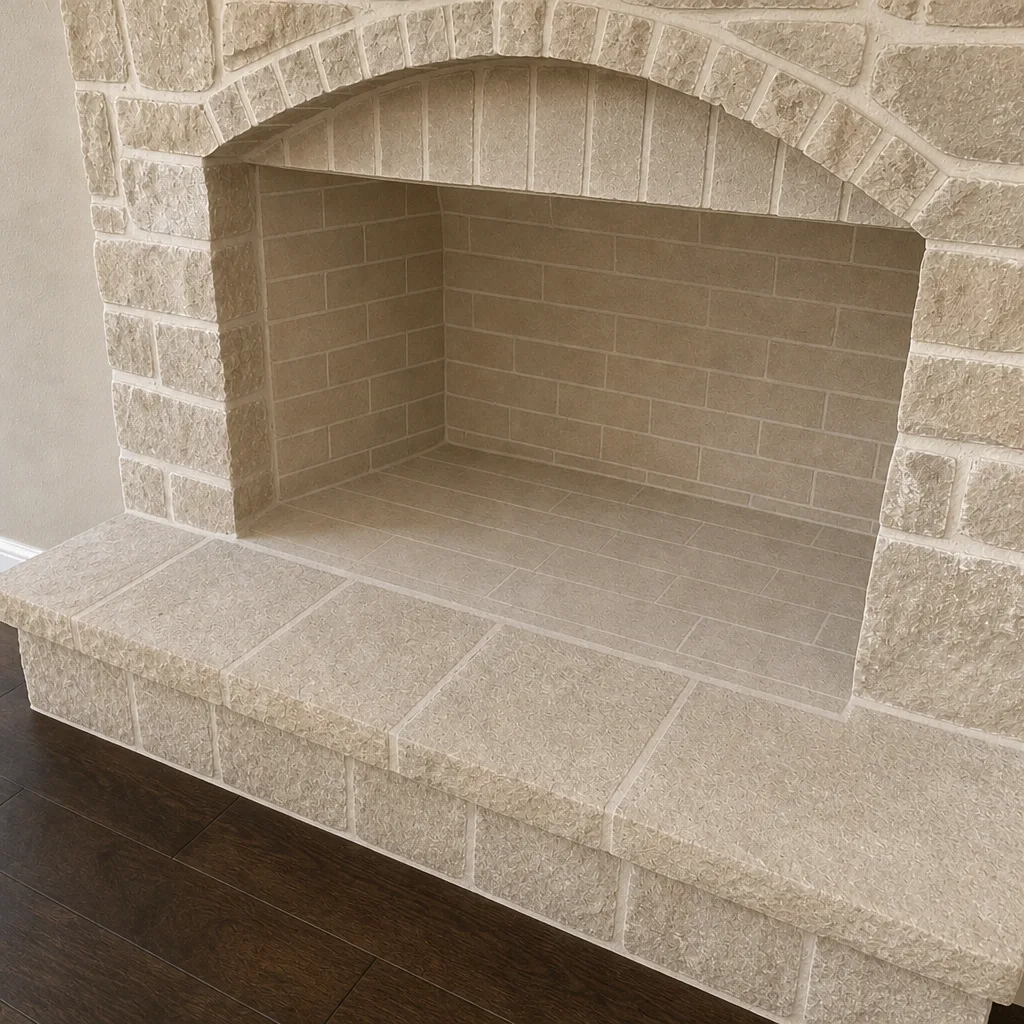 After
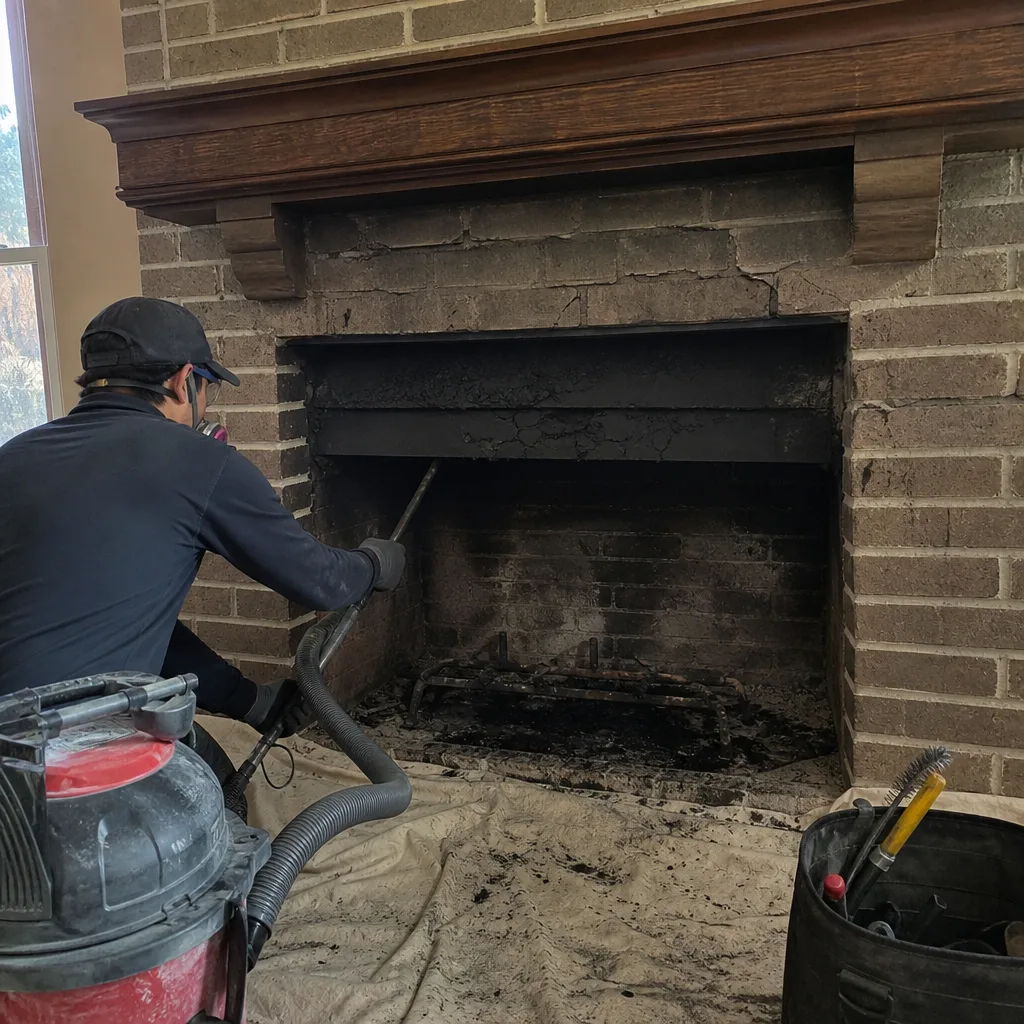 Before
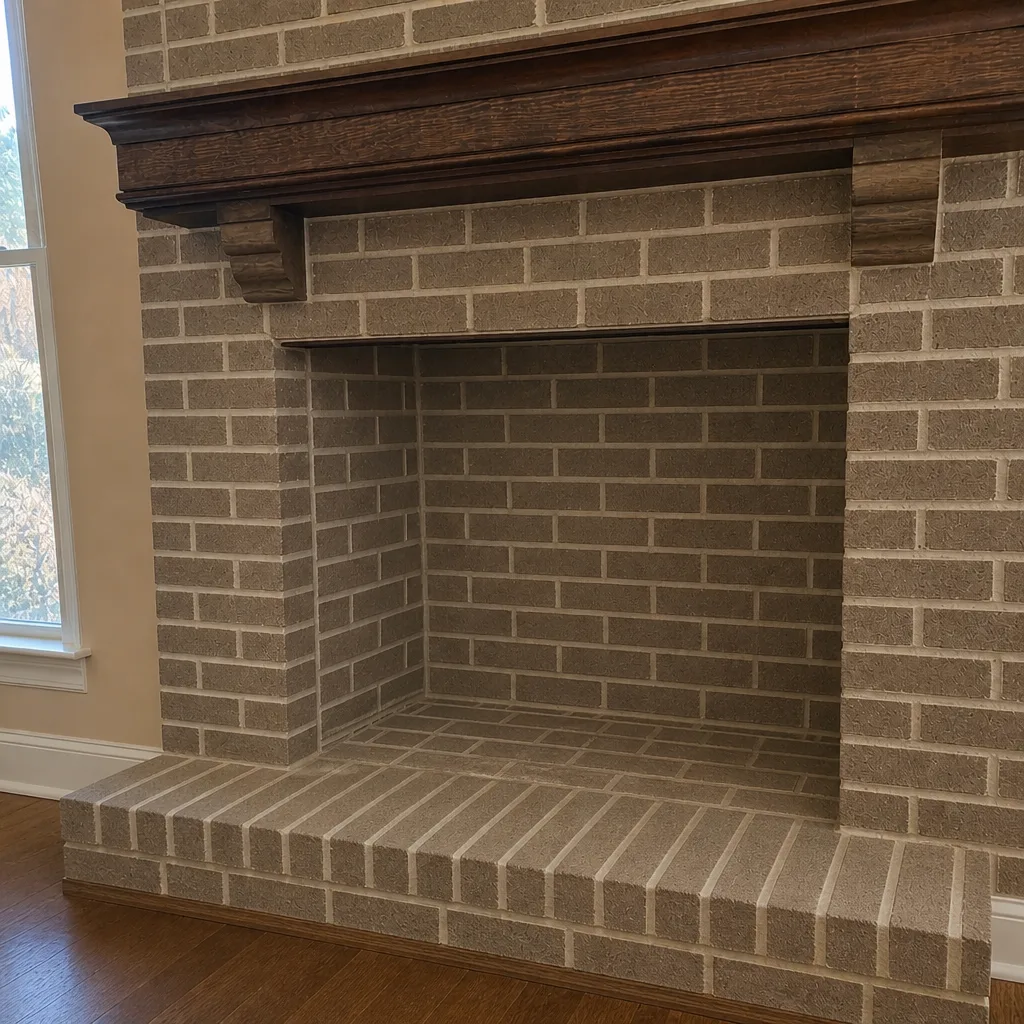 After
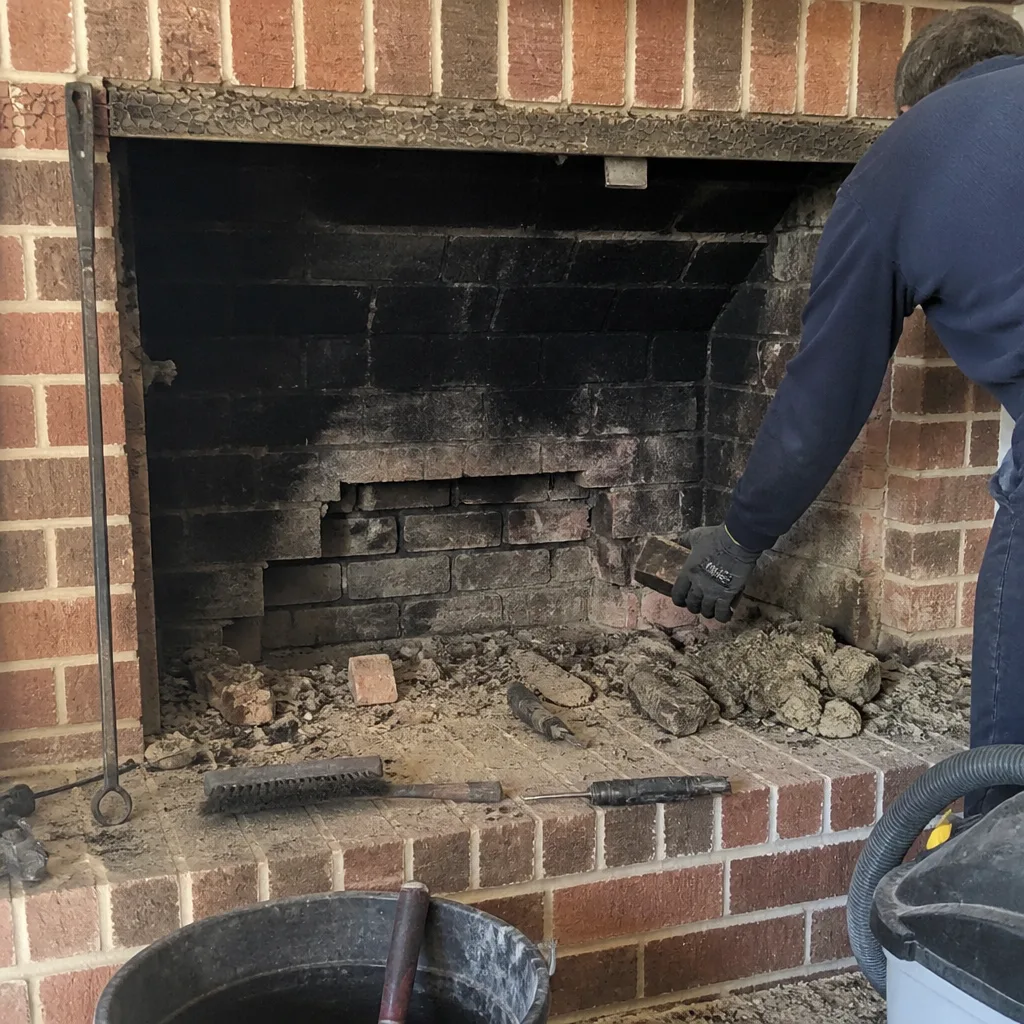 Before
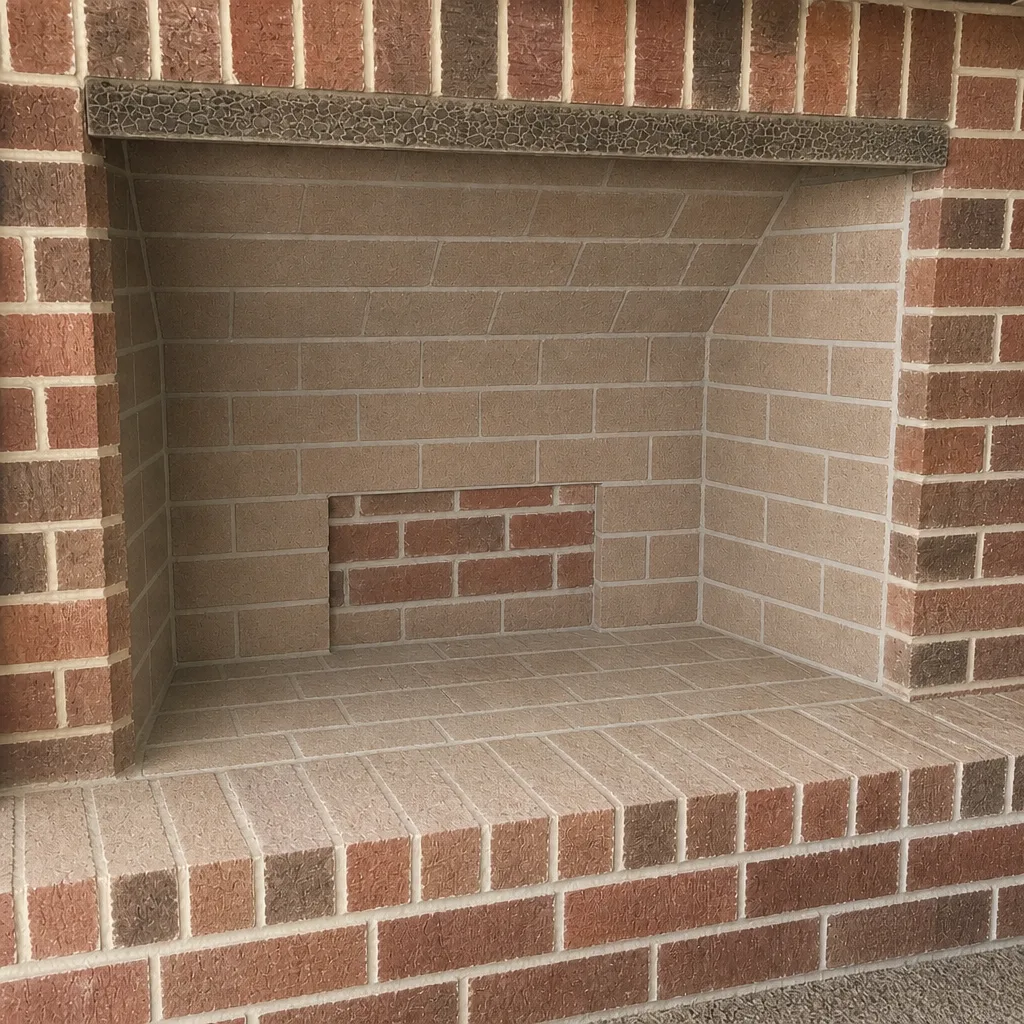 After
Common Mistakes to Avoid
- Booking the cheapest listed price without asking what it includes. A $79 sweep ad and a $250 sweep-and-inspection are not the same service. Ask what’s excluded before you compare numbers.
- Skipping the camera inspection because the sweep looked fine. A visual sweep can’t see inside a clay tile liner. A Level 2 camera scan is the only way to know whether the liner is intact, especially in an older Irving masonry chimney.
- Letting a generalist handyman handle a liner problem. Liner resurfacing and relining require specific systems and training. Ask which brands the company works with – if they can’t name DuraFlex, HeatShield, or a comparable professional system, ask why.
- Accepting a repair quote before seeing the evidence. Ask to see the camera footage or photos. A recommendation you can’t verify is a recommendation you shouldn’t pay for.
- Ignoring a small crown crack because it looks cosmetic. The crown sheds water away from the masonry. A crack lets water in. Left alone, it turns into mortar damage and eventually structural work.
- Waiting until the first cold snap to book. Sweep and inspection schedules fill up as the burning season approaches. Booking well before that gives you time to address a needed repair before it becomes an emergency.
- Assuming a gas insert doesn’t need attention. Gas inserts still vent through the chimney, and the venting system needs to be checked. The sweep itself may be lighter, but the inspection still matters.
When to Call a Professional
Call a professional if your chimney hasn’t been swept or inspected in the past year, if you’re buying a home with a chimney and have no maintenance records, if you’ve had a chimney fire (even a small one), or if you’re changing from wood to gas or installing an insert. Call if you smell smoke in the house when the fireplace isn’t running, if you see creosote glaze on the flue walls, or if the firebox mortar looks cracked or crumbling. Call if a cap is missing or damaged. And call if a prior sweep was done without a written report – you have no benchmark to compare against. Irving Chimney Cleaning offers free estimates in Irving. Call (855) 955-5057. We answer 24/7. Fast dispatch from 7am to 7pm, Sunday through Friday.
Frequently Asked Questions
A chimney sweep in Irving typically runs $140 to $225 for a basic sweep, and $185 to $340 when a Level 1 inspection with a written report is included. Adding a Level 2 camera inspection brings the typical total to $285 to $475. Call (855) 955-5057 for an exact quote – estimates are free.
You need a Level 2 inspection if you’ve recently purchased the home, changed fuel type, had a chimney fire, or suspect any liner problem. For an annual maintenance sweep on a chimney with no known issues, a Level 1 visual inspection is the standard recommendation. If you’re not sure which applies, ask – the answer depends on your chimney’s history. Call (855) 955-5057 for an exact quote – estimates are free.
Not always. Some liner damage – cracked clay tiles, deteriorated mortar joints – can be repaired with HeatShield resurfacing rather than a full reline. A full stainless reline is warranted when the liner is too far gone for resurfacing or when clearances require it. Nothing should be recommended without camera evidence you can see for yourself. Call (855) 955-5057 for an exact quote – estimates are free.
Most chimneys should be swept and inspected once a year, or more often if you burn heavily. In Irving’s mild winters, a fireplace used a few dozen times a season still accumulates creosote, and annual sweeps keep it in Stage 1. Call (855) 955-5057 for an exact quote – estimates are free.
Creosote accumulates with every fire. At Stage 3 it becomes a fire risk, and the liner may not survive it. Separately, small problems – a crown crack, a loose cap, eroding firebox mortar – get worse the longer they go unaddressed. A problem found during a $250 inspection often becomes a repair in the thousands 18 months later. Call (855) 955-5057 for an exact quote – estimates are free.
You can get a range over the phone if you can describe your setup accurately: how many flues, how tall the chimney is, what you burn, and when it was last swept. The written estimate after inspection sets the final price. Call (855) 955-5057. We answer 24/7. Fast dispatch from 7am to 7pm, Sunday through Friday.
The Bottom Line
Chimney cleaning pricing in Irving looks opaque until you separate the sweep from the inspection from the repair. A basic sweep is a few hundred dollars. A sweep with a documented Level 1 inspection is a bit more. A Level 2 camera scan is the benchmark from which every repair decision should be made. Repairs found during inspection have their own price categories, from a few hundred dollars for a cap to several thousand for a reline, and none of them should be recommended without evidence you can see. The homeowners who get the best outcomes are the ones who book a thorough annual sweep, ask what’s included, and treat a written report as the standard. If a quote looks unusually low, ask what it excludes. The answer usually tells you everything.
Irving Chimney Cleaning specializes in chimney sweep, repair, and inspection as one connected service. We work with professional-grade materials including DuraFlex, HeatShield, Olympia Chimney, and Famco, and our technicians have up to 11 years of experience. Call (855) 955-5057 for your free estimate. We answer 24/7. Fast dispatch from 7am to 7pm, Sunday through Friday.
Written by the team at Irving Chimney Cleaning.